Tube vs Solid State Phono Preamps
One of these measures better. The other is more popular. Here is what a tube actually does to a phono signal — and why 'warmth' is a real, describable effect rather than a marketing word.
How this is funded: we earn a commission if you buy through our links, at no extra cost to you. It never changes which product we recommend, and we’ll tell you plainly when to skip one. Full disclosure.
Almost every phono preamp under $200 is one of two things: a solid-state design built around op-amps, or a tube design with one or two small signal valves in the signal path. The marketing around the second kind uses words like warmth, musicality and bloom, which sound like nothing at all.
They are, in fact, describing something real and measurable. It is just not what most buyers assume it is.
What a tube actually does
Every amplifying device distorts a little. What separates tubes from transistors is the shape of that distortion.
Tubes tend to produce predominantly second-order harmonic distortion— added content at exactly twice the frequency of the original note. Twice the frequency is an octave, which is musically consonant. So the added content sits in harmony with the music rather than against it, and the ear reads it as richness, body or warmth.
Solid-state circuits, pushed to their limits, tend toward higher-order odd harmonics— third, fifth, seventh. Those are dissonant intervals, and the ear reads them as hardness or grit. It is the same reason overdriven transistor amplification sounds harsh while overdriven tube amplification sounds like a guitar amp.
The crucial point: this is added content, not recovered detail. A tube stage does not extract more information from the groove. It adds something pleasant that was never on the record.
Why solid state generally measures better
On the four things you can put a number on, modern solid-state designs usually win:
- Noise. Tubes are inherently noisier, and a phono stage amplifies a few thousandths of a volt by a factor of a hundred or more. Noise matters more here than anywhere else in the system, which is why the stages that publish specific noise-floor figures are almost all solid state.
- Distortion. Lower, by design, in a good op-amp circuit.
- RIAA accuracy.The equalization curve is the phono stage’s actual job, and precision components make it easier to hit accurately.
- Consistency. Two solid-state units off the same line perform identically. Two tube units may not, and one unit changes as its tubes age.
None of that makes tube stages bad. It makes them a voicing choicerather than a fidelity upgrade — and it means anyone selling a budget tube phono stage as “more accurate” is selling you something that is not true.
The practical differences
Noise floor
The one that actually bothers people. Put your ear near the speaker with the volume up and nothing playing: a cheap tube stage often has an audible hiss where a good solid-state one is silent. In a normal room at normal volume this is usually inaudible during music, but on quiet passages it can intrude.
Warm-up
Tubes need a few minutes to reach operating temperature and settle. Solid state is at full performance immediately. Minor, but real if you listen in short sessions.
Consumables
Tubes wear out. Small signal tubes last thousands of hours, but they can become microphonic — ringing when the chassis is tapped — or noisy before they die. Budget tube stages generally use common, cheap, widely available types, which keeps this from being a serious cost.
Tube rolling
The upside of that consumability: sockets. Several budget tube phono stages accept a whole family of compatible tubes, so swapping them is a genuinely cheap way to tune the character of your system. It is also a hobby with no natural endpoint, and worth entering with your eyes open.
Which should you buy?
Buy solid state if: you want the phono stage to be a neutral window rather than a flavor; you listen at low volume where a noise floor intrudes; you play a lot of quiet acoustic or classical material; or you simply want to set it up once and never think about it. This is the default recommendation and it is the right one for most people.
Buy a tube stage if: your collection is heavy on bright, thin or aggressively-mastered pressings and you would like them softened; you enjoy tinkering and want a component you can tune; or you have heard one and liked what it did. Those are legitimate reasons.
Do not buy a tube stage because you think it is more accurate. It is not, and a stage that flatters everything also flatters records that did not need it.
What matters more than either
Before choosing a technology, get the matching right — it affects what you hear far more than tube versus transistor does at this price.
- Gain matched to your cartridge. A stage with too little gain sounds quiet and hissy whatever is inside it. See gain and impedance explained.
- Correct loading. 47 kOhm for a moving-magnet cartridge, which essentially every stage provides.
- A proper ground post, correctly connected. Hum ruins a good stage of either kind.
- Whether you needed a new stage at all. If your turntable already has a decent built-in preamp, that money may do more in a cartridge.
And a note on where the “warm vinyl sound” actually comes from: most of it is the mastering. Records are cut differently from their digital releases — usually with less compression and a different tonal balance — and that accounts for far more of the difference people describe than any component in the chain.
One of each, with live prices
Two stages at similar money that make opposite choices. Neither is an upgrade over the other — they are different flavors of competent.
Tube
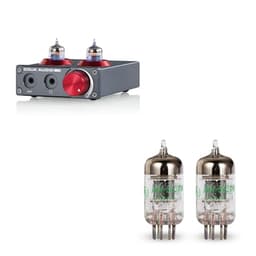
Douk Audio T4 PRO
Listening to records on headphones without a separate amp
Solid state
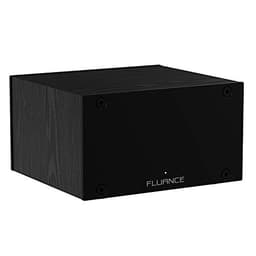
Fluance PA10
A solid mid-priced MM upgrade
Price as of October 15, 2026. #ad How we’re funded
Frequently asked questions
Do tube phono preamps sound better?
They sound different, not objectively better. Tubes typically add low-order harmonic distortion that many listeners perceive as warmth or body. By the standard measurements — distortion, noise, frequency-response flatness — a good solid-state design generally performs better.
What does a tube actually add to the sound?
Predominantly second-order harmonic distortion, which is musically consonant with the original note rather than dissonant. That is why tube distortion is often perceived as pleasant richness while transistor clipping is perceived as harshness. It is added content, not recovered detail.
Are tube phono preamps noisier?
Usually, yes. Tubes generate more inherent noise than modern op-amps, and that matters more in a phono stage than anywhere else because a phono stage amplifies a signal of a few thousandths of a volt by a factor of a hundred or more. Cheap tube stages often have an audible noise floor.
Do the tubes in a phono preamp need replacing?
Eventually. Small signal tubes have a long but finite life — typically thousands of hours — and they can become microphonic or noisy before they fail outright. Budget tube stages usually take common types that are inexpensive to replace, which is part of their appeal.
Is a tube phono preamp worth it for a bright-sounding record collection?
It can genuinely help, but understand what is happening: you are adding harmonic content to mask a tonal problem rather than fixing it. A cartridge with a different tonal balance, or correcting the loading, addresses the cause. The tube addresses the symptom pleasantly.
What is tube rolling?
Swapping the stock tubes for different types or brands to change the sound. Many budget tube phono stages use socketed, widely available tube families specifically to enable it. It is a genuine and inexpensive way to tune the character — and a rabbit hole with no defined end.
Sources
- Elliott Sound Products — Phono preamp / RIAA equalization — Technical reference on RIAA pre-emphasis and the inverse playback curve (accessed July 24, 2026)
- Crutchfield — How to choose a phono preamp — On why a phono signal needs a preamp and never running two at once (accessed July 24, 2026)
- Crutchfield — Intro to home audio power amplifiers and preamps — On the preamp/power-amp split, integrated amplifiers and impedance stability (accessed August 11, 2026)
Keep reading
Best Phono Preamps Under $100
Both kinds compared, including two tube stages.
See the picksBest Phono Preamps Under $200
Where the solid-state designs start publishing noise floors.
See the picksPhono Preamp Gain & Impedance Explained
The matching that matters more than the technology inside the box.
Read the explainerFluance PA10 Review
A close look at the solid-state stage in the comparison above.
Read the review