PLATTER & PLINTH

The Best Record Cleaning Solutions

Cleaning kits get reviewed constantly and the fluid inside them almost never does — even though the fluid is the part you buy again and the part that touches the record.

By Stephen V.Last updated How we pick

A record cleaning kit is a fluid, a pad and a bottle. The pad lasts years. The fluid runs out. So the recurring purchase — and the component actually doing the chemistry against your records — is the one that gets discussed least.

There is one real decision here and it is not brand: alcohol or alcohol-free. Alcohol-based fluids dissolve grime fast and evaporate without needing a rinse, which is why the specialist audio brands use them. Alcohol-free fluids are slower but safe on materials that alcohol can attack, which principally means shellac 78s and anything old enough that you cannot identify it.

The second thing worth working out before buying is cost per side, because bottle prices are not comparable across sizes. A 17 oz bottle at three times the price of a 100 ml one is roughly five times the fluid. We have flagged the volume on every pick so you can do that arithmetic.

All four are currently-purchasable products with live prices. Fluid alone cleans nothing — you also need a brush, pad or washer, which is what our kit roundup covers.

How this is funded:we earn a commission if you buy through our links, at no extra cost to you. It never changes which product we recommend, and we’ll tell you plainly when to skip one. Full disclosure.

Quick picks

Ranked on published specs, drive/motor design and buyer fit. Select a row to jump to the full write-up. We have not heard most of these units — here is exactly what we do instead.

#ProductBest forPrice
1
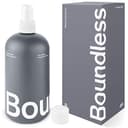
Boundless Audio Record Cleaning Solution (17 oz)

Boundless Audio Record Cleaning Solution (17 oz)

The bottle to buy if you clean records regularly. A 17 oz / 500 ml spray rated by its maker for up to 2,500 record sides works out cheaper per clean than any small refill, it is stated safe for shellac as well as vinyl, and it needs no rinse step.

Best overall
$29.95 · View on Amazon

$37.9921% off

Price as of August 31, 2026. #ad How we’re funded

2
Big Fudge Record Cleaning Solution Refill (100 ml)

Big Fudge Record Cleaning Solution Refill (100 ml)

The cheapest way to find out whether wet cleaning changes anything for you, and the only alcohol-free fluid of the four — which makes it the safe default when you do not know what a record is made of. 100 ml is a small bottle; that is the point.

Best alcohol-free
$9.99 · View on Amazon

Price as of August 31, 2026. #ad How we’re funded

3
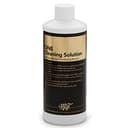
Mobile Fidelity One Record Cleaning Solution (16 oz)

Mobile Fidelity One Record Cleaning Solution (16 oz)

The alcohol-based one-step fluid, and the fastest-drying of the four. Mobile Fidelity builds it on a lab-grade alcohol base that evaporates and takes the dissolved dirt with it — no rinse, no long dry. That speed is exactly why it is the one fluid here we would keep away from shellac.

Best for fast one-step cleaning
$29.98 · View on Amazon

Price as of August 31, 2026. #ad How we’re funded

4
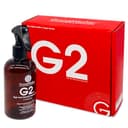
GrooveWasher G2 Fluid Refill (8 oz)

GrooveWasher G2 Fluid Refill (8 oz)

The refill for the G2 kit, and the sensible way to own that system: the kit's 4 oz bottle is the expensive part to replace piecemeal, and this doubles the volume for a couple of dollars more. Buy it with the kit rather than after you run dry.

Best refill for an existing kit
$20.99 · View on Amazon

$23.3210% off

Price as of August 31, 2026. #ad How we’re funded

The picks in full

#1Best overall

Boundless Audio Record Cleaning Solution (17 oz)

The bottle to buy if you clean records regularly. A 17 oz / 500 ml spray rated by its maker for up to 2,500 record sides works out cheaper per clean than any small refill, it is stated safe for shellac as well as vinyl, and it needs no rinse step.

Strengths

  • 17 oz bottle — the maker rates it for up to 2,500 record sides
  • Stated safe for shellac 78s as well as vinyl, which most fluids do not claim
  • No-rinse formula with anti-static agents; refills your existing kit's bottle

Trade-offs

  • Fluid only — you supply the brush, pad or washer
  • A 500 ml bottle is more than a fifty-album collection will get through
TypeRecord cleaning fluid (spray)
Volume17 fl oz / 500 ml
Rated coverageUp to 2,500 record sides (published)
Rinse requiredNo — leaves no residue (published)
Material safetyStated safe for all vinyl and shellac
Anti-staticYes — anti-static agents (published)

Note. Coverage figures on cleaning fluid are the maker's, not ours, and they assume a light mist rather than a soaked pad. Treat 2,500 sides as an upper bound.

Specifications read from the manufacturer / product listing, on August 19, 2026. “Not published” means the maker does not state that figure.

#2Best alcohol-free

Big Fudge Record Cleaning Solution Refill (100 ml)

The cheapest way to find out whether wet cleaning changes anything for you, and the only alcohol-free fluid of the four — which makes it the safe default when you do not know what a record is made of. 100 ml is a small bottle; that is the point.

Strengths

  • Alcohol-free formula — the safe choice when a record's material is uncertain
  • Fine spray nozzle included, so it works without decanting
  • Costs less than a single new record

Trade-offs

  • 100 ml is a fraction of the Boundless bottle — worse value per ml
  • Sold as a refill for Big Fudge's own kit; you supply the brush or cloth
TypeRecord cleaning fluid refill (spray)
Volume100 ml / 3.4 fl oz
AlcoholAlcohol-free (published)
NozzleFine spray nozzle included
Designed forBig Fudge 4-in-1 record cleaning kit

Note. Alcohol-free is the reason to pick this one over the MoFi fluid, not the price. It is the fluid to reach for on shellac, on old pressings and on anything you cannot identify.

Specifications read from the manufacturer / product listing, on August 19, 2026. “Not published” means the maker does not state that figure.

#3Best for fast one-step cleaning

Mobile Fidelity One Record Cleaning Solution (16 oz)

The alcohol-based one-step fluid, and the fastest-drying of the four. Mobile Fidelity builds it on a lab-grade alcohol base that evaporates and takes the dissolved dirt with it — no rinse, no long dry. That speed is exactly why it is the one fluid here we would keep away from shellac.

Strengths

  • Quick-drying lab-grade alcohol base — no rinse and no long drying session
  • Stated free of fragrances, oils and other contaminants
  • A specialist audio maker's own formula rather than a generic re-bottling

Trade-offs

  • Alcohol-based, so we would not put it on shellac 78s — use the Boundless fluid there
  • Costs roughly three times the Big Fudge refill for a comparable job
TypeOne-step record cleaning fluid
Volume16 fl oz
BaseQuick-drying lab-grade alcohol (published)
Rinse requiredNo (published)
ContainsNo fragrances, oils or contaminants (published)

Note. Alcohol content is the trade-off in both directions: it is why this dries fastest, and it is why shellac 78s — whose surface alcohol can attack — should be cleaned with something else.

Specifications read from the manufacturer / product listing, on August 19, 2026. “Not published” means the maker does not state that figure.

#4Best refill for an existing kit

GrooveWasher G2 Fluid Refill (8 oz)

The refill for the G2 kit, and the sensible way to own that system: the kit's 4 oz bottle is the expensive part to replace piecemeal, and this doubles the volume for a couple of dollars more. Buy it with the kit rather than after you run dry.

Strengths

  • 8 oz — twice the fluid that ships in the G2 kit
  • Same formula as the kit, so the pad and the routine do not change
  • Cheaper per ounce than replacing the whole kit

Trade-offs

  • Refill only — no pad, no brush, nothing but the bottle
  • Only worth buying if you already use the G2 pad
TypeRecord cleaning fluid refill (spray)
Volume8 fl oz
Designed forGrooveWasher G2 cleaning system
RemovesDust, dirt and fingerprints (published)

Note. Pairs with the GrooveWasher G2 kit already in our cleaning-kit roundup. On its own it cleans nothing — you need the pad.

Specifications read from the manufacturer / product listing, on August 19, 2026. “Not published” means the maker does not state that figure.

Alcohol or alcohol-free: how to choose

The distinction is genuine and it is the only one that should change your purchase.

Alcohol-based fluids— the Mobile Fidelity One here is built on what the maker describes as a quick-drying lab-grade alcohol base — work by dissolving oils and grime and then evaporating, carrying the dissolved contamination with them. That is why they need no rinse and dry almost immediately.

Alcohol-free fluids use surfactants and wetting agents instead. They lift dirt into suspension rather than dissolving it, so the wipe-off step matters more. They are slower and they are safe on more materials.

When each is the right answer:

  • Modern vinyl LPs: either works. Vinyl (PVC) is not attacked by isopropyl alcohol at the dilutions used in record fluids.
  • Shellac 78s:alcohol-free only. Shellac is a natural resin and alcohol is a solvent for it — this is the one case where the wrong fluid can damage a record permanently. The Boundless fluid states it is safe on shellac; the Big Fudge refill is explicitly alcohol-free.
  • Old, unidentified or valuable pressings: alcohol-free, on the same reasoning. If you do not know what it is made of, do not use a solvent on it.
  • A large batch of grubby charity-shop LPs: alcohol-based, for the speed and the no-rinse convenience.

Working out the cost per side

Nobody prints this, so it is worth doing yourself before buying. The rough method: a light mist on a 12-inch side uses on the order of 1–2 ml. Divide the bottle volume by that and you have a ballpark side count.

Boundless publishes the figure directly — up to 2,500 record sidesfrom the 17 oz / 500 ml bottle — which is consistent with roughly 0.2 ml per side and therefore assumes a very light mist. Treat any maker’s coverage claim as an upper bound rather than a plan; if you saturate a pad you will use several times that.

The practical upshot: buy the large bottle if you clean regularly, and the 100 ml one if you are finding out whether wet cleaning is for you at all. The small bottle is worse value per milliliter and better value as an experiment.

What fluid cannot fix

Worth saying plainly, because cleaning fluid gets sold as a cure-all.

  • Scratches are permanent. A groove with a physical gouge in it will click forever. No fluid, machine or ultrasonic bath changes that.
  • Groove wear is permanent. A record played hundreds of times with a worn stylus or a badly-set tracking force has deformed groove walls. Cleaning removes the dirt on top of the damage.
  • Static comes back.Anti-static agents in a fluid help at the moment of cleaning. Dry friction on the next play regenerates the charge. A carbon-fiber brush before each side is the ongoing answer — see how to clean vinyl records.

What fluid genuinely does is remove mold-release compound from new pressings, fingerprint oils, airborne dust bound in by humidity, and old residue from whatever the previous owner used. That is a real and audible improvement on most secondhand records, and it reduces stylus wear as a side effect.

Using it without making things worse

Four rules, all of which people break:

  1. Wipe with the groove, never across it. Circular motion following the groove direction. Radial wiping drags grit across groove walls.
  2. Keep fluid off the label. Paper labels stain and lift. Mist the pad rather than the record if your aim is uncertain.
  3. Use a lint-free pad or microfibre cloth. Paper towel sheds fibers and is abrasive at a microscopic scale.
  4. Do not reuse a dirty pad on a clean record. A saturated pad redistributes what it lifted from the last twenty records.

And clean the stylus too. A clean record played with a dirty stylus sounds like a dirty record — the maintenance guide covers the schedule for both.

Where fluid stops being enough

Manual wet cleaning with a pad reaches the top of the groove reliably and the bottom of it partially. For records that are genuinely contaminated — mold, decades of smoke residue, ground-in grit — a machine that applies fluid and then vacuums it back out, or an ultrasonic bath, removes material a cloth cannot reach.

That is a different budget: our record cleaning machine roundup starts around the price of a mid-range turntable. For a collection of a few hundred normally-kept records, fluid and a pad is the correct answer and the machine is not.
Frequently asked questions

What is the best record cleaning solution?

For most collections, the Boundless Audio 17 oz spray — no rinse required, stated safe on both vinyl and shellac, and the lowest cost per side of the four here because of the bottle size. Choose the alcohol-free Big Fudge refill instead if you clean 78s or unidentified old pressings, and the Mobile Fidelity One if you want the fastest-drying alcohol-based option.

Can I clean vinyl records with isopropyl alcohol and water?

It is a common homebrew and it will not harm modern PVC vinyl at moderate dilution, but it lacks the surfactants that lift dirt into suspension and the anti-static agents that purpose-made fluids include — and it must never be used on shellac 78s. A purpose-made fluid costs a few dollars per hundred cleans; the homebrew saves very little for a real reduction in effectiveness.

Do you need to rinse after using record cleaning solution?

Not with any of the fluids here — all four are formulated as no-rinse. Some deep-cleaning enzyme solutions do require a distilled-water rinse, and they say so on the bottle. Never rinse with tap water: the dissolved minerals dry into the grooves.

Is alcohol bad for vinyl records?

Not for modern vinyl (PVC) at the concentrations used in commercial record fluids. It is genuinely bad for shellac 78s, which alcohol dissolves, and it is best avoided on any old record whose material you cannot confirm. That is the entire reason alcohol-free fluids exist.

How much record cleaning fluid do I need per record?

A light mist — on the order of a milliliter or two per side, and less if you spray the pad rather than the record. Boundless rates its 500 ml bottle for up to 2,500 sides, which implies a very light application. Soaking the record does not clean it better; it just uses fluid and risks the label.

Can I use record cleaning solution in a cleaning machine?

Check the machine's manual. Most vacuum machines accept any standard record fluid. Ultrasonic machines usually want distilled water with at most a very small amount of a specified surfactant — a foaming fluid in an ultrasonic bath reduces cavitation and cleans worse, not better.

Sources

Keep reading