PLATTER & PLINTH

The Best Record Cleaning Machines

Three different technologies doing three different things to a groove — and an honest assessment of which collections actually justify the spend.

By Stephen V.Last updated How we pick

A cleaning machine is the most expensive accessory in vinyl, and for most people it is unnecessary. A carbon-fiber brush before every play plus an occasional wet clean handles a collection of new and well-kept records completely — that is what our record cleaning kits roundup covers.

Machines earn their place in one specific situation: a large collection of records whose history you do not know. Charity-shop finds, an inherited collection, anything stored in a garage. On records like that the improvement is dramatic and immediately audible, and doing them by hand is an unreasonable amount of work.

The three technologies below do genuinely different things, and the price differences track the difference in mechanism rather than brand positioning. Prices are live and dated.

How this is funded:we earn a commission if you buy through our links, at no extra cost to you. It never changes which product we recommend, and we’ll tell you plainly when to skip one. Full disclosure.

Quick picks

Ranked on published specs, drive/motor design and buyer fit. Select a row to jump to the full write-up. We have not heard most of these units — here is exactly what we do instead.

#ProductBest forPrice
1
Record Doctor VI

Record Doctor VI

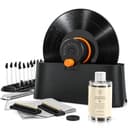
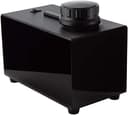
The cheapest real vacuum machine: you apply fluid and brush by hand, then a high-performance vacuum motor pulls the fluid — and the dirt suspended in it — back out of the groove. That extraction step is what a bath washer cannot do, and it is the difference between moving dirt around and removing it.

Best overall (vacuum)
$349.95 · View on Amazon

Price as of August 31, 2026. #ad How we’re funded

2
Spin-Clean Record Washer Kit

Spin-Clean Record Washer Kit

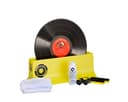
The long-standing default for deep-cleaning records without electricity: a basin, wedge-fit brushes that clean both sides at once, snap-in rollers for different record sizes and an alcohol-free concentrate you dilute in the bath. Nothing about it is clever, and that is exactly why it keeps working.

Best manual bath
$79.99 · View on Amazon

$99.9920% off

Price as of August 31, 2026. #ad How we’re funded

3
HumminGuru EZ Record Washer

HumminGuru EZ Record Washer

A manual bath washer with the two features that separate a good one from an improvised one: a watertight label-protecting clamp that presses straight down, and goat-hair brushes soft enough to work the groove without scouring it. Handles 7, 10 and 12 inch records and drains without a mess.

Best bath with a label clamp
$99.99 · View on Amazon

Price as of August 31, 2026. #ad How we’re funded

4
Pro-Ject VC-E2

Pro-Ject VC-E2

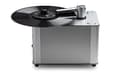
A compact vacuum machine from a maker whose turntables appear throughout this site, with a label-protecting clamp and a fast-drying vacuum cycle. It is the machine to buy if you want vacuum extraction without surrendering a whole shelf to it.

Best compact vacuum
$479.97 · View on Amazon

Price as of August 31, 2026. #ad How we’re funded

5
HumminGuru HG01 Ultrasonic

HumminGuru HG01 Ultrasonic

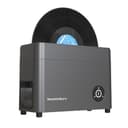
40 kHz ultrasonic cleaning with dual transducers, an automatic clean-and-dry cycle, and a thermal sensor watching water temperature so a cavitating bath never gets hot enough to threaten the record. It needs 350 ml of distilled water rather than the liters an industrial tank wants, which is what makes it a domestic product at all.

Best ultrasonic
$599.99 · View on Amazon

Price as of August 31, 2026. #ad How we’re funded

6
Vinyl Styl Deep Groove Record Washer

Vinyl Styl Deep Groove Record Washer

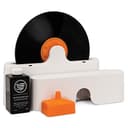
A self-contained bath system that washes 7, 10 and 12 inch records, with a label clamp that keeps the paper dry. It is the mid-point between wiping a record and buying a motorized machine, and the clamp is the reason it is safer than improvising in a sink.

Best for 7 and 10 inch records
$69.99 · View on Amazon

Price as of August 31, 2026. #ad How we’re funded

The picks in full

#1Best overall (vacuum)

Record Doctor VI

The cheapest real vacuum machine: you apply fluid and brush by hand, then a high-performance vacuum motor pulls the fluid — and the dirt suspended in it — back out of the groove. That extraction step is what a bath washer cannot do, and it is the difference between moving dirt around and removing it.

Strengths

  • Powerful vacuum motor extracts fluid and suspended dirt out of the groove
  • Roughly half the price of the established vacuum machines
  • Records come off dry and ready to play immediately

Trade-offs

  • You still apply the fluid and brush by hand — only the extraction is powered
  • Vacuum motors are loud; this is not a quiet appliance
TypeVacuum record cleaning machine
CleaningManual fluid application, powered extraction
DryingVacuum — plays immediately after
PowerMains

Note. The jump from a bath washer to vacuum extraction is bigger than the jump from a brush to a bath. If your collection is largely secondhand, this is where the money starts being worth it.

Specifications read from the manufacturer / product listing, on August 12, 2026. “Not published” means the maker does not state that figure.

#2Best manual bath

Spin-Clean Record Washer Kit

The long-standing default for deep-cleaning records without electricity: a basin, wedge-fit brushes that clean both sides at once, snap-in rollers for different record sizes and an alcohol-free concentrate you dilute in the bath. Nothing about it is clever, and that is exactly why it keeps working.

Strengths

  • Cleans both sides simultaneously between wedge-fit brushes
  • Alcohol-free concentrate — safe for the vinyl and for most labels
  • No power, no motor, nothing to fail; brushes and rollers are replaceable

Trade-offs

  • The bath needs changing regularly or you are washing records in dirt
  • Slow if you have hundreds of records to work through
TypeManual bath washer
Record sizes33, 45 and 78 RPM records
SolutionAlcohol-free concentrate (4 oz), diluted in the basin
IncludesBasin with lid, brush pair, roller pair, two drying cloths
PowerNone required

Note. Change the bath water more often than feels necessary. The failure mode of every manual washer is the same: it stops cleaning and starts redistributing.

Specifications read from the manufacturer / product listing, on August 11, 2026. “Not published” means the maker does not state that figure.

#3Best bath with a label clamp

HumminGuru EZ Record Washer

A manual bath washer with the two features that separate a good one from an improvised one: a watertight label-protecting clamp that presses straight down, and goat-hair brushes soft enough to work the groove without scouring it. Handles 7, 10 and 12 inch records and drains without a mess.

Strengths

  • Watertight label clamp — wet-clean without ruining paper labels
  • Ultra-soft goat-hair brushes rather than stiff synthetic bristles
  • Handles 7, 10 and 12 inch records, with a drying rack and dual drain outlets

Trade-offs

  • Manual — you turn the handle, one record at a time
  • No vacuum or ultrasonic action, so heavily contaminated records still need repeat passes
TypeManual bath washer
Record sizes7", 10" and 12" (45 RPM adapter included)
Label protectionWatertight clamp
BrushesGoat hair
PowerNone required

Note. The clamp is what makes this safer than a sink. Wet-cleaning a record without sealing the label is the fastest way to destroy an original pressing's value.

Specifications read from the manufacturer / product listing, on August 12, 2026. “Not published” means the maker does not state that figure.

#4Best compact vacuum

Pro-Ject VC-E2

A compact vacuum machine from a maker whose turntables appear throughout this site, with a label-protecting clamp and a fast-drying vacuum cycle. It is the machine to buy if you want vacuum extraction without surrendering a whole shelf to it.

Strengths

  • Compact footprint — designed for rooms where a full-size machine won't fit
  • Label-protecting clamp keeps paper labels dry through the wash
  • Fast vacuum drying means records are playable straight off the platter

Trade-offs

  • Expensive relative to the manual washers, and stock moves quickly
  • Small platter area means working through a large collection takes time
TypeVacuum record cleaning machine
Label protectionClamp included
DryingVacuum
FootprintCompact
PowerMains

Note. Pro-Ject also sells felt strips and fluid as consumables for this machine. Factor those in — a cleaning machine, like a turntable, has running costs.

Specifications read from the manufacturer / product listing, on August 12, 2026. “Not published” means the maker does not state that figure.

#5Best ultrasonic

HumminGuru HG01 Ultrasonic

40 kHz ultrasonic cleaning with dual transducers, an automatic clean-and-dry cycle, and a thermal sensor watching water temperature so a cavitating bath never gets hot enough to threaten the record. It needs 350 ml of distilled water rather than the liters an industrial tank wants, which is what makes it a domestic product at all.

Strengths

  • 40 kHz ultrasonic cavitation reaches into the groove in a way no brush can
  • Fully automatic clean and dry cycle — load it and walk away
  • Thermal monitoring guards against the water heating enough to warp a record

Trade-offs

  • By far the most expensive item on this site — it costs more than most of our turntables
  • Needs distilled water and periodic filter maintenance, and cleans one record per cycle
TypeUltrasonic record cleaning machine
Frequency40 kHz, dual transducers
CycleAutomatic clean and dry
Water350 ml distilled, reusable filtration
SafetyThermal sensor monitors water temperature
Record size12"

Note. Ultrasonic cleaning is genuinely the most effective method available domestically, and it is also the point where cleaning equipment costs more than the deck playing the records. Buy it for a large or valuable collection, not for fifty albums.

Specifications read from the manufacturer / product listing, on August 12, 2026. “Not published” means the maker does not state that figure.

#6Best for 7 and 10 inch records

Vinyl Styl Deep Groove Record Washer

A self-contained bath system that washes 7, 10 and 12 inch records, with a label clamp that keeps the paper dry. It is the mid-point between wiping a record and buying a motorized machine, and the clamp is the reason it is safer than improvising in a sink.

Strengths

  • Label protection clamp lets you wet-wash without ruining the paper labels
  • Handles 7, 10 and 12 inch records, with a 45 RPM adapter included
  • Self-contained — nothing to source separately once it arrives

Trade-offs

  • Manual and slow compared with a motorized or ultrasonic machine
  • Takes up real shelf space next to the turntable
TypeManual bath washer
Record sizes7", 10" and 12"
Label protectionYes — clamp included
Includes45 RPM adapter

Note. A bath system is for records that are actually dirty — secondhand finds, inherited collections, anything stored in a garage. New records need a brush, not a bath.

Specifications read from the manufacturer / product listing, on August 11, 2026. “Not published” means the maker does not state that figure.

The three technologies, and what each physically does

Bath washers — agitation

You fill a basin with diluted fluid, stand the record between brushes, and rotate it by hand. The fluid loosens contamination and the brushes agitate it out of the groove. Both sides clean at once.

What it does well: removes loose dirt, dust and surface grime cheaply, with no power and nothing to break. The Spin-Clean has been doing this for decades.

What it cannot do:get the dirt back out of the room. Once contamination is suspended in the bath it stays there, so you are relying on the record coming out cleaner than the water it left. Change the fluid far more often than feels necessary — if the bath looks gray, it has stopped cleaning and started redistributing.

Vacuum machines — extraction

You apply fluid and brush by hand, then a vacuum motor pulls the fluid, and the dirt suspended in it, back out of the groove.

Why that matters: extraction is the step a bath cannot perform. The contamination leaves the record rather than settling back into it as the fluid dries. This is the single biggest jump in cleaning effectiveness available, bigger than the step from vacuum to ultrasonic.

The trade: vacuum motors are loud, and you still do the fluid and brushing by hand. The Record Doctor VI is the affordable entry; the Pro-Ject VC-E2 does the same job in a smaller footprint with a label clamp.

Ultrasonic — cavitation

The record is lowered into a bath of distilled water excited by transducers at 40 kHz. That creates microscopic cavitation bubbles which collapse against the groove walls, dislodging contamination from places no brush bristle can physically reach.

Why it is the most effective: a brush is a physical object with a finite width, and a groove is a few tens of microns across. Cavitation does not have that problem.

The trade: cost. The HumminGuru HG01 costs more than most turntables on this site. It also needs distilled water and periodic filter maintenance, and cleans one record per cycle.

Does your collection justify a machine?

An honest decision tree, because this is the most over-bought category in vinyl.

  • Mostly new records, brushed before each play? No machine. A brush and a fluid kit is the whole answer.
  • Under about 100 records, some secondhand? A manual bath washer. An afternoon of work, and the cost of one decent cartridge.
  • Several hundred records, many with unknown history? A vacuum machine. This is where extraction stops being a luxury and where hand-cleaning stops being reasonable.
  • A large or valuable collection, or you buy secondhand constantly? Ultrasonic. It is the most effective method available domestically and it is genuinely hands-off.

A useful sanity check: if the machine costs more than your turntable, cartridge and phono stage combined, consider whether upgrading those would improve your listening more. Frequently it would — see cartridges under $200.

Fluid, water and the things that damage records

The machine is only half of it. Three rules apply to all of them:

  1. Use distilled water. Tap water contains dissolved minerals that stay behind in the groove as the record dries. That is a new contaminant replacing the one you removed.
  2. Use a fluid designed for vinyl.Neat isopropyl alcohol is used in some homebrew mixes and is disputed — it can attack certain pressings and strip plasticizer over repeated use. Prepared fluids are alcohol-free or formulated to a known dilution. Library of Congress preservation guidance takes a similarly conservative line on solvents.
  3. Protect the label. Paper labels and water do not mix. Every machine here except the open bath designs includes a clamp; if yours does not, keep the fluid below the label.

What a machine cannot fix

Worth stating plainly before anyone spends several hundred dollars:

  • Scratches. Displaced vinyl. Nothing restores it. A click at the same point every rotation is physical damage.
  • Groove wear.A record played many times with a worn stylus has deformed groove walls. Cleaning removes dirt, not history — see how to replace a turntable stylus.
  • Warps. That is a storage problem — see how to store vinyl records.
  • Mistracking. If distortion appears on loud passages across many records, that is a setup fault, not dirt. See troubleshooting.

After cleaning: do not undo the work

A cleaned record returned to its original paper inner sleeve picks up fibers and static immediately. Replace plain paper inners with polyethylene or rice-paper-backed sleeves at the same time you clean — it costs very little and it is what makes the cleaning last. See record storage and sleeves.

And keep the stylus clean. A spotless record played with a dirty stylus sounds like a dirty record, and the tip picks up whatever the groove still holds.
Frequently asked questions

Are record cleaning machines worth it?

For a large collection with unknown history, yes — the improvement on neglected records is dramatic and doing them by hand is unreasonable work. For a collection of mostly new records that get brushed before each play, a machine is unnecessary.

What is the difference between vacuum and ultrasonic record cleaners?

A vacuum machine extracts the fluid, and the dirt suspended in it, back out of the groove after you brush it in. An ultrasonic machine uses 40 kHz cavitation in a bath to dislodge contamination from places a brush physically cannot reach. Ultrasonic is more effective and considerably more expensive.

Is a Spin-Clean as good as a vacuum machine?

No, and the difference is the extraction step. A bath washer suspends dirt in the fluid, and some of it settles back as the record dries. A vacuum machine removes the fluid and the dirt from the record entirely. The bath is still a large improvement over doing nothing.

Do I need distilled water for a record cleaning machine?

Yes. Tap water contains dissolved minerals that remain in the groove as the record dries, replacing the contamination you just removed with a new one. Distilled water evaporates cleanly and costs very little.

Can I use isopropyl alcohol to clean records?

It appears in some homebrew formulas and is disputed. Alcohol can attack certain pressings and, over repeated use, strip plasticizer from the vinyl. Prepared record fluids are alcohol-free or formulated to a known dilution, which is the safer default.

How often should I use a record cleaning machine?

Once per record, when it first enters your collection, and again only if it has been mishandled or stored badly. Machine cleaning is not a routine — the routine is a carbon-fiber brush before every play, which prevents most of the need for anything more.

Sources

Keep reading