Turntable Maintenance
Four parts wear out and one setting drifts. Everything else is left alone — here is the schedule, the costs, and the jobs people do that they shouldn't.
How this is funded: we earn a commission if you buy through our links, at no extra cost to you. It never changes which product we recommend, and we’ll tell you plainly when to skip one. Full disclosure.
A turntable is one of the few pieces of audio equipment with genuine consumables, and one of the few where neglecting them damages something other than the equipment itself. A worn stylus does not just sound worse — it permanently abrades your records.
The good news is that the list is short. Four parts wear, one setting drifts, and everything else is best left alone.
Every play: two brushes, seven seconds
The record. A carbon-fiber brush held against the spinning record for two or three rotations, then swept to the outer edge. This removes loose dust before the stylus presses it into the groove, and the conductive bristles drain the static that attracts more. It is the single highest-value habit in vinyl.
The stylus. Every few plays, a dedicated stylus brush from back to front— the direction the stylus travels through the groove. Never side to side, which is how cantilevers get bent.
A dirty stylus sounds almost exactly like a worn one: dull highs, hazy detail, harsh sibilance. Cleaning it first has saved a great many people the price of a replacement.
Every six months: check the tracking force
Counterweights drift. A deck that gets moved, knocked or dusted around can end up tracking noticeably lighter or heavier than you set it, and both extremes damage records — too light lets the stylus skitter and hammer the groove walls, too heavy adds wear and dulls the treble.
Re-balance the arm, set the force to the cartridge’s published figure, and match anti-skate. Ten minutes, twice a year, and always after changing a cartridge or stylus. The procedure is in how to set up a cartridge.
Fixed-arm automatic decks have nothing to check here — the factory set it and it cannot move.
Every few hundred hours: the stylus
The most important item on this page. Manufacturers who publish figures quote several hundred to around a thousand playing hours depending on tip profile — Audio-Technica states approximately 300 to 500 hours for the conical ATN3600LC, which is a rare piece of specificity in this category.
Those are playing hours, not calendar months. An hour a day is roughly a year to eighteen months on a conical tip. Watch for dulling highs, hardened sibilance, distortion on inner grooves, and more surface noise on records you know are clean.
Replacing it is a two-minute job needing no tools and no realignment on most cartridges — see how to replace a turntable stylus. And since you are replacing it anyway, a better stylus costs only the difference.
Every three to five years: the belt
Belt-drive decks only. Belts stretch, harden and glaze with age, and the symptom is speed: the deck runs slightly slow, or the pitch wanders in a way that is most obvious on sustained piano notes.
Replacing one takes a few minutes — lift the platter, remove the old belt, loop the new one around the motor pulley and the platter’s inner rim. While it is off, wipe the pulley and the rim with isopropyl alcohol on a lint-free cloth. Accumulated residue there causes slipping that people often mistake for a failing motor.
Direct-drive decks have no belt and this maintenance item simply does not exist, which is one of their genuine practical advantages — see belt drive vs direct drive.
Occasionally: dust and the mat
Dust the plinth with a dry microfiber cloth. Take the mat off and clean it separately — felt and rubber mats collect dust and then transfer it straight onto the next record, which quietly undoes the brushing habit.
Keep household cleaners away from the cartridge entirely, and off acrylic platters, where solvents can craze the surface. Water on a dry cloth is enough for almost everything.
The dust cover: closed when not in use. During play, fully open or fully closed — a half-open cover can resonate, and if your deck sits near the speakers, playing closed can reduce acoustic feedback.
What not to do
- Do not oil the main bearing unless your manufacturer documents it. Modern bearings are generally sealed or lubricated for life, and adding the wrong oil to a bearing not designed for it causes problems rather than solving them.
- Do not clean the stylus with your finger, or with alcohol unless it is a fluid sold for the purpose. Finger oil attracts dust, and the wrong solvent can dissolve the adhesive holding the diamond.
- Do not adjust anything that is working. Azimuth, VTA and bearing preload do not drift on their own. Adjusting them without a measurable problem to solve is how a well-set-up deck becomes a badly set-up one.
- Do not use household cleaners on records — see record cleaning kits for what is actually safe.
The running cost, summarized
Over five years of regular listening, a typical belt-drive deck needs roughly two or three styli and one or two belts, plus a brush that lasts indefinitely. That is the whole ownership cost, and it is modest against almost anything else you might buy for the money.
It is also the answer to a question people ask about older decks: a turntable from the 1970s in reasonable condition usually needs a stylus, a belt and a careful setup, and then works. There is no chipset to age out and no software to stop being supported — which is part of why the format has lasted, as why are turntables so expensive? explains.
Maintenance keeps a deck at its best; it does not make it better than it was. When you are ready to spend rather than maintain, our upgrade order guide ranks the five purchases by what each one measurably changes, cheapest first.
The whole maintenance kit
Two brushes and a replacement stylus cover essentially everything on this page. Prices are live and dated.
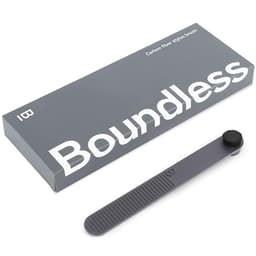
Boundless Audio Carbon Fiber Stylus Brush
The every-few-plays stylus habit
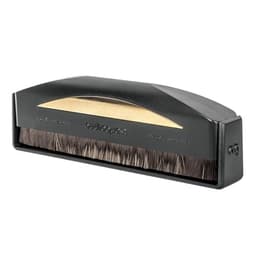
AudioQuest Carbon Fiber Record Brush
The everyday before-each-play dust brush
Price as of October 14, 2026. #ad How we’re funded
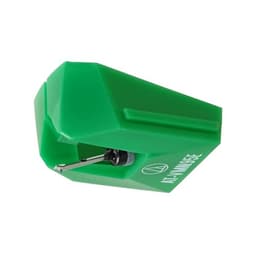
Audio-Technica AT-VMN95E Replacement Stylus
Replacing a worn stylus without touching the alignment
Frequently asked questions
How do I maintain a turntable?
Brush each record before playing, brush the stylus every few plays, check tracking force and anti-skate every six months, replace the stylus when it wears, and replace the belt every three to five years on a belt-drive deck. Nothing else needs regular attention.
How often should I replace a turntable belt?
Every three to five years with regular use, or sooner if the deck runs slow, the speed wanders, or the belt looks glazed or stretched. Belts are inexpensive consumables, and a tired one is the most common cause of a belt-drive deck playing at the wrong speed.
Do turntables need to be oiled or lubricated?
Generally no. Main bearings on modern decks are sealed or pre-lubricated for life, and adding oil to a bearing not designed for it can do more harm than good. Unless your manufacturer specifically documents a lubrication interval, leave it alone.
How do I clean a turntable platter and plinth?
Dust the plinth with a dry microfiber cloth. Remove a rubber or felt mat and clean it separately — mats collect dust and shed it onto records. Do not use household cleaners near the cartridge or on an acrylic platter, where solvents can craze the surface.
Should I leave the dust cover open or closed?
Closed when the deck is not in use, to keep dust off the platter and stylus. During play, either fully open or fully closed — a half-open cover can resonate. If your deck sits near speakers, playing with the cover closed can also reduce acoustic feedback into the cartridge.
How do I know if my turntable needs servicing?
Persistent speed problems after a belt change, audible rumble through the speakers with nothing playing, or a tonearm that will not balance or moves with visible friction. Those point at the motor or bearings, which are the only parts a home user should not attempt.
Sources
- Elusive Disc — Turntable setup guide: tracking force & anti-skate — Step-by-step on balancing the tonearm, setting tracking force and anti-skate (accessed July 24, 2026)
- Audio-Technica — AT-VMN95E replacement stylus — Manufacturer page for the elliptical VM95-series replacement stylus and its fitment list (accessed August 11, 2026)
- Library of Congress — Caring for and cleaning grooved discs — Preservation guidance on cleaning and storing records to prevent damage (accessed July 24, 2026)
- Crutchfield — How to choose the right turntable — Buying-guide reference on drive type, cartridges, preamps and setup (accessed July 24, 2026)
Keep reading
Records to Buy
Maintaining the deck is half of it — this is the other half.
Browse recordsBest Turntable Mats
When the mat is past cleaning: cork, acrylic and rubber, on published dimensions.
See the picksHow Often to Replace a Stylus
The one maintenance item with a real deadline attached.
Read the guideHow to Replace a Turntable Stylus
The most important job on this page, step by step.
Read the guideTurntable Troubleshooting
When maintenance is not the answer and something is actually wrong.
Fix itBest Turntable Needles & Replacement Styli
The one consumable that matters most, matched to your cartridge.
See the picksHow to Clean Vinyl Records
Clean records are what make a stylus last.
Read the guideBest Record Cleaning Machines
When a brush is no longer enough, and whether your collection justifies a machine.
See the machines