How to Clean Vinyl Records
Dust is the enemy of quiet playback. Here's a safe routine — the brush before each side, a proper wet clean for dirty records, and the mistakes to avoid.
How this is funded: we earn a commission if you buy through our links, at no extra cost to you. It never changes which product we recommend, and we’ll tell you plainly when to skip one. Full disclosure.
Most of the pops, crackles and surface noise people blame on “old records” is just dust and grime sitting in the groove. Keeping records clean is the cheapest, most effective thing you can do for quiet playback — and it also protects your stylus and the records themselves, since a dirty groove grinds against the diamond every time you play it.
The routine has two parts: a quick dry brush before every play, and an occasional wet clean for records that are actually dirty. The golden rule throughout is to work with the grooves, never across them, and to keep anything abrasive (paper towels especially) away from the surface.
The cleaning routine, step by step
- Dust before every play with a carbon-fiber brush. With the record on the platter, hold a carbon-fiber anti-static brush lightly against the surface and let the platter spin two or three rotations, then lift the brush toward the edge to carry the dust off. This is the single most useful habit — it removes loose dust and drains static before the stylus reaches it.
- For a dirty record, do a wet clean. Apply a small amount of proper record cleaning fluid (never household cleaners or alcohol on their own) to a clean anti-static or microfiber cloth, or to the record. Wipe gently following the direction of the grooves — in circles, never across them — working around the record.
- Rinse and dry properly. If the fluid requires it, wipe with distilled water on a second clean cloth, then let the record air-dry on a rack or a clean lint-free cloth. Avoid paper towels, which shed lint and can micro-scratch. Never put a wet record back in its sleeve.
- Keep the stylus clean too. A dirty stylus undoes a clean record. Use a dedicated stylus brush gently from back to front (never side to side or front to back), or a stylus cleaning gel, every few plays. A clean stylus tracks better and lasts longer.
- Store records upright and sleeved. Return each record to a clean anti-static inner sleeve and store the collection vertically, never stacked flat, away from heat and direct sun. Good storage is what keeps a cleaned record clean.
The mistakes that actually damage records
Three things do more harm than good: wiping across the grooves (scratches them), using paper towels or tissues (they shed lint and micro-scratch), and using harsh household cleaners or neat alcohol (can degrade the vinyl or leave residue). Stick to a record brush, proper fluid, lint-free cloths and distilled water, and you’ll clean records safely for years.
Two jobs this routine does not cover
If dust reappears within seconds of brushing and the inner sleeve clings to the record, the problem is not dirt — it is an electrostatic charge, and cleaning treats the symptom rather than the cause. That has its own page: how to get rid of static on vinyl records, where the fix is conductive rather than absorbent.
And a clean record played with a dirty stylus still sounds like a dirty record, because the debris that gathers on the tip sits between the diamond and the groove. The companion routine is in how to clean a turntable stylus — it takes under two minutes and the direction you brush matters more than what you brush with.
The tools we’d buy
You don’t need much: a carbon-fiber brush for the daily dust habit, and a cleaning kit for the deeper wet clean. Prices are live and dated.
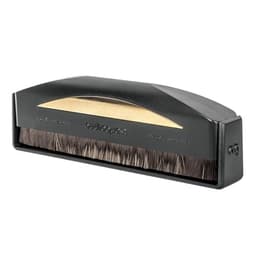
AudioQuest Carbon Fiber Record Brush
The everyday before-each-play dust brush
Price as of October 21, 2026. #ad How we’re funded
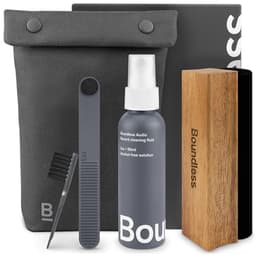
Boundless Audio Record Cleaning Kit
A complete starter record-cleaning routine
Frequently asked questions
What's the best way to clean a vinyl record?
For routine dust, a carbon-fiber anti-static brush before each play. For dirty records, a gentle wet clean with proper record cleaning fluid wiped along the grooves, then a distilled-water wipe and air-dry. Always clean in the direction of the grooves, never across them.
Can I clean records with household products?
Avoid them. Alcohol-heavy or detergent cleaners can strip the vinyl or leave residue, and paper towels shed lint that scratches. Use fluid made for records and lint-free or microfiber cloths. Distilled (not tap) water avoids leaving mineral deposits.
How often should I clean my records?
Brush every record before you play it — it takes seconds and prevents most noise. Do a full wet clean when a record is visibly dirty, newly bought secondhand, or sounds crackly despite brushing. New records benefit from one clean to remove manufacturing residue.
Do I need a record cleaning machine?
Not for most collections. A brush and a good manual cleaning kit handle everyday cleaning well. A vacuum or ultrasonic machine is worth it only for large collections or heavily soiled records where deep cleaning is a frequent job.
How do I clean the stylus?
Use a dedicated stylus brush gently from back to front (never front-to-back or side-to-side, which can bend the cantilever), or a stylus cleaning gel, every few plays. A clean stylus tracks more accurately and lasts longer.
Sources
- Library of Congress — Caring for and cleaning grooved discs — Preservation guidance on cleaning and storing records to prevent damage (accessed July 24, 2026)
Keep reading
Colored Vinyl vs Black: Does It Sound Worse?
Why black vinyl sheds static — and colored compounds do not.
Read the guideBest Record Cleaning Solutions
Which fluid to use, and when alcohol-free matters.
See the picksCartridges & Care
More on keeping the stylus healthy and when to replace it.
Visit the hubHow to Set Up a Turntable
A clean record on a well-set-up deck is the whole game.
Read the setup guideBest Turntables
A deck with a proper stylus keeps records cleaner for longer.
See the turntablesBest Record Cleaning Kits
Brushes, fluid systems and bath washers, matched to how dirty your records are.
See the kitsHow to Store Vinyl Records
What keeps a cleaned record clean — and flat — for the next thirty years.
Read the guideBest Record Cleaning Machines
For a secondhand collection this routine cannot rescue by hand.
See the machines