Hi-Res Audio vs Hi-Fi
They are not two grades of the same thing. One describes a file's numbers; the other describes whether a system tells you the truth. Conflating them is how people buy the wrong upgrade.
How this is funded: we earn a commission if you buy through our links, at no extra cost to you. It never changes which product we recommend, and we’ll tell you plainly when to skip one. Full disclosure.
These two terms get used as if they were rungs on the same ladder — hi-fi, then hi-res, then presumably something better still. They are not. They describe entirely different kinds of thing, and the confusion has a practical cost: people buy a hi-res subscription when the same money on a cartridge would have changed what they hear.
Hi-fi is a goal. Hi-res is a specification.
Hi-fi is short for high fidelity, and fidelity means faithfulness. It is a claim about the whole chain— source, amplification, speakers, room — and about a relationship: how close what comes out is to what was recorded. It is not a price point and not a sound signature. A modest, accurate system is hi-fi. An expensive, flattering one is arguably not. We take that apart properly in what is hi-fi.
Hi-res audiois a specification for a digital file: a sample rate and bit depth above CD standard, which is 16-bit / 44.1 kHz. Typically that means 24-bit at 96 or 192 kHz. It is a property of a file, measurable by reading its header, and it says nothing whatever about the equipment playing it.
So the two are not comparable, and a hi-res file played through a laptop speaker is not hi-fi by any definition, while a well-mastered CD through a good system very much is.
What the numbers in a hi-res file mean
Worth understanding, because it is the basis of both the marketing claim and the skepticism about it.
Sample rateis how many times per second the waveform is measured. Sampling theory says a given rate can perfectly reconstruct any frequency below half of it, so 44.1 kHz covers everything up to about 22 kHz — above the top of human hearing, which is generously 20 kHz and in practice lower for most adults. Higher rates capture ultrasonic content, which is real but which you cannot hear.
Bit depthis how finely each measurement is graded, and it sets the dynamic range. 16-bit gives about 96 dB, which comfortably exceeds the dynamic range of virtually all recorded music and most listening rooms. 24-bit gives far more, and its genuine value is in production: headroom while recording and mixing, so a level set conservatively still has no audible noise.
That production point is not a marketing claim — it is precisely why we recommend 24-bit in how to record vinyl to a computer. The headroom is useful when you are capturing. It is not obviously useful when you are listening to a finished master.
The thing that actually differs: the master
Here is the part that resolves most arguments about this. When someone reports that a hi-res version of an album sounds better than the CD, or that the vinyl sounds better than the stream, they are usually right — and usually not for the reason they think.
A released album is not one recording. It is a set of masters, each prepared for a format and often at different times by different engineers. The vinyl master, the CD master, the streaming master and the hi-res reissue can all differ in equalization, compression and dynamic range, sometimes drastically.
The loudness waris the sharpest example. Decades of mastering pushed digital releases louder by compressing their dynamic range towards the digital ceiling. Vinyl physically resists this — a heavily clipped, bass-heavy master is difficult or impossible to cut into a groove that a stylus can track — so vinyl releases are sometimes cut from a less-compressed master.
Which means a record can genuinely sound more dynamic and more open than the digital release of the same album, despite being a technically inferior medium in every measurable respect. That is a mastering difference wearing a format costume.
Vinyl measured honestly
This is a vinyl site, so it would be easy to fudge this. We will not.
On measurements, a record loses to CD-standard digital on essentially every axis: surface noise, channel separation, wow and flutter, dynamic range, distortion, inner-groove tracking, and the simple fact that playing it wears it. None of that is contested and none of it is fixable, because it is inherent to dragging a diamond through a plastic groove.
What vinyl offers is a different set of things: the master it carries is sometimes the better one, the format imposes an album-length attention span, the object exists, and the ritual is part of the experience. Those are real reasons and none of them is a measurement. We make the same argument at more length in are turntables worth it, and we set records directly against the disc format — running costs, what wears out, and whether the vinyl was even cut from analog tape — in vinyl vs CD.
What this means for what you buy
Three practical conclusions.
Do not buy hi-res to improve a system with a weak link.If your speakers, cartridge or room are the limiting factor — and for most systems one of them is — a higher sample rate at the source changes nothing you can hear. The allocation logic in how to build a hi-fi system applies.
Do chase the better master. If a particular album has a well-regarded remaster, seeking it out is worth far more than the format it comes in. This is also the honest reason to buy a specific pressing rather than any pressing.
Do use 24-bit when you digitize. The one place hi-res specifications matter to a vinyl listener is capture, and there the reason is headroom rather than resolution.
A note on the marketing
“Hi-res” is a certifiable, printable specification, which makes it excellent marketing: a logo on a box, a badge in an app, a number that is unambiguously bigger than another number. “Hi-fi” cannot be certified that way, because it describes a relationship between a recording and what you hear in your room.
That asymmetry is why the two get conflated, and it is worth keeping straight. The badge tells you what the file contains. It tells you nothing about whether your system can show it to you — and on this site the honest position is that the cartridge, the phono stage and the speakers decide that, in roughly that order of neglect.
Where the same money does more
If you are weighing a hi-res subscription against a component, these are the two places the same spend reliably changes what you hear.
Where the money does most good
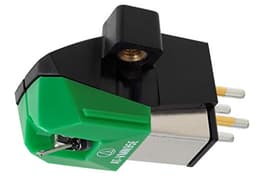
Audio-Technica AT-VM95E
The first cartridge upgrade for most decks
Where the money does second-most good
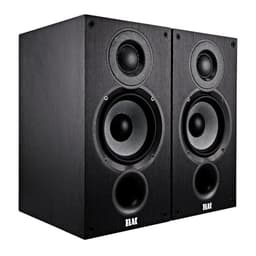
ELAC Debut 2.0 B5.2
The best-balanced passive pair around $250
Frequently asked questions
What is the difference between hi-res audio and hi-fi?
Hi-res audio is a specification for a digital file — a sample rate and bit depth above CD standard, typically 24-bit and 96 kHz or higher. Hi-fi is a goal: reproduction faithful to the original recording, achieved by the whole chain from source to speakers. A hi-res file played on poor speakers is not hi-fi; a well-mastered CD on a good system is.
Is hi-res audio better than vinyl?
As a measurement, a hi-res digital file has lower noise, no wow and flutter, no surface noise and greater dynamic range than any record. What decides which sounds better in practice is the mastering — the version of the recording each format carries. A well-mastered record routinely beats a badly-mastered hi-res file of the same album, and the reverse is equally true.
Can you hear the difference between hi-res and CD quality?
Controlled listening tests have repeatedly struggled to show a reliable difference between properly-mastered CD-standard audio and higher-resolution versions of the same master. Where people do hear a difference, it is very often because the hi-res release was mastered differently — usually with less compression — rather than because of the sample rate.
Does hi-res audio matter for vinyl?
Only when you are digitizing records. For playback it is irrelevant — a record is analog and never becomes a file. When you do record vinyl to a computer, 24-bit is worth using for the recording headroom, and sample rates above 48 kHz add file size rather than audible detail from a record source.
Do I need a hi-res streaming subscription?
Only if the rest of your system can show you the difference and you have compared masters rather than formats. Where the same money would buy a better cartridge, a better phono stage or better speakers, those changes are far more likely to be audible.
What is the loudness war and why does it matter here?
It refers to the practice of mastering recordings ever louder by compressing their dynamic range. It matters because vinyl physically resists it — a heavily compressed, clipped master is difficult to cut into a groove — so the vinyl release of an album is sometimes mastered with more dynamic range than the digital one. That, not the format, is often what people are hearing when they say records sound better.
Sources
- Elliott Sound Products — Phono preamp / RIAA equalization — Technical reference on RIAA pre-emphasis and the inverse playback curve (accessed July 24, 2026)
- Crutchfield — Home speakers buying guide — Reference on choosing passive vs powered speakers, room size and amplifier pairing (accessed August 11, 2026)
- Crutchfield — Phono cartridge guide — Reference on cartridge types, styli and mounting (accessed July 24, 2026)
Keep reading
Essential Indie Records on Vinyl
Where the master, not the medium, decides what you hear.
See the picksWhat Is Hi-Fi?
The term itself, defined properly before anyone sells you it.
Read the guideAre Turntables Worth It?
The honest case for vinyl in a streaming world.
Read the guideHow to Record Vinyl to a Computer
The one place sample rate and bit depth genuinely matter to a record.
Read the guideHow to Build a Hi-Fi System
Where the money actually changes what you hear.
Read the guide