How to Build a Hi-Fi System Around a Turntable
The hard part is not choosing components. It is deciding what fraction of the budget each one deserves — and the conventional answer is wrong for vinyl.
How this is funded: we earn a commission if you buy through our links, at no extra cost to you. It never changes which product we recommend, and we’ll tell you plainly when to skip one. Full disclosure.
“Hi-fi system” sounds like a product category and is really a set of four jobs that have to happen in order. Once you can see the jobs, the shopping list stops being a mystery — and, more usefully, so does the question of what to spend on each.
This page covers the four functions, an allocation that works for vinyl specifically, and three worked systems at different budgets.
The four functions
- Source. The turntable and cartridge, converting groove modulation into a tiny electrical signal. This is the only irreversible step in the chain: information not retrieved here cannot be recovered downstream.
- Phono stage.Roughly 100× amplification plus the inverse RIAA curve. See phono vs line for why this is not optional.
- Amplification. Volume control and enough power to move speaker drivers.
- Speakers. Electricity back into air movement, in a room that has its own opinions about the result.
How many boxes those four take is a separate decision, and it ranges from two (turntable with built-in preamp plus powered speakers) to four or more. The options are drawn out in the setup diagram.
Budget allocation for vinyl
The classic hi-fi advice was “source first” — put most of the money into the turntable. That came from an era when sources genuinely varied more than speakers did. It is no longer good advice as stated, but it is not wrong either, and the reason is worth understanding.
A workable split for a vinyl system, ignoring the room:
- Speakers: ~40%. The largest audible differences between two systems at the same price are almost always here. Speakers are also the component interacting with your room.
- Turntable and cartridge: ~30%. Weighted towards the cartridge within that. A good cartridge on a competent deck beats a mediocre cartridge on an excellent one.
- Amplification: ~20%. Enough clean power for your speakers, and then stop. Competent amplifiers at modest prices are genuinely good.
- Phono stage: ~10%. Small share, disproportionate effect if you get it badly wrong. A decent standalone stage costs little.
The source-first instinct survives inside the 30%: within the turntable budget, favor the cartridge and the tonearm over cosmetic features. The cartridge is the one component doing genuinely delicate mechanical work.
Rule: buy nothing you will have to throw away
Most people build a system over years rather than in one purchase, and the single biggest waste is buying something that cannot be part of the finished chain.
Two examples of the same principle:
- A turntable with a switchable preamp works today with powered speakers and still works after you add a separate stage, because you switch the internal one out. A deck with a permanently-wired preamp is capped forever. See turntables with a built-in preamp.
- A deck with an adjustable counterweightaccepts every cartridge you might want later. A fixed-arm automatic accepts none. That single feature is the difference between a platform and an appliance — automatic vs manual covers the trade.
Powered speakers are the interesting exception: they include their amplifier, so moving to separates later means replacing both. That is a real cost, and it is still usually the right way to start, because it gets you a complete working system for less than the separates route’s entry price.
Rule: your room is a component you already own
Everything above is about equipment, and the room does more than any single upgrade on the list. Four free changes:
- Get the speakers apart and toed in. Roughly an equilateral triangle with your listening position, tweeters near ear height.
- Move them away from the wall behind them. A rear-ported speaker hard against a wall gains bass, but bass that is boomy rather than tuneful.
- Keep the two sides symmetric. One speaker in a corner and one in open space produces two different sounds and no stereo image.
- Keep the turntable away from the speakers.Not the same shelf, not between them if you can avoid it. Speaker energy into the plinth becomes acoustic feedback — see troubleshooting.
What to buy first if you cannot buy it all
A sensible order when the budget arrives in installments:
- Turntable and powered speakers. A complete working system for the least money. Choose the deck with the switchable preamp and the adjustable arm so nothing here is a dead end.
- A better cartridge.Usually the highest-value single upgrade, assuming the arm supports it — cartridges under $200.
- A standalone phono stage. Switch the deck to PHONO and let a dedicated box do the work.
- Amplifier and passive speakers. The point at which the powered pair is retired, and the point at which the system becomes genuinely modular.
And if you are at step zero and unsure whether any of this is for you, start with vinyl setup for beginners rather than here — there is no obligation to build a system at all to enjoy records.
What “hi-fi” does and does not promise
The term means high fidelity: reproduction faithful to the recording. It is a standard of accuracy, not a price bracket and not a sound signature. A modest system that is accurate is hi-fi; an expensive one that flatters everything is not, strictly speaking.
That distinction is useful when shopping, because it tells you what to listen for — whether a system lets you hear what is on the record, rather than whether it sounds impressive on a showroom demo track. We work through the term itself in what is hi-fi, and the streaming-era confusion around it in hi-res audio vs hi-fi.
Three worked systems
Each follows the allocation rules above rather than being assembled by price alone. Every component is one we cover elsewhere on the site, so you can read the reasoning behind each choice.
Around $500 — the two-box system
Turntable with a switchable built-in preamp, straight into powered speakers. Two boxes, one cable, and every part of it is upgradeable later without being wasted.
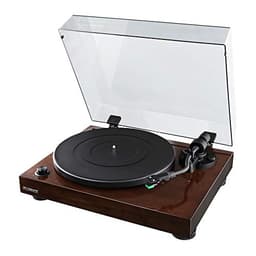
Fluance RT81
First serious turntable that you won't outgrow in a year
Price as of October 15, 2026. #ad How we’re funded
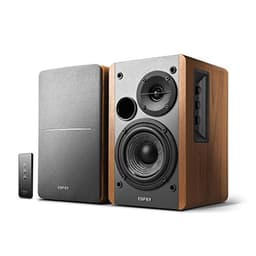
Edifier R1280T
The best-value complete-system speakers
Price as of October 15, 2026. #ad How we’re funded
Around $1,000 — the three-box system
A preamp-less deck with a better motor and an Ortofon cartridge, a real phono stage, and passive speakers — which means an amplifier too. Buy the amplifier from the pairings guide.
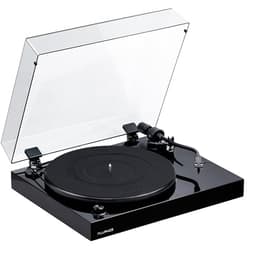
Fluance RT82
A step-up deck when you already have a phono preamp
Price as of October 15, 2026. #ad How we’re funded
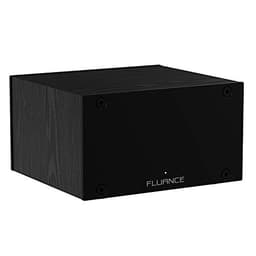
Fluance PA10
A solid mid-priced MM upgrade
Price as of October 15, 2026. #ad How we’re funded
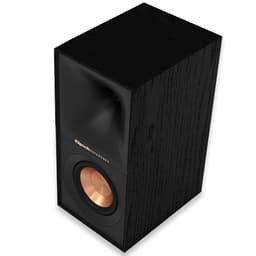
Klipsch R-40M
Getting real volume out of a small, inexpensive amplifier
Price as of October 15, 2026. #ad How we’re funded
Around $2,000 — the one you keep
Acrylic platter and a 2M Blue, a metal-chassis MM/MC phono stage with adjustable loading, and speakers with braced cabinets. Add an integrated amplifier and this is a system you stop upgrading.
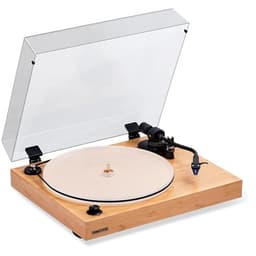
Fluance RT85
The most cartridge and platter per dollar under $600
Price as of October 15, 2026. #ad How we’re funded
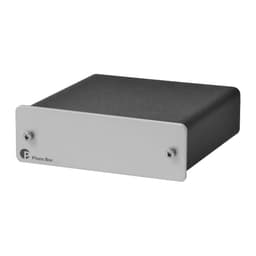
Pro-Ject Phono Box
A refined MM/MC upgrade for a separates system
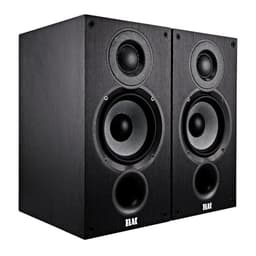
ELAC Debut 2.0 B5.2
The best-balanced passive pair around $250
Frequently asked questions
What do I need for a hi-fi system with a turntable?
Four functions: a source (the turntable and cartridge), a phono stage, amplification, and speakers. That can be as few as two physical boxes — a turntable with a built-in preamp plus powered speakers — or four, if you use separates. The functions never change; only how many boxes they are spread across.
How should I split my budget across a hi-fi system?
For a vinyl system, roughly 40% speakers, 30% turntable and cartridge, 20% amplification, 10% phono stage is a defensible starting point. The old advice to put most of the budget into the source is a hangover from an era when sources varied more than speakers do — but the cartridge is still the component doing the most delicate work per dollar.
What is the minimum for a proper hi-fi system?
A turntable with an adjustable counterweight and a magnetic cartridge, a phono stage somewhere in the chain, and a pair of real stereo speakers positioned apart from each other. Below that you have a record player, which is a fine thing but a different one.
Should I buy everything at once or build up over time?
Build up, but plan the whole chain first so nothing gets thrown away. A turntable with a switchable preamp works today with powered speakers and still works when you add a phono stage and an amplifier. A deck with a permanently-wired preamp does not.
Do I need an expensive amplifier?
Usually not. In a normal room, 20-50 W per channel of clean power drives most bookshelf speakers past comfortable listening levels, and speaker sensitivity affects perceived loudness far more than amplifier wattage does. Spend the money on the speakers and the cartridge.
What is the single best upgrade to an existing system?
Usually the cartridge, if your deck has an adjustable counterweight — it is the component physically reading the groove, and the difference between a conical and a good elliptical is larger than most electronics upgrades. If your speakers are the weak point instead, they are the exception.
Does the room matter more than the equipment?
It matters enormously and it is free to work on. Speaker placement, distance from walls, symmetry relative to your listening position and keeping the turntable away from the speakers all change what you hear more than a component upgrade of similar effort would.
Sources
- Crutchfield — Home speakers buying guide — Reference on choosing passive vs powered speakers, room size and amplifier pairing (accessed August 11, 2026)
- Crutchfield — Intro to home audio power amplifiers and preamps — On the preamp/power-amp split, integrated amplifiers and impedance stability (accessed August 11, 2026)
- Crutchfield — How to choose a phono preamp — On why a phono signal needs a preamp and never running two at once (accessed July 24, 2026)
- Crutchfield — Understanding speaker and amplifier wattage ratings — On RMS versus peak power, and matching an amplifier's output to a speaker's rating (accessed August 11, 2026)
Keep reading
The First 10 Records to Buy
The system is only worth building if there is something to play on it.
See the picksTurntable Setup Diagram
How the boxes you choose actually connect together.
Read the guideAmplifier and Speakers for a Turntable
The matching rules for the two halves that have to agree.
Read the guideWhat Is Hi-Fi?
What the term actually means before you spend money on it.
Read the guideVinyl Setup for Beginners
The start-here version if this is your first system.
Read the guideBest Speaker Stands for Bookshelf Speakers
Where the speakers end up standing once the boxes are chosen.
See the stands