How to Get Rid of Static on Vinyl Records
Static and dirt look like the same problem and are not. One is a charge you can drain and prevent; the other is a deposit you have to remove — and the products for each are different.
How this is funded: we earn a commission if you buy through our links, at no extra cost to you. It never changes which product we recommend, and we’ll tell you plainly when to skip one. Full disclosure.
The short answer: use a carbon fiber record brush before every side, and replace your plain inner sleeves with anti-static ones. The brush drains the charge while it lifts dust, because carbon fiber is conductive; the sleeves stop most of the charge being created in the first place, because that happens when the record slides out of the jacket. Everything else — fluids, humidity, handling — adjusts the margin. This page is deliberately separate from our cleaning guide, because static and dirt are different problems that happen to produce similar noises.
Static is a charge, not a deposit
Vinyl is an electrical insulator. When two insulating surfaces rub against each other — a record and a paper sleeve, a stylus and a groove — charge is transferred and then has nowhere to go, so it sits on the surface. The record becomes an electrostatic dust magnet, and you can watch it work: brush a charged record clean and the dust is back within seconds, pulled out of the air.
That is why the products that fix dirt do not fix static. A damp velvet pad removes what is on the record; it does nothing about the surface’s eagerness to attract more. And it is why the first thing to buy is conductive rather than absorbent: a carbon fiber brush gives the charge a path off the surface at the same time as it lifts the dust.
The cause is usually the sleeve
The single biggest generator of static in most collections is the inner sleeve. Every time a record is pulled out of a plain paper or thin plastic inner, the two surfaces rub along their whole area. Stock paper sleeves are doubly bad: they charge the record and they shed fibers into the groove.
Replacing them with anti-static inners — rice paper or poly-lined — is a one-time job per record and it attacks the cause rather than the symptom. It is also the cheapest meaningful upgrade in all of vinyl per record: our storage and sleeve picks rank the packs of 100, and how to store records covers the rest of the shelf. If you have ever heard a record described as “quieter after sleeving,” this is the mechanism.
The dry-air problem nobody sells you a product for
Static is strongly seasonal. In a heated room in midwinter, charge that would dissipate harmlessly in humid air persists, and the same record with the same brush behaves completely differently. We do not rank humidifiers — it is outside what this site covers — but it is dishonest to write a static page without saying that the room matters more than the accessory. If one room in the house is noticeably drier than the others, it is the wrong room for the collection.
The same logic applies to where the records live. Library of Congress preservation guidance for grooved discs is about stable, moderate conditions and upright storage; that advice happens to also be static advice, because the environment that keeps a record flat is the environment in which it holds less charge. We cover the storage half in storing vinyl vertically.
What about anti-static guns and zapping devices?
There is a whole category of handheld ionizing devices sold for exactly this problem, and some of them are well regarded. We do not rank any, for a reason we will state plainly rather than hide: we have no verified current listing for one in our product registry, and we do not invent picks to fill a gap on a page. If you want to try one, buy it on its own merits and keep the brush — a dry brush before each side is the habit, not the gadget.
Make sure it is static before you spend anything
Three different faults get called “noise,” and only one of them is static.
- Sharp irregular clicks, sleeve cling, dust that returns instantly. That is static. This page.
- Continuous crackle or rustle through a whole side. That is usually dirt in the groove, or wear. Start with our cleaning routine and, if the record is secondhand, our guide to spotting a bad pressing.
- Distortion or sibilance that gets worse toward the center of a side. That is a setup problem, not a cleanliness one: check tracking force and alignment with our tonearm guide and, if it persists, the age of the stylus.
Spending money on static when the problem is a worn stylus is the expensive version of this mistake, because the worn stylus keeps damaging records while you brush them.
The spec matrix
One product drains the charge, one stops it being generated, and one cleans the record while claiming a static benefit. They do different jobs and most collections want the first two.
| Specification | Carbon Fiber Record BrushAudioQuest | 100x Inner & 100x Outer SleevesHudson Hi-Fi | AT6012 Record Care KitAudio-Technica |
|---|---|---|---|
| What it is | Carbon fiber anti-static record brush | 100 anti-static inner sleeves plus 100 outer sleeves | Velvet brush with an internal fluid reservoir |
| How it addresses static | Conductive carbon fiber bristles lift dust and drain charge from the surface | Anti-static rice paper inners, so the record is not charged every time it leaves the jacket | The maker states the AT634 solution is formulated to reduce static charge |
| When you use it | Dry, before each side | Once per record, then permanently | Occasionally, as a wet clean |
| Also removes dirt | Dust only - not fingerprints or ground-in grime | No - it prevents rather than cleans | Yes - velvet pad plus fluid reaches into the groove |
| What is in the box | Not published | 100 inner + 100 outer, acid-free, cut for single, double and gatefold jackets | AT634 record care solution, brush pad, storage base, adhesive tape |
| Replaceable or refillable | Not published | Sold in packs | Velvet pads eventually need replacing |
Values are read from each maker’s listing or published specification, on the date shown under that product below. Not published means the maker does not state it. We have measured nothing — where a static claim appears here it is attributed to the maker who makes it. Prices are live on each button and dated. “Not published” means the figure is not stated in the sources cited below — it is never a value we estimated. Rows marked same are the ones where these decks do not differ.
The three things that address static, with live prices
If you buy one, buy the brush. If you buy two, buy the brush and the sleeves - between them they cover draining the charge and not creating it.
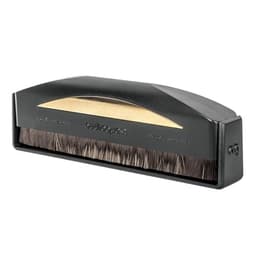
AudioQuest Carbon Fiber Record Brush
The everyday before-each-play dust brush
Price as of October 6, 2026. #ad How we’re funded
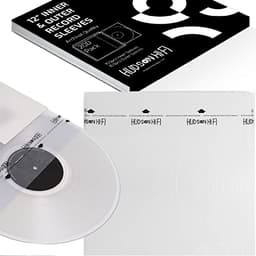
Hudson Hi-Fi 100x Inner & 100x Outer Sleeves
Sleeving 100 records in one go
Price as of October 6, 2026. #ad How we’re funded
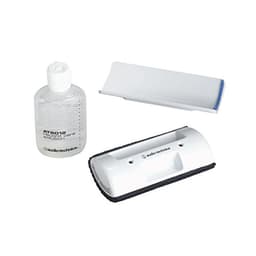
Audio-Technica AT6012 Record Care Kit
A no-fuss brush-and-fluid routine you'll actually keep up
Price as of October 6, 2026. #ad How we’re funded
Frequently asked questions
How do you get rid of static on vinyl records?
Drain the charge and stop generating it. A carbon fiber record brush is the draining half: its bristles are conductive, so it lifts dust and takes charge off the surface at the same time. Anti-static inner sleeves are the prevention half, because most of the charge is created at the moment the record is pulled out of a plain paper or plastic sleeve. Raising the humidity of the room helps more than any product.
What causes static on vinyl records?
A record is an electrical insulator, so friction leaves charge sitting on its surface with nowhere to go. The two big sources are sliding the record out of and into its inner sleeve, and the stylus tracking the groove. Dry air makes it dramatically worse, which is why static is a winter problem in heated rooms and often disappears in humid weather.
Does static damage records?
Not directly, but it recruits the thing that does. A charged surface attracts and holds airborne dust, and dust in the groove is what the stylus then grinds against - which is both the noise you hear and a real wear mechanism. Treating static is therefore a preservation measure, not just a noise one.
Do anti-static record brushes actually work?
The mechanism is straightforward and the makers are specific about it: carbon fiber bristles are conductive, so they provide a path for charge as well as reaching into the groove for dust. We have not measured the effect on any particular brush, so we rank the category on what is published rather than on a test. What is uncontroversial is that a dry brush before each side removes loose dust, and loose dust is most of what static is holding on the record.
Are anti-static inner sleeves worth it?
They are the highest-value change in this whole category, because they address the cause rather than the symptom. Stock paper inners both generate charge and shed fibers into the groove; anti-static rice paper or poly-lined sleeves do neither. It is a one-time job per record and the cost per album is small in packs of 100.
Will a humidifier help with record static?
It addresses the underlying condition, yes. Static is a dry-air phenomenon, so the same record and the same brush will behave differently in a heated winter room and a humid summer one. We do not rank humidifiers - it is outside what this site covers - but if one room in your home is noticeably drier than the rest, it is the wrong room for the collection.
Is crackling the same thing as static?
Usually not. Static tends to produce sharp, irregular clicks plus the obvious physical signs: the sleeve clings, and dust settles back onto the record within seconds of brushing it. A continuous crackle across a whole side is more often dirt in the groove or groove wear, and distortion that worsens toward the center of a side points at tracking force or alignment instead.
Can I use a dryer sheet or an anti-static spray on records?
Not on our advice. Anything that leaves a residue in the groove trades a temporary charge problem for a permanent contamination problem, and the groove is a hard place to get anything back out of. Use products sold for records, follow their instructions, and if you want a wet clean use a fluid whose maker states what it is formulated to do.
Sources
- Library of Congress — Caring for and cleaning grooved discs — Preservation guidance on cleaning and storing records to prevent damage (accessed July 24, 2026)
- Library of Congress — Care, handling and storage of audio-visual materials — Preservation guidance on vertical storage, sleeve materials and storage environment (accessed August 11, 2026)
- camelcamelcamel — AudioQuest carbon fiber record brush price history (B06XK9V3KB) — Amazon-sold: lowest ever $27.92 (July 10, 2023), highest ever $29.95 (August 4, 2023), average $29.32. Third-party new: $35.00 on August 17, 2026, average $33.34. A two-dollar band on the Amazon-sold history — the accessory that never goes on sale because it barely moves at all (accessed September 13, 2026)
- Crutchfield — Phono cartridge guide — Reference on cartridge types, styli and mounting (accessed July 24, 2026)
- Crutchfield — How to choose the right turntable — Buying-guide reference on drive type, cartridges, preamps and setup (accessed July 24, 2026)
Keep reading
How to Clean Vinyl Records
The routine for dirt, which is the other half of a quiet record.
Read the guideBest Record Cleaning Kits
Brushes, fluids and pads ranked, including the ones that claim a static benefit.
See the picksBest Record Storage and Sleeves
Anti-static inners are the prevention half of this page.
See the picksHow to Clean a Turntable Stylus
Whatever the record is holding, the stylus collects.
Read the guide