How to Clean a Turntable Stylus
A clean record played with a dirty stylus sounds like a dirty record. The routine takes under two minutes, and the single most important part of it is the direction you brush.
How this is funded: we earn a commission if you buy through our links, at no extra cost to you. It never changes which product we recommend, and we’ll tell you plainly when to skip one. Full disclosure.
The short answer: brush the stylus dry, from back to front, with a carbon fiber stylus brush, every few plays. That is the whole routine for most people, it takes seconds, and the direction matters more than the brush does — brushing sideways is how cantilevers get bent. Use a dedicated stylus fluid only for residue that dry brushing will not shift, never use a finger, and once the tip is past its published hours, stop cleaning it and replace it.
Why a dirty stylus sounds like a dirty record
The diamond that reads the groove is tiny, and the dust it picks up does not land neatly on the point. It gathers on the shank just above the tip, where it builds into a grey pad. That pad sits between the diamond and the groove wall, which produces exactly the symptoms people usually blame on the record: dull, veiled sound, a loss of detail at the top, and a general sense that the pressing is tired.
It also adds mass at the business end and changes how the tip sits in the groove, so the problem is not purely cosmetic. It is the reason for the line we repeat on every cleaning page on this site: a clean record played with a dirty stylus sounds like a dirty record. If you have just cleaned an album and it still sounds wrong, check the tip before you blame anything else.
The routine, in order
- Look before you touch. Lock the arm on its rest. Look at the stylus from the front and the side, with a phone camera zoomed in if you have nothing better. Visible fuzz on the shank means it is time; a tip that looks clean probably is.
- Dry brush, back to front. Put the brush under the stylus behind the cartridge and draw it forward, the way the stylus travels. Three or four light passes. No downward pressure beyond the weight of the brush.
- Fluid only when brushing fails. Residue needs a fluid made for styli. Apply it to the brush, not to the stylus, and follow the instructions on the bottle you bought rather than advice from a forum.
- Hands off. No fingers, no tissues, no cotton buds. All three leave something behind or snag on the assembly.
- Clean the records as well. Otherwise you are cleaning the symptom. One pass with an anti-static record brush before each side keeps the stylus clean for weeks rather than hours.
Which direction, and why it is the whole game
The cantilever is a thin tube, usually aluminum, with the diamond mounted at its far end. It is designed to move vertically and laterally within a tiny range while tracking a groove, and it is not designed to take a sideways shove. A brush dragged across the stylus from left to right does exactly that. The damage is often not dramatic enough to be obvious — a slightly bent cantilever misaligns the tip in the groove, which produces distortion on one channel and uneven wear.
So the rule is one sentence long: always move the brush in the direction the record moves beneath the stylus, from the back of the cartridge toward the front. If you are unsure which way that is, look at a record spinning: the groove passes under the stylus from the front of the deck toward the back, and the stylus is effectively travelling forwards through it.
Dirty, or worn out?
These produce similar symptoms and need opposite responses, so it is worth being able to tell them apart. Clean the stylus properly first. If the dullness lifts, it was dirt. If the record still sounds hard, sibilant or lifeless, the tip is probably worn, and no further cleaning will help.
Published life figures are the only non-guesswork input available here, and they vary by profile: Audio-Technica states approximately 300 to 500 hours for the conical stylus fitted to its entry turntables and approximately 300 hours for the elliptical upgrade to that same body, while one retailer reference puts a typical elliptical or Shibata tip at 800 to 1,000 hours. Our stylus replacement guide goes through how to convert that into a date you can actually act on, and cartridge vs stylus explains why on most decks the fix is a snap-on part rather than a new cartridge.
What this does not fix
A clean stylus tracking at the wrong force still damages records, and it still sounds wrong. If you have never confirmed the tracking force on your deck with anything other than the dial on the counterweight, that is a bigger win than any cleaning routine — our tonearm balancing guide covers the method and a tracking force gauge is how you verify it. Cleaning is maintenance; alignment and force are setup, and setup comes first.
The spec matrix
A brush for the weekly job, a kit for the occasional wet clean of both record and stylus, and the part you buy when cleaning has stopped being the answer.
| Specification | Carbon Fiber Stylus BrushBoundless Audio | G2 Record Cleaning KitGrooveWasher | AT-VMN95E Replacement StylusAudio-Technica |
|---|---|---|---|
| What it is | Carbon fiber and wool stylus brush on a long handle | Record and stylus cleaning kit - fluid, pad, stylus brush and stylus fluid | Replacement stylus for the AT-VM95 cartridge family |
| Method | Dry brushing, back to front, every few plays | Manual wet clean, with a dedicated stylus fluid in the box | Snap-on replacement - no tools, no realignment |
| Includes a stylus fluid | No - dry brushing only | Yes - SC1 stylus fluid and a curved-handle stylus brush | Not published |
| Also cleans records | No - stylus only | Yes - G2 fluid (4 oz) and a large microfiber pad | No |
| Reduces static | Yes - conductive carbon fiber bristles | Not published | Not published |
| Fits | Any stylus | Any record and any stylus | Any AT-VM95-series cartridge body; AT-LP120X series, AT-LP3XBT, AT-LPW30/40/50, AT-LP5X, AT-LP8X |
| Published stylus profile | Not published | Not published | 0.3 x 0.7 mil elliptical, bonded shank |
Values are read from each maker’s listing or published specification, on the date shown under that product below. Not published means the maker does not state it. Prices are live on each button and dated. “Not published” means the figure is not stated in the sources cited below — it is never a value we estimated. Rows marked same are the ones where these decks do not differ.
What the job needs, with live prices
The brush is the one nobody should be without. The kit matters if you also clean records by hand. The replacement stylus is the honest end of this page - no amount of cleaning restores a worn tip.
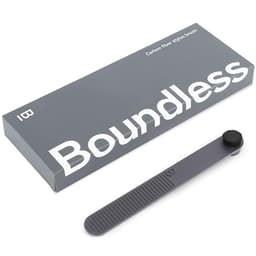
Boundless Audio Carbon Fiber Stylus Brush
The every-few-plays stylus habit
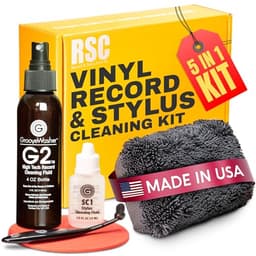
GrooveWasher G2 Record Cleaning Kit
The complete wet-clean routine, records and stylus, in one box
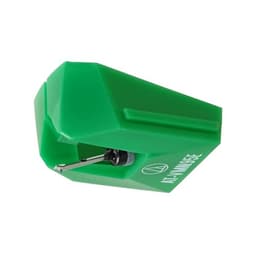
Audio-Technica AT-VMN95E Replacement Stylus
Replacing a worn stylus without touching the alignment
Price as of October 6, 2026. #ad How we’re funded
Frequently asked questions
How do you clean a turntable stylus?
Lock the tonearm on its rest, place a carbon fiber stylus brush under the stylus behind the cartridge, and draw it forward in the direction the stylus travels - three or four light passes. Never brush side to side, which can bend the cantilever. For residue that dry brushing will not shift, apply a fluid made for styli to the brush rather than flooding it onto the tip, and follow that fluid's own instructions.
Which direction should you brush a stylus?
Back to front: from behind the cartridge toward the front, which is the same direction the stylus moves relative to the record. Side-to-side brushing applies lateral force to the cantilever, which is the thin tube holding the diamond, and that is the single most common way people damage a cartridge while trying to look after it.
How often should you clean a turntable stylus?
A quick dry brush every few plays is the normal routine, and it only takes seconds. How often you need more than that depends almost entirely on how clean your records are: a stylus collects whatever is in the groove, so a collection that gets brushed before each side keeps its stylus clean, and a dusty collection needs the tip checked constantly.
Can you use alcohol to clean a stylus?
Use the fluid the cartridge or fluid maker sells for the job rather than improvising a solvent. Kits that include stylus cleaning supply a specific stylus fluid separate from their record fluid, which tells you the two are not interchangeable, and following the instructions on the bottle you bought is the only advice here that cannot go wrong.
Can I clean a stylus with my finger?
No. Skin oil is the kind of residue that then attracts and holds dust, so it makes the problem worse rather than better, and the sideways force a finger applies is more than enough to bend a cantilever. The same objection applies to tissues and cotton buds, whose fibers snag on the assembly.
Why does my record sound muffled after cleaning the record?
Because the stylus is probably the dirty part. Dust gathers on the shank just above the diamond and acts as a filter between the tip and the groove, which reads as dull, veiled sound on a record you have just cleaned. Brush the stylus and listen again before concluding anything about the record or the cartridge.
How do I know if my stylus is dirty or worn out?
Clean it first, then judge. If the sound is still dull, hard or sibilant after a proper clean, the tip is likely worn. Use published life figures as the yardstick rather than guesswork: Audio-Technica states approximately 300 to 500 hours for the conical stylus fitted to its entry turntables, and a retailer reference puts a typical elliptical or Shibata stylus at 800 to 1,000 hours. A worn tip damages records, so this is not a deadline to run past.
Do stylus cleaning gels work?
We have not tested any, so we will not rank them. What we can say about the category is structural: a gel works by lifting debris when the stylus is lowered into it, which avoids lateral force entirely, and the usual objection raised against them is residue. If you use one, follow its own instructions, and keep a dry brush for the routine passes between plays.
Sources
- Library of Congress — Caring for and cleaning grooved discs — Preservation guidance on cleaning and storing records to prevent damage (accessed July 24, 2026)
- Elusive Disc — Elliptical or Shibata stylus, and when to replace one — Retailer reference: "Replace the stylus every 800-1000 hours (dependent on usage and model)" (accessed August 19, 2026)
- Audio-Technica — ATN3600LC replacement stylus — The replacement conical stylus for the AT3600L cartridge fitted to the AT-LP60X, and the only place Audio-Technica publishes that cartridge's tracking-force range: "Vertical Tracking Force 3.0 to 4.0 g (3.5 g standard)"; "Conical bonded", 0.6 mil; stylus life "Approx. 300-500 hours"; compatible with the AT-LP60X series, AT-LP60 series, AT-LP2D series, AT-PL300 series, AT-SB727, AT-SB2022, AT-LPGO-BT and AT-PL50 (accessed September 18, 2026)
- Audio-Technica — ATN3600LE elliptical replacement stylus — The AT-LP60X's one upgrade rung, from the maker: "This elliptical bonded stylus makes it easy to upgrade the sound quality of any turntable equipped with an ATN3600L or ATN3600LC conical stylus, such as the turntables in our popular AT-LP60X series"; stylus shape "Elliptical bonded", dimensions "0.3 x 0.7 mil"; "Vertical Tracking Force 3.0 to 4.0 g (3.5 g standard)"; stylus life "Approx. 300 hours"; the same compatibility list as the ATN3600LC. Read alongside the VM95C page, this is the fact the comparison turns on: the LP60X's elliptical option still tracks at 3.5 g, because the force is set by the arm and the cartridge body it was designed for, not by the stylus (accessed September 18, 2026)
- Audio-Technica — VM95 Series cartridges — The shared-body VM95 range and its interchangeable stylus upgrade path (accessed July 24, 2026)
- Audio-Technica — AT-VMN95E replacement stylus — Manufacturer page for the elliptical VM95-series replacement stylus and its fitment list (accessed August 11, 2026)
- Crutchfield — Phono cartridge guide — Reference on cartridge types, styli and mounting (accessed July 24, 2026)
Keep reading
How Often Should You Replace a Stylus?
The published hour figures, and what a worn tip does to a record.
Read the guideBest Record Cleaning Kits
Cleaning the records is what keeps the stylus clean in the first place.
See the picksBest Replacement Styli
When the answer is a new tip rather than another clean.
See the picksTurntable Maintenance
Everything else on the deck that wants attention, on a schedule.
Read the guide