How to Pack and Ship Vinyl Records
Records do not break in transit as often as they are bent, split and scuffed in it. Three failure modes, one rule that prevents most of them, and the honest list of what is worth buying.
How this is funded: we earn a commission if you buy through our links, at no extra cost to you. It never changes which product we recommend, and we’ll tell you plainly when to skip one. Full disclosure.
The short answer: sleeve everything, take the record out of the jacket before you ship it, load vertically in a box barely larger than the records, brace the gaps, and keep the whole lot out of heat. Records almost never arrive shattered. They arrive with split seams, crushed corners, scuffed surfaces and a gentle dish across the middle — four kinds of damage, all of them preventable, and three of them caused by the packing rather than the journey.
The three ways records die in transit
One: the record splits its own jacket. A 12-inch LP is a heavy, rigid disc inside a paper-and-card envelope. When a package is dropped, the box stops and the disc does not — so the edge of the record drives into the bottom seam from the inside and opens it. This is the single most common shipping damage in the hobby, and the fix is free: ship the record beside its jacket, both sleeved, taped so neither can move.
Two: pressure, from stacking flat. Records lying horizontally carry the weight of everything above them on a thin, unsupported plastic disc. Over a long move, or a few weeks in a stacked box, that is how a flat record becomes a dished one. The Library of Congress’s own care guidance for discs is vertical storage, and a box is just temporary storage with a rougher ride. Spines down, standing on edge, every time.
Three: heat. Vinyl is a thermoplastic. It does not need an oven — the inside of a closed vehicle on a warm day is enough to soften a disc to the point that it takes a set against whatever it is pressed against, and a warped record cannot be reliably flattened afterwards. Records travel in the cabin, not the trunk, and they come inside at the far end rather than sitting in a garage for the summer.
Packing a collection for a move
Use small boxes. Thirty to forty twelve-inch records in a box is enough: it is already heavy, it stays carryable, and a small box is less likely to be crushed than a large one that someone decides to stack something on. Liquor-store boxes and purpose-made record boxes are both roughly the right footprint.
Load them spines down, standing up, in the same orientation they live on a shelf, and fill the box so the records are snug but not compressed — about 80 percent of the way, as with a crate. If the last few inches are empty, fill the space with crumpled paper rather than leaving the stack free to tip. Put a stiff sheet of cardboard against each outer face so corner impacts spread across the stack instead of landing on one jacket edge.
Two habits worth adding. Mark which way up the box goes, because the whole scheme depends on it staying that way. And do not seal records up with anything that traps damp — a shrink-wrapped box that sat in a humid garage for a month is how mold-spotted jackets happen. Once you have arrived, unpack sooner rather than later; our storage guide covers the shelving and environment questions that start on the day the boxes open.
Shipping a single record
The sequence is short and the order matters. Sleeve the disc in an anti-static inner. Put the jacket in an outer sleeve. Slide the record out of the jacket and lay the two side by side, taped so they cannot shift. Add a stiff cardboard pad on each flat face. Use a box or mailer barely larger than a 12-inch jacket — oversize is the enemy, because space is permission to move. Tape the seams, mark it fragile, and accept that the carrier will not read that.
We do not rank a cardboard record mailer, and that is deliberate rather than an oversight: the mailers that work are commodity packaging with no published specification to compare, and we only rank products whose maker publishes figures we can quote. What we can say is what the better ones do — they are die-cut for a 12-inch jacket, they fold into stiffened corner pads, and they cost a dollar or two each. Buy those from a packaging supplier rather than improvising with a box that is the wrong size.
What the sleeves are actually for
These two purchases do different jobs and it is worth knowing which one you need. An inner sleeve protects the disc. The plain paper inner that most records ship with is abrasive — it is the thing putting fine scuffs on the record every time it slides in or out — and an anti-static rice-paper or poly-lined inner stops that for good. An outer sleeve protects the jacket: in a packed box, jackets rub against each other for the entire journey, and ring wear is permanent.
If you can only do one before a move, do the inners. If the collection has resale value, or the artwork matters to you, do both; the kits we rank bundle 50 or 100 of each, which is the quantity that gets the job finished. Our storage and sleeve picks compare the published materials — 3 mil polyethylene, high-density polypropylene, acid-free rice paper — and our storage guide explains why the inner matters more than the outer for the record itself.
Moving the turntable too
One paragraph, because it is the other half of the same day. Lock or secure the tonearm, fit the stylus guard, and take the platter off if it lifts away — a loose platter sliding on its bearing during a move is how spindles and bearings get damaged. Remove the counterweight if it unscrews, keep the belt (if the deck has one) off the motor pulley so it does not take a set, and transport the deck upright. When it arrives, the setup starts again from the beginning: level it, rebalance the arm, reset the tracking force. Our leveling guide and setup guide are the two to read in that order, and cleaning is worth doing before the first side goes on, because boxes are dusty places.
What is worth buying first, with live prices
Sleeves do the real work - the inner protects the disc, the outer protects the jacket - and a crate is where the records go once they have arrived. We rank no cardboard record mailer, for the reason given above.
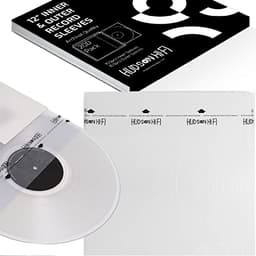
Hudson Hi-Fi 100x Inner & 100x Outer Sleeves
Sleeving 100 records in one go
Price as of October 10, 2026. #ad How we’re funded
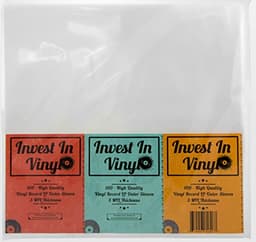
Invest In Vinyl 100 Clear Outer LP Sleeves
Jacket protection when your inner sleeves are already handled
Price as of October 10, 2026. #ad How we’re funded

Crosley AC1004A Record Storage Crate
A first crate for a collection under 75 albums
Price as of October 10, 2026. #ad How we’re funded
Frequently asked questions
How do you pack vinyl records for moving?
Sleeve them, then load them vertically into small boxes - 30 to 40 records each - with the spines down, exactly as they sit on a shelf. Fill any remaining space so nothing can shift, brace the flat faces with stiff cardboard, and carry the boxes in the cabin of the vehicle rather than a hot trunk. Never stack records flat: the weight of the pile dishes the ones at the bottom.
Should records be packed flat or upright?
Upright, always. The Library of Congress's own preservation guidance for discs is vertical storage, and the reason applies doubly in a box: a flat stack concentrates the entire weight of the pile on the bottom records, and that pressure plus any warmth is exactly how a dished record is made. Upright, each record carries only itself.
How do you ship a single vinyl record safely?
Sleeve the record, then take it out of the jacket and tape the sleeved disc alongside the jacket rather than inside it. Use a mailer or box barely bigger than a 12-inch jacket, put a stiff cardboard pad on each flat face, fill the gaps so nothing slides, and mark the package as fragile. Taking the record out of the jacket is the step that prevents split seams, which is the most common form of shipping damage.
Why do records get split seams in the post?
Because the record is still in the jacket. A 12-inch disc weighs enough that when the package is dropped, the disc keeps moving and its edge punches through the seam from the inside. Nothing on the outside of the package prevents that - the only reliable fix is to ship the record beside its jacket rather than in it.
Can I ship records in the original box they came in?
Only if it was a record mailer in the first place. Reused shipping boxes are usually too large, and an oversized box is the second most common cause of damage after leaving the record in the jacket: the contents move, build momentum and hit the walls. If you must reuse, cut the box down so the jacket fits snugly and brace the faces.
Will heat damage records in a moving truck?
It can, and it is the damage nobody plans for. Vinyl softens at temperatures a closed vehicle reaches on a warm day, and a record that has sagged while pressed against its neighbors stays that way. Move records in the passenger cabin if you can, avoid leaving boxes in a parked car, and keep them out of direct sun during loading.
Do I need new sleeves before packing a collection?
Inner sleeves, usually yes. The plain paper inner most records ship with is abrasive and it is the thing scratching the disc every time it goes in or out - an anti-static rice-paper or lined inner fixes that permanently. Outer sleeves matter most for jackets you care about or intend to sell, because in a packed box jackets rub against each other for the whole journey.
How many records fit in a box?
Aim for 30 to 40 twelve-inch records in a small box rather than filling a large one. A box of 40 is already heavy enough to be awkward, and heavier boxes are the ones that get dropped or crushed by what gets stacked on them. The same logic applies to crates once you arrive: fill to about 80 percent so records are not under side pressure.
Sources
- Library of Congress — Care, handling and storage of audio-visual materials — Preservation guidance on vertical storage, sleeve materials and storage environment (accessed August 11, 2026)
- Library of Congress — Caring for and cleaning grooved discs — Preservation guidance on cleaning and storing records to prevent damage (accessed July 24, 2026)
- Disc Makers — vinyl record weights: what is 180 gram, and is it important? — A record-pressing company on its own product: standard weight for a 12-inch record "averages around 140 grams"; on whether 180g sounds better, "The short answer is, no they don't sound any better"; and decisively, "The stampers/plates used for 180g records are the same as Standard weight records. The groove depths are the same." It allows that extra mass may damp micro-movements on high-end systems, and says the heavier disc mainly creates "an impression of higher quality" (accessed September 7, 2026)
- Crutchfield — How to choose the right turntable — Buying-guide reference on drive type, cartridges, preamps and setup (accessed July 24, 2026)
Keep reading
How to Store Vinyl Records
What happens once the boxes are unpacked: shelving, sleeves and environment.
Read the guideBest Record Storage and Sleeves
Crates, cubes, inners and outers, ranked on published material and capacity.
See the picksShould Records Be Stored Vertically?
The one rule behind most of this page, with the preservation guidance it comes from.
Read the guideHow to Clean Vinyl Records
The first thing to do with records that have been in storage or in transit.
Read the guide