PLATTER & PLINTH

Essential Classic Rock Records on Vinyl

The largest catalog and the cheapest entry in vinyl — these records were pressed in enormous numbers and are still being repressed. Ranked by what each one asks of a turntable, because almost none of them tells you anything about its mastering.

By Stephen V.Last updated How we pick

Classic rock is the easiest genre to start collecting and the hardest to collect carefully. Easy, because these albums sold in the millions, have never gone out of print, and can be bought new for less than a jazz reissue. Hard, because virtually none of the reissues tells you anything about where the music came from.

That is the honest headline for this page. On the jazz list, Blue Note publishes its mastering engineer, its source tapes and its pressing plant, so you can compare two editions on stated facts. Here, for eight of the nine records below, the listing states no mastering engineer, no source and frequently not even a vinyl weight. We have marked every one of those as “Not published” rather than fill the gap with a guess, and the pattern itself is the finding.

So the ranking uses what can actually be established: whether the record is reliably in stock, what it costs relative to the rest, and — the part that is genuinely useful — what each one demands of a turntable. A dense Led Zeppelin side and a sparse Steely Dan mix stress completely different parts of a setup, and knowing which is which turns a shelf of records into a diagnostic toolkit.

If you are still choosing the deck, the relevant page is the best turntable for the money — classic rock is forgiving material and does not require an expensive front end to enjoy.

How this is funded:we earn a commission if you buy through our links, at no extra cost to you. It never changes which product we recommend, and we’ll tell you plainly when to skip one. Full disclosure.

Quick picks

Ranked for someone building a collection from nothing, on availability, price and what each record demands of a setup. No listening claims — we have not heard these pressings; here is exactly what we do instead.

#ProductBest forPrice
1
Fleetwood Mac Rumours

Fleetwood Mac Rumours

The default first record for a reason: 1977, eleven songs, no filler, and a production job clean enough that it sounds like something even through a modest system. It is also one of the cheapest in-print reissues of a canonical album on the market, which matters more than it sounds — your first record should not be the one you are frightened to handle while you are still learning to cue a tonearm.

Start here
$19.59 · View on Amazon

$24.9822% off

Price as of September 7, 2026. #ad How we’re funded

2
Pink Floyd The Dark Side of the Moon

Pink Floyd The Dark Side of the Moon

The 1973 album that sold turntables then and still sells them now. It is a continuous, side-long piece with a wide dynamic range and a lot of low-level texture, which is exactly the material that makes a proper stereo setup obviously better than a Bluetooth speaker. This listing is the 50th Anniversary Remaster, which the title states plainly.

Best demonstration record
$30.00 · View on Amazon

$31.976% off

Price as of September 7, 2026. #ad How we’re funded

3
The Beatles Abbey Road

The Beatles Abbey Road

1969, and the Beatles album that works best as an album — side two runs as a medley, so the format's constraint becomes the point. This listing is the Anniversary Edition. Beatles vinyl is unusual in that the catalog is kept in print aggressively, so you are buying a current pressing at a predictable price rather than chasing a scarce one.

The safe universal pick
$22.98 · View on Amazon

$29.9923% off

Price as of September 7, 2026. #ad How we’re funded

4
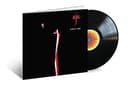
Steely Dan Aja

Steely Dan Aja

The record that turns up on every hi-fi demo shortlist, because the 1977 sessions were recorded and mixed to an obsessive standard and the result is clean, wide and quiet. If you want to hear what your system is actually doing — where instruments sit, how far back the room goes — this is a more informative record than anything louder.

Best reference recording
$29.46 · View on Amazon

Price as of September 7, 2026. #ad How we’re funded

5
Led Zeppelin IV

Led Zeppelin IV

1971, eight tracks, and the record that most people mean when they say they want rock on vinyl. It is a drum record above all else, which makes it a good stress test — a loud, dense mix cut close to the label is where a cheap cartridge starts to lose composure, and if your setup handles side two it handles most things.

Best tracking test
$22.97 · View on Amazon

$24.988% off

Price as of September 7, 2026. #ad How we’re funded

6
The Rolling Stones Sticky Fingers

The Rolling Stones Sticky Fingers

1971, and the Stones record that holds together best from first track to last. Loose, warm and played rather than constructed, which makes it a good antidote to the meticulously produced records elsewhere on this list. It is also among the cheaper canonical rock reissues currently in print.

Best cheap canonical pick
$20.99 · View on Amazon

$29.9930% off

Price as of September 7, 2026. #ad How we’re funded

7
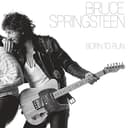
Bruce Springsteen Born to Run

Bruce Springsteen Born to Run

A 1975 record built as a deliberate wall of sound — layered guitars, piano, glockenspiel, saxophone, all pushed together. That density is the interesting part on vinyl: it is a genuinely hard record to reproduce cleanly, and it separates a well-set-up system from a merely functional one more honestly than an audiophile demo disc does.

Hardest mix to reproduce
$27.98 · View on Amazon

Price as of September 7, 2026. #ad How we’re funded

8
David Bowie The Rise and Fall of Ziggy Stardust and the Spiders from Mars

David Bowie The Rise and Fall of Ziggy Stardust and the Spiders from Mars

A 1972 concept album that is also a straightforward collection of very good songs, which is why it survives being a concept album. This listing states 180g in its title. Bowie's catalog has been reissued carefully and consistently, so this is one of the more predictable purchases in classic rock.

Best stated specification
$39.83 · View on Amazon

Price as of September 7, 2026. #ad How we’re funded

9
Dire Straits Brothers in Arms

Dire Straits Brothers in Arms

A 1985 album that was one of the first recorded fully digitally and marketed hard on sound quality, which makes it a genuinely interesting object on a vinyl page: it is the record that proves a digital source and a good vinyl cut are not enemies. Clean, spacious and famously used as demo material in hi-fi shops for a decade.

Best argument-settler
$34.49 · View on Amazon

$39.9814% off

Price as of September 7, 2026. #ad How we’re funded

The picks in full

#1Start here

Fleetwood Mac Rumours

The default first record for a reason: 1977, eleven songs, no filler, and a production job clean enough that it sounds like something even through a modest system. It is also one of the cheapest in-print reissues of a canonical album on the market, which matters more than it sounds — your first record should not be the one you are frightened to handle while you are still learning to cue a tonearm.

Strengths

  • Consistently among the cheapest canonical albums in print
  • Clean, uncluttered production that does not need an expensive system to work
  • Near-universal appeal — the record nobody in the house objects to

Trade-offs

  • Utterly ubiquitous; it will not impress anyone who already collects
  • Current pressings are cut from a digital-era remaster and the listing does not state the mastering chain
  • Many editions exist under many ASINs; check you are buying the plain LP and not a box
ArtistFleetwood Mac
Edition (per listing)Standard vinyl issue
LabelRhino/Warner Records
FormatVinyl LP
Stated weightNot published
Listing verified2026-09-07, live Creators API

Note. If you are buying one record to go in the box with a new turntable as a gift, this is the safest choice on the site.

Specifications read from the manufacturer / product listing, on September 7, 2026. “Not published” means the maker does not state that figure.

#2Best demonstration record

Pink Floyd The Dark Side of the Moon

The 1973 album that sold turntables then and still sells them now. It is a continuous, side-long piece with a wide dynamic range and a lot of low-level texture, which is exactly the material that makes a proper stereo setup obviously better than a Bluetooth speaker. This listing is the 50th Anniversary Remaster, which the title states plainly.

Strengths

  • Wide dynamics and constant stereo movement — the obvious demo record
  • Designed as a continuous side, so it suits the format rather than fighting it
  • The anniversary edition is clearly labeled, so you know what you are buying

Trade-offs

  • A remaster, not an original-tape audiophile cut; the listing states no mastering chain
  • Priced above the cheapest catalog reissues here
  • If you want an original 1970s pressing, this is not it and the used market is a different exercise
ArtistPink Floyd
Edition (per listing)50th Anniversary Remaster
LabelLegacy Recordings
FormatVinyl LP
Stated weightNot published
Listing verified2026-09-07, live Creators API

Specifications read from the manufacturer / product listing, on September 7, 2026. “Not published” means the maker does not state that figure.

#3The safe universal pick

The Beatles Abbey Road

1969, and the Beatles album that works best as an album — side two runs as a medley, so the format's constraint becomes the point. This listing is the Anniversary Edition. Beatles vinyl is unusual in that the catalog is kept in print aggressively, so you are buying a current pressing at a predictable price rather than chasing a scarce one.

Strengths

  • Side two's medley makes it a genuine album-side listen rather than a singles collection
  • The catalog is kept in print, so availability and price are stable
  • Anniversary Edition is clearly identified in the listing title

Trade-offs

  • The listing does not state a vinyl weight or mastering source
  • Beatles reissues attract strong opinions about mastering that we are not in a position to arbitrate
  • Many similarly-titled ASINs exist; confirm you are buying the single LP
ArtistThe Beatles
Edition (per listing)Anniversary Edition
LabelCapitol
FormatVinyl LP
Stated weightNot published
Listing verified2026-09-07, live Creators API

Specifications read from the manufacturer / product listing, on September 7, 2026. “Not published” means the maker does not state that figure.

#4Best reference recording

Steely Dan Aja

The record that turns up on every hi-fi demo shortlist, because the 1977 sessions were recorded and mixed to an obsessive standard and the result is clean, wide and quiet. If you want to hear what your system is actually doing — where instruments sit, how far back the room goes — this is a more informative record than anything louder.

Strengths

  • Meticulously recorded, so system differences show up clearly
  • Quiet, spacious mixes rather than compressed loudness
  • Seven long tracks — generous side lengths and no filler

Trade-offs

  • Clinical by design; some listeners find it cold rather than involving
  • The listing does not state a mastering source or vinyl weight
  • Long sides mean the cut has to work harder — inner-groove performance matters here
ArtistSteely Dan
Edition (per listing)Standard vinyl issue
LabelGeffen
FormatVinyl LP
Stated weightNot published
Listing verified2026-09-07, live Creators API

Note. If you are trying to decide whether a cartridge upgrade did anything, use this record and one you know well rather than a new purchase — you cannot judge a change against material you have never heard.

Specifications read from the manufacturer / product listing, on September 7, 2026. “Not published” means the maker does not state that figure.

#5Best tracking test

Led Zeppelin IV

1971, eight tracks, and the record that most people mean when they say they want rock on vinyl. It is a drum record above all else, which makes it a good stress test — a loud, dense mix cut close to the label is where a cheap cartridge starts to lose composure, and if your setup handles side two it handles most things.

Strengths

  • Dense, loud mixes make inner-groove tracking problems audible if you have them
  • Priced with the standard catalog reissues, not the audiophile ones
  • Short enough per side that the cut is not compromised by running time

Trade-offs

  • The listing publishes neither a vinyl weight nor a mastering credit
  • Heavily compressed material by design — not the record to judge subtlety on
  • Numerous competing pressings exist and we have not compared them
ArtistLed Zeppelin
Edition (per listing)Standard vinyl issue
LabelAtlantic Catalog Group
FormatVinyl LP
Stated weightNot published
Listing verified2026-09-07, live Creators API

Specifications read from the manufacturer / product listing, on September 7, 2026. “Not published” means the maker does not state that figure.

#6Best cheap canonical pick

The Rolling Stones Sticky Fingers

1971, and the Stones record that holds together best from first track to last. Loose, warm and played rather than constructed, which makes it a good antidote to the meticulously produced records elsewhere on this list. It is also among the cheaper canonical rock reissues currently in print.

Strengths

  • Among the cheaper canonical rock titles currently in print
  • Played-in-a-room feel rather than layered studio construction
  • Consistent album with no weak side

Trade-offs

  • Deliberately rough recording — it will not flatter a system
  • No stated weight or mastering credit in the listing
  • The famous original sleeve gimmick is not part of a standard reissue
ArtistThe Rolling Stones
Edition (per listing)Standard vinyl issue
LabelInterscope
FormatVinyl LP
Stated weightNot published
Listing verified2026-09-07, live Creators API

Specifications read from the manufacturer / product listing, on September 7, 2026. “Not published” means the maker does not state that figure.

#7Hardest mix to reproduce

Bruce Springsteen Born to Run

A 1975 record built as a deliberate wall of sound — layered guitars, piano, glockenspiel, saxophone, all pushed together. That density is the interesting part on vinyl: it is a genuinely hard record to reproduce cleanly, and it separates a well-set-up system from a merely functional one more honestly than an audiophile demo disc does.

Strengths

  • Layered production makes cartridge alignment and tracking force audibly matter
  • Eight tracks, sensible side lengths, standard catalog pricing
  • One of the few canonical rock records that is not already in every collection

Trade-offs

  • The wall-of-sound production is congested by design and will not sound airy on any system
  • No published mastering credit or vinyl weight on the listing
  • If your setup is not dialed in, this is the record that will sound worst
ArtistBruce Springsteen
Edition (per listing)Standard vinyl issue
LabelLegacy Recordings
FormatVinyl LP
Stated weightNot published
Listing verified2026-09-07, live Creators API

Specifications read from the manufacturer / product listing, on September 7, 2026. “Not published” means the maker does not state that figure.

#8Best stated specification

David Bowie The Rise and Fall of Ziggy Stardust and the Spiders from Mars

A 1972 concept album that is also a straightforward collection of very good songs, which is why it survives being a concept album. This listing states 180g in its title. Bowie's catalog has been reissued carefully and consistently, so this is one of the more predictable purchases in classic rock.

Strengths

  • 180g stated on the listing, unlike most standard catalog reissues here
  • Consistently reissued catalog — you are not gambling on a one-off pressing
  • Works both as a sequence and as individual tracks

Trade-offs

  • Priced above the standard catalog reissues on this page
  • 180g is a weight, not a mastering claim — it tells you nothing about the cut
  • No mastering engineer or source is stated on the listing
ArtistDavid Bowie
Edition (per listing)180g issue
LabelParlophone
FormatVinyl LP
Stated weight180g (stated in the listing title)
Listing verified2026-09-07, live Creators API

Specifications read from the manufacturer / product listing, on September 7, 2026. “Not published” means the maker does not state that figure.

#9Best argument-settler

Dire Straits Brothers in Arms

A 1985 album that was one of the first recorded fully digitally and marketed hard on sound quality, which makes it a genuinely interesting object on a vinyl page: it is the record that proves a digital source and a good vinyl cut are not enemies. Clean, spacious and famously used as demo material in hi-fi shops for a decade.

Strengths

  • Exceptionally clean recording that shows a system's stereo image clearly
  • A useful counter-example to the idea that a digital step ruins a record
  • Widely available as a current reissue rather than a scarce original

Trade-offs

  • Very much a mid-1980s production — gated drums and all
  • The listing states no vinyl weight or mastering credit
  • Long album; the sides are full and the cut has to accommodate that
ArtistDire Straits
Edition (per listing)Standard vinyl issue
LabelRhino/Warner Records
FormatVinyl LP
Stated weightNot published
Listing verified2026-09-07, live Creators API

Note. Worth owning if you enjoy the argument about digital in the chain — this record was digital at the source in 1985 and has been a hi-fi demo staple ever since.

Specifications read from the manufacturer / product listing, on September 7, 2026. “Not published” means the maker does not state that figure.

What these reissues do not tell you

Read the spec table on any pick above and you will see the same row repeatedly: Stated weight: Not published. That is not us failing to research it. It is what the listings say, and it is worth understanding why.

Jazz reissues are sold to a small, informed audience that asks about mastering, so labels compete on disclosure. Classic rock reissues are sold in vastly larger numbers to people who want the album, so there is no commercial pressure to publish a chain. The result is that for most of these records you cannot establish, before buying, whether you are getting a fresh all-analog cut or a transfer of a 1990s CD master.

Three practical consequences:

  • Do not pay a premium for an unstated claim. If one edition costs meaningfully more than another and neither publishes a mastering source, the extra money is buying packaging or scarcity, not a better cut.
  • “Remastered” is not a quality claim. It tells you the audio was worked on again. It does not tell you from what, by whom, or whether the result is better. The Pink Floyd pick here is clearly labeled a 50th Anniversary Remaster, which is more than most listings offer, and it still does not state a chain.
  • 180g is a weight, not a mastering credit. The Bowie listing is the only one on this page that states a vinyl weight, and that tells you about the disc rather than the groove. The full version of that argument is in is 180 gram vinyl better.

What each record asks of your turntable

This is the useful ranking axis when mastering data is unavailable, and it is the reason to own a spread rather than nine records that sound alike.

  • Dense, loud, compressed — a tracking test. Led Zeppelin IV and Born to Run. Heavily layered material cut loud is where a cheap or misaligned cartridge loses composure, especially in the last minutes of a side where the groove is tightest. If the final track of a side sounds harsh and the first does not, that is inner-groove distortion and it is an alignment problem, not a pressing problem. Cartridge alignment is here.
  • Clean and spacious — a resolution test. Aja and Brothers in Arms. Both were recorded to an unusually high standard with deliberate space in the mix, so they reward a better cartridge or better speaker placement in an obvious way. These are the records to A/B an upgrade with.
  • Wide dynamics — a system-capability test. The Dark Side of the Moon. Built to move between near-silence and full band, with a lot of stereo movement. If a system sounds flat on this, the limitation is upstream of the record.
  • Deliberately rough — a sanity check. Sticky Fingers. A loose, live-sounding record that will not flatter anything. Worth owning precisely so you do not start believing every record should sound polished.

The digital-in-the-chain argument, settled by one record

Brothers in Arms is on this list partly to end a recurring conversation. It was one of the first albums recorded fully digitally, it was marketed on sound quality, and it was a hi-fi demonstration record in shops for a decade afterwards.

That matters because the loudest claim in vinyl marketing is that a digital step anywhere in the chain ruins a record. If that were true in the simple form it is usually stated, this album would be unlistenable, and it is not. The honest position is narrower and more useful: the quality of the master matters enormously and its format matters less than the marketing implies. A careful digital transfer beats a careless analog one.

That is also why the Mobile Fidelity episode is worth knowing about rather than being outraged by — the problem there was non-disclosure rather than the existence of a digital step. The documented account is here.

Buying these used, and when it makes sense

Classic rock is the one genre where the second-hand market is genuinely worth engaging with early, for a simple reason: these records were pressed in such enormous quantities that used copies are everywhere and cheap. Three rules make it work.

  1. Buy common records used, scarce records new. A used copy of Rumours is a low-stakes purchase because another one exists everywhere. Applying the same logic to something scarce is how people overpay for a damaged record.
  2. Condition beats pressing, always. A clean later reissue is a better object than a scratched original, and no amount of provenance fixes a groove that has been damaged by a worn stylus. If you cannot inspect it, buy from somewhere with a returns policy.
  3. Assume it needs cleaning. A used record has an unknown history and almost always plays better after a proper wet clean than out of the sleeve. A basic kit handles it and a machine is worth it only once you are buying used regularly.

The counterfeit risk is lower here than in hip-hop but it is not zero, especially for the most-bootlegged titles. The checks take thirty seconds.

What is missing, and why

One notable absence. Neil Young’s Harvest belongs on any list like this and is not featured, because the current listings are a single second-hand copy and a set of out-of-stock entries rather than a standard in-print reissue. We would rather name it and tell you to wait than point you at a marketplace copy at an unpredictable price. Vinyl listings churn constantly, so this will change.


Frequently asked questions

What classic rock albums should I buy on vinyl first?

Start with Fleetwood Mac's Rumours. It is among the cheapest canonical albums in print, the production is clean enough to sound good through a modest system, and almost nobody objects to it — which matters for a record you will play repeatedly while a new turntable is still a novelty. Add The Dark Side of the Moon second if you want to demonstrate what the system can do, and Abbey Road third as the safe universal pick.

Are classic rock vinyl reissues good quality?

Usually fine, and usually undocumented, which are two different statements. Modern pressings of these albums are generally well made physically. What almost none of them publishes is the mastering chain — who cut it and from what source — so you cannot establish before buying whether you are getting a fresh analog cut or a transfer of an older digital master. Because of that, do not pay a premium for one edition over another unless the more expensive one actually states something the cheaper one does not.

Does 'remastered' mean a vinyl reissue sounds better?

No. It means the audio was processed again at some point, and nothing more. It does not tell you what it was remastered from, who did it, or whether the result is an improvement — remastering can and often does add compression to make a record louder. Treat the word as a description of process, not a guarantee of quality, and prefer a listing that states its actual mastering source over one that only says 'remastered'.

Should I buy original 1970s pressings of classic rock albums?

Only once you can judge condition, and rarely at collector prices. These albums were pressed in enormous numbers, so genuine original copies are not rare, but a fifty-year-old record has had fifty years of handling — often by people playing it on equipment with a worn stylus, which causes permanent groove damage. A clean current reissue is a more predictable purchase. Buy common titles used and cheap, and buy new when the used copy is expensive or unverifiable.

Why does one side of my record sound worse near the end?

That is inner-groove distortion, and it is a setup problem rather than a pressing fault. As the stylus moves toward the center the groove is physically shorter for the same amount of music, so the tip has to trace tighter modulations, and any error in cartridge alignment or tracking force shows up there first. Dense, loud material like Led Zeppelin IV makes it obvious. Check alignment and tracking force before concluding the record is bad.

Is a digitally recorded album worth buying on vinyl?

Yes, and Brothers in Arms is the standing counter-example. It was one of the first fully digital recordings, was marketed on sound quality, and was used as a hi-fi demonstration record for years. What matters is the quality and care of the master, not whether a digital stage exists somewhere in the chain. A careful digital transfer beats a careless analog one, which is why the Mobile Fidelity controversy was really about disclosure rather than about digital itself.

Sources

  • Mobile Fidelity Sound Lab — product lines and the 2022 DSD disclosureDocumented timeline: Original Master Recording LPs (from 1977) use "half-speed mastering from the original analog master tapes"; UltraDisc One-Step (from 2016) presses "directly from the positive grooves cut into the master lacquer", with stampers lasting about 1,000 pressings; in July 2022 staff confirmed Direct Stream Digital files were used when creating vinyl masters, covering at least 60% of titles by the end of 2011 including One-Step releases; a class action alleging fraud over "Purely Analog" marketing followed in August 2022 (accessed September 7, 2026)
  • Library of Congress — Caring for and cleaning grooved discsPreservation guidance on cleaning and storing records to prevent damage (accessed July 24, 2026)

Keep reading