PLATTER & PLINTH

The First 10 Records to Buy

A turntable arrives with a stylus, a mat and no music. These ten are cheap, currently in print, and chosen so that a new deck has something to do on the first night — and something to prove itself against in the first month.

By Stephen V.Last updated How we pick

The most common mistake with a first record order is buying for the collection you imagine having in five years rather than the turntable you own today. People reach straight for a scarce pressing, or a box set, or an audiophile edition of something they have never actually listened to all the way through.

These ten go the other way. Every one is currently in print, every one is at the cheap end of what a canonical album costs, and every one is something you can play a dozen times without getting bored — because the real job of the first ten records is to get you past the novelty of watching the platter go round and into the habit of actually listening.

They also serve a second purpose. A new turntable needs proving: is the arm balanced, is the cartridge aligned, is the belt the right tension, is there hum. Different records expose different faults, and this set is deliberately spread across quiet and loud, sparse and dense, so that between them they will surface almost anything wrong with a new setup. Where a record is useful that way, the write-up says so.

No prices in the text. Vinyl listings churn faster than anything else this site covers — pressings sell through and reappear under new listings constantly — so the buttons carry the live figure and the date it was read. If you are still choosing the deck itself, start with the best turntables for beginners instead.

How this is funded:we earn a commission if you buy through our links, at no extra cost to you. It never changes which product we recommend, and we’ll tell you plainly when to skip one. Full disclosure.

Quick picks

Chosen for price, availability and what each one asks of a new turntable — not ranked by musical merit, which is not ours to rank. We have not heard these specific pressings; here is exactly what we do instead.

#ProductBest forPrice
1
Fleetwood Mac Rumours

Fleetwood Mac Rumours

The default first record for a reason: 1977, eleven songs, no filler, and a production job clean enough that it sounds like something even through a modest system. It is also one of the cheapest in-print reissues of a canonical album on the market, which matters more than it sounds — your first record should not be the one you are frightened to handle while you are still learning to cue a tonearm.

Start here
$19.59 · View on Amazon

$24.9822% off

Price as of September 7, 2026. #ad How we’re funded

2
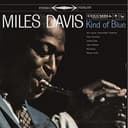
Miles Davis Kind Of Blue

Miles Davis Kind Of Blue

The record almost every vinyl collection starts with, and for once the consensus pick is also the practical one. The 1959 session is modal rather than dense bebop, the tempos are unhurried, and the recording is spacious — which makes it the album people reach for when they want to hear what a system does with space and decay rather than what it does with volume. It has been in continuous print for decades, so it is cheap, easy to find, and easy to replace.

Best for judging a new setup
$25.98 · View on Amazon

Price as of September 7, 2026. #ad How we’re funded

3
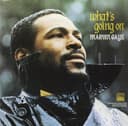
Marvin Gaye What's Going On

Marvin Gaye What's Going On

1971, and the record that turned soul from a singles business into an album one — tracks flow into each other, so a side plays as a continuous piece. It is also warm, uncluttered and easy to live with, which makes it one of the best first records on the whole site regardless of genre.

Best side-long listen
$20.99 · View on Amazon

$29.9930% off

Price as of September 7, 2026. #ad How we’re funded

4
The Beatles Abbey Road

The Beatles Abbey Road

1969, and the Beatles album that works best as an album — side two runs as a medley, so the format's constraint becomes the point. This listing is the Anniversary Edition. Beatles vinyl is unusual in that the catalog is kept in print aggressively, so you are buying a current pressing at a predictable price rather than chasing a scarce one.

The safe universal pick
$22.98 · View on Amazon

$29.9923% off

Price as of September 7, 2026. #ad How we’re funded

5
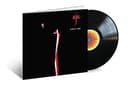
Steely Dan Aja

Steely Dan Aja

The record that turns up on every hi-fi demo shortlist, because the 1977 sessions were recorded and mixed to an obsessive standard and the result is clean, wide and quiet. If you want to hear what your system is actually doing — where instruments sit, how far back the room goes — this is a more informative record than anything louder.

Best reference recording
$29.46 · View on Amazon

Price as of September 7, 2026. #ad How we’re funded

6
Nas Illmatic

Nas Illmatic

Ten tracks, thirty-nine minutes, 1994 — the most economical canonical album in hip-hop and, not coincidentally, one of the few that fits a single LP without compromise. That matters on vinyl: a short album gets a wider, quieter cut, which is why so many hip-hop reissues of longer records end up as sprawling double LPs and this one does not.

Best hip-hop entry point
$30.82 · View on Amazon

Price as of September 7, 2026. #ad How we’re funded

7
Radiohead OK Computer

Radiohead OK Computer

1997, and the most dynamically ambitious record in this group — it moves from near-silence to full band repeatedly, which is exactly the behavior compressed streaming masters flatten and a good vinyl cut does not. If you want one modern record to demonstrate why dynamic range matters, this is it.

Best dynamics demonstration
$43.14 · View on Amazon

Price as of September 7, 2026. #ad How we’re funded

8
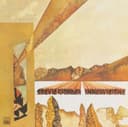
Stevie Wonder Innervisions

Stevie Wonder Innervisions

A 1973 record largely played by one person, with synthesizers used as instruments rather than effects. The arrangements are busy but clean, and the bass lines are melodic and mixed forward — which makes it a genuinely useful record for hearing whether your speakers are placed properly.

Best for speaker placement
$29.99 · View on Amazon

Price as of September 7, 2026. #ad How we’re funded

9
Bon Iver For Emma, Forever Ago

Bon Iver For Emma, Forever Ago

A sparse 2007 record made largely of voice and one guitar, recorded rough on purpose. Sparse records are the honest ones for evaluating a turntable: with nothing to hide behind, mistracking, hum and speed instability all become obvious immediately.

Best fault-finder
$23.98 · View on Amazon

Price as of September 7, 2026. #ad How we’re funded

10
The Strokes Is This It

The Strokes Is This It

2001, eleven tracks, thirty-six minutes, and deliberately recorded to sound small and compressed. That makes it an honest inclusion rather than an audiophile one: it is a great record that will never sound spacious, and knowing which of your records are like that is part of learning to judge a system.

Best cheap modern pick
$22.32 · View on Amazon

Price as of September 7, 2026. #ad How we’re funded

The picks in full

#1Start here

Fleetwood Mac Rumours

The default first record for a reason: 1977, eleven songs, no filler, and a production job clean enough that it sounds like something even through a modest system. It is also one of the cheapest in-print reissues of a canonical album on the market, which matters more than it sounds — your first record should not be the one you are frightened to handle while you are still learning to cue a tonearm.

Strengths

  • Consistently among the cheapest canonical albums in print
  • Clean, uncluttered production that does not need an expensive system to work
  • Near-universal appeal — the record nobody in the house objects to

Trade-offs

  • Utterly ubiquitous; it will not impress anyone who already collects
  • Current pressings are cut from a digital-era remaster and the listing does not state the mastering chain
  • Many editions exist under many ASINs; check you are buying the plain LP and not a box
ArtistFleetwood Mac
Edition (per listing)Standard vinyl issue
LabelRhino/Warner Records
FormatVinyl LP
Stated weightNot published
Listing verified2026-09-07, live Creators API

Note. If you are buying one record to go in the box with a new turntable as a gift, this is the safest choice on the site.

Specifications read from the manufacturer / product listing, on September 7, 2026. “Not published” means the maker does not state that figure.

#2Best for judging a new setup

Miles Davis Kind Of Blue

The record almost every vinyl collection starts with, and for once the consensus pick is also the practical one. The 1959 session is modal rather than dense bebop, the tempos are unhurried, and the recording is spacious — which makes it the album people reach for when they want to hear what a system does with space and decay rather than what it does with volume. It has been in continuous print for decades, so it is cheap, easy to find, and easy to replace.

Strengths

  • In print continuously — you are never hunting a scarce pressing
  • Sparse, unhurried arrangements make it easy listening for a jazz newcomer
  • Widely available at standard-reissue money rather than audiophile money

Trade-offs

  • So ubiquitous that it can feel like a box to tick rather than a discovery
  • Many competing pressings exist at many prices; the cheapest is not always the best mastered, and we have not compared them
  • The Legacy listing does not publish a vinyl weight or mastering credit
ArtistMiles Davis
Edition (per listing)Standard vinyl issue
LabelLegacy Recordings
FormatVinyl LP
Stated weightNot published
Listing verified2026-09-07, live Creators API

Note. If you buy one jazz record to find out whether your turntable is set up correctly, buy this one — quiet passages and sustained cymbals expose a mistracking stylus faster than a loud record will.

Specifications read from the manufacturer / product listing, on September 7, 2026. “Not published” means the maker does not state that figure.

#3Best side-long listen

Marvin Gaye What's Going On

1971, and the record that turned soul from a singles business into an album one — tracks flow into each other, so a side plays as a continuous piece. It is also warm, uncluttered and easy to live with, which makes it one of the best first records on the whole site regardless of genre.

Strengths

  • Continuous sides make it a natural fit for the format
  • Warm and uncluttered — flattering on a modest system
  • Consistently among the cheapest canonical albums in print

Trade-offs

  • The listing publishes no weight or mastering credit
  • Many Motown reissues exist at many prices and we have not compared them
  • Short album; you will be up to flip it quickly
ArtistMarvin Gaye
Edition (per listing)Standard vinyl issue
LabelMotown Records
FormatVinyl LP
Stated weightNot published
Listing verified2026-09-07, live Creators API

Specifications read from the manufacturer / product listing, on September 7, 2026. “Not published” means the maker does not state that figure.

#4The safe universal pick

The Beatles Abbey Road

1969, and the Beatles album that works best as an album — side two runs as a medley, so the format's constraint becomes the point. This listing is the Anniversary Edition. Beatles vinyl is unusual in that the catalog is kept in print aggressively, so you are buying a current pressing at a predictable price rather than chasing a scarce one.

Strengths

  • Side two's medley makes it a genuine album-side listen rather than a singles collection
  • The catalog is kept in print, so availability and price are stable
  • Anniversary Edition is clearly identified in the listing title

Trade-offs

  • The listing does not state a vinyl weight or mastering source
  • Beatles reissues attract strong opinions about mastering that we are not in a position to arbitrate
  • Many similarly-titled ASINs exist; confirm you are buying the single LP
ArtistThe Beatles
Edition (per listing)Anniversary Edition
LabelCapitol
FormatVinyl LP
Stated weightNot published
Listing verified2026-09-07, live Creators API

Specifications read from the manufacturer / product listing, on September 7, 2026. “Not published” means the maker does not state that figure.

#5Best reference recording

Steely Dan Aja

The record that turns up on every hi-fi demo shortlist, because the 1977 sessions were recorded and mixed to an obsessive standard and the result is clean, wide and quiet. If you want to hear what your system is actually doing — where instruments sit, how far back the room goes — this is a more informative record than anything louder.

Strengths

  • Meticulously recorded, so system differences show up clearly
  • Quiet, spacious mixes rather than compressed loudness
  • Seven long tracks — generous side lengths and no filler

Trade-offs

  • Clinical by design; some listeners find it cold rather than involving
  • The listing does not state a mastering source or vinyl weight
  • Long sides mean the cut has to work harder — inner-groove performance matters here
ArtistSteely Dan
Edition (per listing)Standard vinyl issue
LabelGeffen
FormatVinyl LP
Stated weightNot published
Listing verified2026-09-07, live Creators API

Note. If you are trying to decide whether a cartridge upgrade did anything, use this record and one you know well rather than a new purchase — you cannot judge a change against material you have never heard.

Specifications read from the manufacturer / product listing, on September 7, 2026. “Not published” means the maker does not state that figure.

#6Best hip-hop entry point

Nas Illmatic

Ten tracks, thirty-nine minutes, 1994 — the most economical canonical album in hip-hop and, not coincidentally, one of the few that fits a single LP without compromise. That matters on vinyl: a short album gets a wider, quieter cut, which is why so many hip-hop reissues of longer records end up as sprawling double LPs and this one does not.

Strengths

  • Short running time means a comfortable single-LP cut rather than a cramped one
  • Sample-based production with real low end — a genuine workout for a cartridge
  • The consensus starting point, so it anchors a collection

Trade-offs

  • Stock moves fast and it frequently sits at "only a few left" — check before planning around it
  • The listing publishes no vinyl weight or mastering credit
  • Reissue provenance in hip-hop is murky; sources are rarely stated by anyone
ArtistNas
Edition (per listing)Standard vinyl issue
LabelGet on Down
FormatVinyl LP
Stated weightNot published
Listing verified2026-09-07, live Creators API

Note. Hip-hop reissues are the least transparent corner of the vinyl market — labels almost never publish a mastering source. We report what the listing states and nothing more.

Specifications read from the manufacturer / product listing, on September 7, 2026. “Not published” means the maker does not state that figure.

#7Best dynamics demonstration

Radiohead OK Computer

1997, and the most dynamically ambitious record in this group — it moves from near-silence to full band repeatedly, which is exactly the behavior compressed streaming masters flatten and a good vinyl cut does not. If you want one modern record to demonstrate why dynamic range matters, this is it.

Strengths

  • Huge swings between quiet and loud — the clearest dynamics demo here
  • XL has kept the catalog in print with consistent pressings
  • Sequenced as an album; the side breaks land where they should

Trade-offs

  • The most expensive indie pick here
  • A double LP, so more flipping and more shelf space
  • No mastering credit or weight stated on the listing
ArtistRadiohead
Edition (per listing)Standard vinyl issue
LabelXL Recordings
FormatVinyl LP
Stated weightNot published
Listing verified2026-09-07, live Creators API

Specifications read from the manufacturer / product listing, on September 7, 2026. “Not published” means the maker does not state that figure.

#8Best for speaker placement

Stevie Wonder Innervisions

A 1973 record largely played by one person, with synthesizers used as instruments rather than effects. The arrangements are busy but clean, and the bass lines are melodic and mixed forward — which makes it a genuinely useful record for hearing whether your speakers are placed properly.

Strengths

  • Busy but clean arrangements — detailed without being congested
  • Prominent, tuneful bass makes speaker placement audibly matter
  • Long-running Motown catalog issue at sensible money

Trade-offs

  • Early-synthesizer textures date it more than the other soul picks
  • No stated weight or mastering source on the listing
  • Multiple competing reissues; provenance is not published by any of them
ArtistStevie Wonder
Edition (per listing)Standard vinyl issue
LabelMotown Records
FormatVinyl LP
Stated weightNot published
Listing verified2026-09-07, live Creators API

Specifications read from the manufacturer / product listing, on September 7, 2026. “Not published” means the maker does not state that figure.

#9Best fault-finder

Bon Iver For Emma, Forever Ago

A sparse 2007 record made largely of voice and one guitar, recorded rough on purpose. Sparse records are the honest ones for evaluating a turntable: with nothing to hide behind, mistracking, hum and speed instability all become obvious immediately.

Strengths

  • Almost nothing in the mix, so setup faults have nowhere to hide
  • Sustained voice and guitar make wow and flutter easier to notice
  • Jagjaguwar has kept it in print at a sensible price

Trade-offs

  • Deliberately lo-fi source — do not blame the pressing for the roughness
  • Quiet and slow; not a record for a room full of people
  • No stated weight or mastering source
ArtistBon Iver
Edition (per listing)Standard vinyl issue
LabelJagjaguwar
FormatVinyl LP
Stated weightNot published
Listing verified2026-09-07, live Creators API

Note. Sustained solo voice is the easiest way to hear speed instability. If it wavers on this record, suspect the belt or the motor before the cartridge.

Specifications read from the manufacturer / product listing, on September 7, 2026. “Not published” means the maker does not state that figure.

#10Best cheap modern pick

The Strokes Is This It

2001, eleven tracks, thirty-six minutes, and deliberately recorded to sound small and compressed. That makes it an honest inclusion rather than an audiophile one: it is a great record that will never sound spacious, and knowing which of your records are like that is part of learning to judge a system.

Strengths

  • Among the cheapest canonical indie titles currently in print
  • Short and consistent — an easy record to play end to end
  • Long-running catalog listing rather than a limited run

Trade-offs

  • Deliberately compressed and small-sounding; it will not showcase anything
  • No stated weight or mastering credit
  • The US and UK track listings differ historically — check what you are buying
ArtistThe Strokes
Edition (per listing)Standard vinyl issue
LabelLegacy Recordings
FormatVinyl LP
Stated weightNot published
Listing verified2026-09-07, live Creators API

Specifications read from the manufacturer / product listing, on September 7, 2026. “Not published” means the maker does not state that figure.

How these ten were chosen

Four rules, applied in this order. None of them is a judgement about which albums are best, because that is not a judgement this site is in a position to make or a useful one to publish.

  1. It has to be in print right now. Every listing here was checked live before it went on the page: a real vinyl release in Amazon ’s Physical Music category, with a real price and stock, not a pre-order and not a single second-hand copy. That rule alone removed several obvious albums — Neil Young’s Harvest, Bill Withers ’s Still Bill and Curtis Mayfield’s Super Fly all currently show only marketplace copies or out-of-stock entries, so none of them is featured here despite belonging on any honest list.
  2. It has to be cheap for what it is. A first record should not be one you are nervous about handling while you are still learning to cue a tonearm. Nothing here is a limited edition, an audiophile pressing or a collectible.
  3. The set has to cover the range. Quiet and loud, sparse and dense, 1959 to 2020. Ten records that all sound the same teach you nothing about your system and get old fast.
  4. Each one has to do a job on a new deck. Not an audiophile test-disc job — a practical one. Sustained voice reveals speed instability. Quiet passages reveal hum. Dense inner-groove passages reveal alignment problems. The ten between them cover the faults a new owner actually hits.

What each one tells you about the turntable

This is the part most first-record lists skip, and it is the reason to buy a spread rather than ten records that sound alike. If something is wrong with a new setup, one of these will show it.

  • Speed stability. A sustained solo voice or a held piano note is where wow and flutter becomes audible as a slight seasickness in the pitch. For Emma, Forever Ago is the clearest test here. If it wavers, suspect the belt or the motor before you suspect the cartridge — the diagnostic order is in turntable troubleshooting.
  • Hum and grounding. Quiet, low-level recordings put your noise floor on display. If you hear a steady hum under the soft passages of Kind Of Blue, the cause is almost always a disconnected ground wire between the deck and the phono stage rather than anything to do with the record.
  • Tracking and alignment. Dense, loud passages near the center of a side are the hardest thing a stylus has to do. If the last track of a side gets harsh or spitty and the rest is fine, that is an alignment or tracking-force problem, and balancing the tonearm is where to start.
  • Speaker placement. Melodic, forward bass — Innervisions is the one here — changes character dramatically depending on how close your speakers sit to a wall. If the bass is boomy on this record and thin on others, move the speakers before you blame anything else.
  • Whether the system is worth it at all. Aja and OK Computer are the two here with the most headroom. If a system makes those sound flat, the limiting factor is upstream of the records.

The five paths after these ten

Ten records is roughly where people work out which direction they actually want to go. Rather than guess, follow whichever of these you keep reaching for.

  • Jazz. The genre with the best-documented reissues by a distance — Blue Note publishes its mastering chain, which almost nobody else does. If Kind Of Blue is the one you keep playing, this is your lane and it is the cheapest one to do well.
  • Classic rock. The largest catalog and the cheapest entry, because these records were pressed in enormous numbers and are still being repressed.
  • Hip-hop. The most rewarding and the least transparent: labels rarely publish anything about a reissue’s source, and running times mean many albums need a double LP.
  • Soul and funk. Where the format and the music fit together best — these are albums built as continuous sides, and several of them are the quietest, most revealing records you can own.
  • Indie and modern. For a collection that does not stop in 1979. Current pressings of current records, generally well made and generally cheap.

What not to buy yet

Four categories to leave alone until you have played the ten above and know what you like.

  • Audiophile pressings. A Tone Poet or Mobile Fidelity edition can cost three or four times a standard reissue. There are real, published differences behind that — and there is also a great deal of marketing. Read what each line actually publishes before you pay for one, not after.
  • Box sets. Almost always more expensive per album than buying the two records you actually wanted, and they arrive with six you did not. The arithmetic is here and it is not close.
  • Anything scarce or collectible. A first record should be replaceable. You are going to mishandle at least one while you learn.
  • Picture discs and novelty colored variants. Bought for the object rather than the playback, and they are the one part of the colored vinyl argument that genuinely holds up — see colored vinyl.

Look after them from the start

Records are cheap to keep in good condition and expensive to rescue. Three habits, all of which cost nothing on day one.

  1. Store them upright. Stacked records warp under their own weight and the damage is not reversible. Why vertical storage matters covers the mechanism; the practical version is that a shelf is fine and a pile is not.
  2. Brush before every play. Dust in the groove is what the stylus grinds into the vinyl, so a few seconds with a carbon fiber brush prevents damage rather than just reducing noise. A basic kit covers it.
  3. Watch the stylus hours. This is the one that costs you the collection rather than the sound — a worn tip damages every record it plays. The manufacturers’ own hour figures are lower than most people expect.

Frequently asked questions

What records should I buy first for a new turntable?

Buy cheap, currently in-print albums that you will play repeatedly rather than scarce or audiophile pressings. A good first ten spans quiet and loud, sparse and dense, so that between them they reveal whether your setup has a problem — sustained voice exposes speed instability, quiet passages expose hum, and dense inner-groove passages expose alignment errors. Ten is also roughly the point at which most people discover which genre they actually want to collect, which is a better basis for the next thirty purchases than guessing up front.

How many records should I buy to start?

Around ten, and then stop until you have played them all. The common failure is buying thirty records in the first month, most of them chosen from lists rather than from listening, and ending up with a shelf you do not use. Ten is enough to keep a new turntable busy, enough to find the faults in a new setup, and few enough that you will actually get through them.

Are new vinyl records better than used ones?

New records are more predictable, which is what matters when you are starting. A current in-print pressing arrives unplayed, at a known price, and can be replaced if something goes wrong. Used records can be excellent value and can also be scratched, warped or the wrong pressing entirely, and judging that reliably takes experience you do not have yet. Buy new for the first ten, then start buying used once you know what you are looking at.

Do I need to clean a brand-new record?

It is worth a brush before the first play. New records carry mold-release compound and paper dust from the inner sleeve, neither of which is dirt exactly, but both of which end up under the stylus. A carbon fiber brush takes a few seconds. A full wet clean is not necessary for a new record unless it is audibly noisy out of the sleeve.

Why are some classic albums not on this list?

Because they are not reliably purchasable right now. Every listing on this page was checked live for a real in-stock vinyl release with a real price before it was featured. Several albums that belong on any honest first-records list — Neil Young's Harvest, Bill Withers's Still Bill and Curtis Mayfield's Super Fly among them — currently show only single second-hand copies or out-of-stock entries, so they are named here rather than sold. Vinyl listings churn constantly, so that will change.

Should I buy 180 gram versions of these records?

Not for the weight itself. 180g describes how much vinyl is in the disc, not how well the groove was cut, and a heavy pressing from an indifferent master is still an indifferent record. Heavier discs are somewhat more resistant to warping and feel more substantial, which are real if modest benefits. If you have a choice between two pressings and one is cheaper, the weight is not the reason to pay more.

Sources

  • Blue Note — Tone Poet Audiophile Vinyl Reissue SeriesLabel's own series description: "produced by the 'Tone Poet' Joe Harley", "mastered all-analog directly from the original master tapes by Kevin Gray of Cohearent Audio", "pressed on 180g vinyl at Record Technology Inc. (RTI), and packaged in deluxe tip-on jackets" (accessed September 7, 2026)
  • Blue Note — Classic Vinyl Reissue SeriesLabel's own series description: "all-analog 180g vinyl pressings in standard packaging that are mastered by Kevin Gray directly from the original master tapes and manufactured at Optimal in Germany" — the same mastering engineer and the same source tapes as Tone Poet, at a different plant and without the deluxe jacket (accessed September 7, 2026)
  • Library of Congress — Caring for and cleaning grooved discsPreservation guidance on cleaning and storing records to prevent damage (accessed July 24, 2026)

Keep reading