PLATTER & PLINTH

Essential Hip-Hop Records on Vinyl

The genre where reissue provenance is least transparent and running time matters most. Nine albums worth owning, and an honest account of what the labels will not tell you about any of them.

By Stephen V.Last updated How we pick

Hip-hop on vinyl has a documentation problem that no other genre on this site has to the same degree. Look at the spec tables below: the mastering source is unpublished on every single pick, and on one of them the label field returned a contributor’s first name rather than a record label, so we left it blank rather than print something we could not stand behind.

That is not a reason to avoid the genre. It is a reason to buy it differently. Where jazz lets you compare two editions on published facts, hip-hop asks you to judge on what you can actually verify: is this a real, licensed, in-stock pressing, and does the album fit the format sensibly.

The second of those matters here more than anywhere else, because running time is the hidden variable in hip-hop on vinyl. A forty-minute album cuts comfortably onto one LP with wide, quiet grooves. A seventy-minute one becomes a cramped single disc or an expensive double. That single mechanical fact explains why Illmatic is the ideal first hip-hop record and why several later classics are awkward purchases.

Counterfeits are also more common in this genre than in any other, particularly for the most in-demand 1990s titles. The checks that catch them take about thirty seconds.

How this is funded:we earn a commission if you buy through our links, at no extra cost to you. It never changes which product we recommend, and we’ll tell you plainly when to skip one. Full disclosure.

Quick picks

Ordered for someone building from nothing, on availability, price and how well each album fits the format. No listening claims — we have not heard these pressings; here is exactly what we do instead.

#ProductBest forPrice
1
Nas Illmatic

Nas Illmatic

Ten tracks, thirty-nine minutes, 1994 — the most economical canonical album in hip-hop and, not coincidentally, one of the few that fits a single LP without compromise. That matters on vinyl: a short album gets a wider, quieter cut, which is why so many hip-hop reissues of longer records end up as sprawling double LPs and this one does not.

Start here
$30.82 · View on Amazon

Price as of September 7, 2026. #ad How we’re funded

2
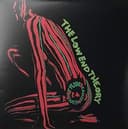
A Tribe Called Quest The Low End Theory

A Tribe Called Quest The Low End Theory

A 1991 record built on upright bass and jazz samples, and the natural bridge between the jazz shelf and the hip-hop shelf. It is also the hip-hop record that most rewards a decent system, because the bass is played rather than programmed and there is real space around it.

Best for a jazz collector
$49.99 · View on Amazon

$54.999% off

Price as of September 7, 2026. #ad How we’re funded

3
Wu-Tang Clan Enter the Wu-Tang (36 Chambers)

Wu-Tang Clan Enter the Wu-Tang (36 Chambers)

1993, and deliberately the roughest-sounding record in this set — murky, low-fidelity by design, built from degraded samples and a basement drum sound. It is worth owning precisely because it is the counter-argument to audiophile thinking: no pressing, however heavy, will make this record clean, and it would be a worse album if it were.

Cheapest canonical pick
$22.90 · View on Amazon

Price as of September 7, 2026. #ad How we’re funded

4
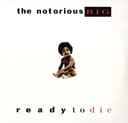
The Notorious B.I.G. Ready to Die

The Notorious B.I.G. Ready to Die

1994, and the cleanest-sounding record of the East Coast canon — bigger budget, warmer samples, and a low end that is actually mixed rather than merely loud. If the Wu-Tang record is the argument that pressing quality cannot save a rough mix, this is the one that shows what the same era sounded like with money behind it.

Best recorded of the era
$28.97 · View on Amazon

$36.9822% off

Price as of September 7, 2026. #ad How we’re funded

5
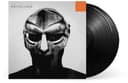
Madvillain Madvillainy

Madvillain Madvillainy

2004, twenty-two tracks, most of them under two minutes — a record assembled from fragments that works far better as a continuous side than as a playlist, which is an unusually good argument for owning it physically. Stones Throw has kept it in print consistently, which is rare for a record with this much collector demand.

Best modern classic
$29.99 · View on Amazon

$33.9912% off

Price as of September 7, 2026. #ad How we’re funded

6
Beastie Boys Paul's Boutique

Beastie Boys Paul's Boutique

A 1989 record made of hundreds of samples layered several deep, which is why it could never be made again and why it is unusually dense on vinyl. This listing is the 20th Anniversary Edition. It is the most detailed record in this group — there is always something happening underneath the thing you are listening to.

Most detailed production
$29.90 · View on Amazon

Price as of September 7, 2026. #ad How we’re funded

7
OutKast Aquemini

OutKast Aquemini

1998, and the most musically ambitious record in this group — live instrumentation, horns, guitar, and arrangements that owe as much to the soul shelf as to the hip-hop one. That makes it the record here with the widest dynamic range, and the one that sounds least like a loop.

Best for a soul collector
$34.39 · View on Amazon

Price as of September 7, 2026. #ad How we’re funded

8
J Dilla Donuts

J Dilla Donuts

2006, thirty-one instrumental tracks, most of them well under two minutes, sequenced so the last loops back into the first. It is a producer's record with no vocals to organize it, which makes it the most vinyl-native album in this set — it is designed to be dropped on and left running.

Best instrumental
$40.98 · View on Amazon

Price as of September 7, 2026. #ad How we’re funded

9
Kendrick Lamar good kid, m.A.A.d city

Kendrick Lamar good kid, m.A.A.d city

The modern entry point: a 2012 album structured as a narrative, which is the rare contemporary hip-hop record that genuinely asks to be played in order. It is the one record in this group that a listener under thirty is likely to already know by heart, which makes it the easiest first hip-hop purchase for most people.

Best modern entry point
$39.98 · View on Amazon

Price as of September 7, 2026. #ad How we’re funded

The picks in full

#1Start here

Nas Illmatic

Ten tracks, thirty-nine minutes, 1994 — the most economical canonical album in hip-hop and, not coincidentally, one of the few that fits a single LP without compromise. That matters on vinyl: a short album gets a wider, quieter cut, which is why so many hip-hop reissues of longer records end up as sprawling double LPs and this one does not.

Strengths

  • Short running time means a comfortable single-LP cut rather than a cramped one
  • Sample-based production with real low end — a genuine workout for a cartridge
  • The consensus starting point, so it anchors a collection

Trade-offs

  • Stock moves fast and it frequently sits at "only a few left" — check before planning around it
  • The listing publishes no vinyl weight or mastering credit
  • Reissue provenance in hip-hop is murky; sources are rarely stated by anyone
ArtistNas
Edition (per listing)Standard vinyl issue
LabelGet on Down
FormatVinyl LP
Stated weightNot published
Listing verified2026-09-07, live Creators API

Note. Hip-hop reissues are the least transparent corner of the vinyl market — labels almost never publish a mastering source. We report what the listing states and nothing more.

Specifications read from the manufacturer / product listing, on September 7, 2026. “Not published” means the maker does not state that figure.

#2Best for a jazz collector

A Tribe Called Quest The Low End Theory

A 1991 record built on upright bass and jazz samples, and the natural bridge between the jazz shelf and the hip-hop shelf. It is also the hip-hop record that most rewards a decent system, because the bass is played rather than programmed and there is real space around it.

Strengths

  • Acoustic bass and jazz sampling give it more dynamic range than most of the genre
  • The obvious next purchase for anyone who already bought the jazz picks
  • Sparse arrangements leave room for a system to show what it can do

Trade-offs

  • Priced at the top of the standard hip-hop reissue band
  • The listing's label field is unreliable and no mastering source is stated
  • Stock has been thin; confirm availability before counting on it
ArtistA Tribe Called Quest
Edition (per listing)Standard vinyl issue
LabelNot published
FormatVinyl LP
Stated weightNot published
Listing verified2026-09-07, live Creators API

Note. The label field on this listing returned a contributor's name rather than a record label, so we have left it unpublished rather than print something we cannot stand behind.

Specifications read from the manufacturer / product listing, on September 7, 2026. “Not published” means the maker does not state that figure.

#3Cheapest canonical pick

Wu-Tang Clan Enter the Wu-Tang (36 Chambers)

1993, and deliberately the roughest-sounding record in this set — murky, low-fidelity by design, built from degraded samples and a basement drum sound. It is worth owning precisely because it is the counter-argument to audiophile thinking: no pressing, however heavy, will make this record clean, and it would be a worse album if it were.

Strengths

  • Among the cheaper canonical hip-hop titles in print
  • A genuinely useful reminder that the source, not the vinyl, sets the ceiling
  • Foundational record for the genre — it earns its place in a small collection

Trade-offs

  • Deliberately lo-fi; it will sound murky on any system and that is the intent
  • Frequently low on stock under this ASIN
  • No published weight, mastering credit or source
ArtistWu-Tang Clan
Edition (per listing)Standard vinyl issue
LabelSony
FormatVinyl LP
Stated weightNot published
Listing verified2026-09-07, live Creators API

Specifications read from the manufacturer / product listing, on September 7, 2026. “Not published” means the maker does not state that figure.

#4Best recorded of the era

The Notorious B.I.G. Ready to Die

1994, and the cleanest-sounding record of the East Coast canon — bigger budget, warmer samples, and a low end that is actually mixed rather than merely loud. If the Wu-Tang record is the argument that pressing quality cannot save a rough mix, this is the one that shows what the same era sounded like with money behind it.

Strengths

  • Noticeably better recorded than its contemporaries, so it suits a good system
  • Warm, sample-heavy production with real low-end weight
  • Reissued by a major catalog operation, so availability is stable

Trade-offs

  • A long album spread across a double LP — more flipping, more cost
  • No mastering source or weight published on the listing
  • Explicit throughout; not the record to demo a system for visitors
ArtistThe Notorious B.I.G.
Edition (per listing)Standard vinyl issue
LabelAtlantic Catalog Group
FormatVinyl LP
Stated weightNot published
Listing verified2026-09-07, live Creators API

Specifications read from the manufacturer / product listing, on September 7, 2026. “Not published” means the maker does not state that figure.

#5Best modern classic

Madvillain Madvillainy

2004, twenty-two tracks, most of them under two minutes — a record assembled from fragments that works far better as a continuous side than as a playlist, which is an unusually good argument for owning it physically. Stones Throw has kept it in print consistently, which is rare for a record with this much collector demand.

Strengths

  • Short fragmentary tracks make side-at-a-time listening the natural mode
  • Kept in print by Stones Throw rather than left to the collector market
  • The most-requested modern title in the genre and the one that holds value

Trade-offs

  • Deliberately murky, sample-degraded production — not a system showcase
  • Priced above the standard catalog reissues here
  • No stated weight or mastering credit
ArtistMadvillain
Edition (per listing)Standard vinyl issue
LabelStones Throw
FormatVinyl LP
Stated weightNot published
Listing verified2026-09-07, live Creators API

Specifications read from the manufacturer / product listing, on September 7, 2026. “Not published” means the maker does not state that figure.

#6Most detailed production

Beastie Boys Paul's Boutique

A 1989 record made of hundreds of samples layered several deep, which is why it could never be made again and why it is unusually dense on vinyl. This listing is the 20th Anniversary Edition. It is the most detailed record in this group — there is always something happening underneath the thing you are listening to.

Strengths

  • Extraordinarily layered — new detail surfaces on repeat listens
  • Clearly labeled anniversary edition rather than an ambiguous repress
  • Sits at standard reissue pricing despite its reputation

Trade-offs

  • Sample density means it can sound cluttered on a modest setup
  • No stated weight or mastering credit
  • The anniversary edition is a remaster; the listing states no chain
ArtistBeastie Boys
Edition (per listing)20th Anniversary Edition
LabelCapitol
FormatVinyl LP
Stated weightNot published
Listing verified2026-09-07, live Creators API

Specifications read from the manufacturer / product listing, on September 7, 2026. “Not published” means the maker does not state that figure.

#7Best for a soul collector

OutKast Aquemini

1998, and the most musically ambitious record in this group — live instrumentation, horns, guitar, and arrangements that owe as much to the soul shelf as to the hip-hop one. That makes it the record here with the widest dynamic range, and the one that sounds least like a loop.

Strengths

  • Live instrumentation gives it dynamics most of the genre does not have
  • Sits naturally next to the soul and funk picks rather than apart from them
  • Long-running catalog listing rather than a limited pressing

Trade-offs

  • Long album across multiple sides — a bigger commitment than Illmatic
  • No published weight or mastering information
  • Priced above the cheapest hip-hop reissues here
ArtistOutKast
Edition (per listing)Standard vinyl issue
LabelLegacy Recordings
FormatVinyl LP
Stated weightNot published
Listing verified2026-09-07, live Creators API

Specifications read from the manufacturer / product listing, on September 7, 2026. “Not published” means the maker does not state that figure.

#8Best instrumental

J Dilla Donuts

2006, thirty-one instrumental tracks, most of them well under two minutes, sequenced so the last loops back into the first. It is a producer's record with no vocals to organize it, which makes it the most vinyl-native album in this set — it is designed to be dropped on and left running.

Strengths

  • Entirely instrumental — the rare hip-hop record that works as background
  • Sequenced as a loop, so a side ending is not an interruption
  • Stones Throw has kept it in print rather than letting it go collector-only

Trade-offs

  • Stock is frequently thin and the price moves accordingly
  • Deliberately degraded, sample-based sound; not a fidelity showcase
  • No published weight or mastering source
ArtistJ Dilla
Edition (per listing)Standard vinyl issue
LabelStones Throw
FormatVinyl LP
Stated weightNot published
Listing verified2026-09-07, live Creators API

Specifications read from the manufacturer / product listing, on September 7, 2026. “Not published” means the maker does not state that figure.

#9Best modern entry point

Kendrick Lamar good kid, m.A.A.d city

The modern entry point: a 2012 album structured as a narrative, which is the rare contemporary hip-hop record that genuinely asks to be played in order. It is the one record in this group that a listener under thirty is likely to already know by heart, which makes it the easiest first hip-hop purchase for most people.

Strengths

  • Narrative structure rewards playing sides in sequence
  • The most likely album here to already be familiar
  • Consistently in print through a major label catalog

Trade-offs

  • The most expensive hip-hop pick here and it is a multi-LP set
  • Heavily compressed modern mastering — loud, and not a dynamics showcase
  • No published weight or mastering credit
ArtistKendrick Lamar
Edition (per listing)Standard vinyl issue
LabelAftermath/Interscope
FormatVinyl LP
Stated weightNot published
Listing verified2026-09-07, live Creators API

Note. Modern major-label hip-hop is mastered loud for streaming, and the vinyl usually inherits that. Buy it for the album, not to hear what your cartridge can do.

Specifications read from the manufacturer / product listing, on September 7, 2026. “Not published” means the maker does not state that figure.

Running time is the spec nobody mentions

A 12-inch LP played at 33 rpm holds roughly 20 to 22 minutes per side before compromises start. Cutting engineers can fit more, but only by reducing the groove spacing and the level — which means less bass and a quieter, more congested record. That constraint is invisible on a streaming service and decisive on vinyl.

Hip-hop collides with it constantly:

  • Short albums cut beautifully. Illmatic runs about forty minutes across ten tracks. That is close to ideal — two comfortable sides, room for the low end that the genre lives on. It is the main reason it is the best first hip-hop record rather than merely a famous one.
  • Long albums become doubles. Most of the sprawling classics of the 1990s and 2000s need two or three discs, which raises the price, increases the flipping, and takes more shelf. good kid, m.A.A.d city is the clearest example here.
  • Short-track albums are the format’s natural fit. Donuts is thirty-one pieces, most under two minutes, sequenced to loop. There is nothing to skip and no reason to get up, which is exactly what a side of vinyl is good at.

The practical rule: check the disc count in the listing title before you compare prices. A cheap-looking single LP of a long album may be a compromised cut, and an expensive double may be the honest way to press it.

The low end is the real demand on your system

Hip-hop asks one specific thing of a turntable that other genres do not, and it is worth understanding because it is where most complaints come from.

Deep bass on a record means large groove excursions. Large excursions are physically harder for a stylus to track, and they are the first thing to fail if the tracking force is set too light or the cartridge is misaligned. The symptom is a rattling, distorted quality on the heaviest bass hits that people usually blame on the pressing.

  • Set tracking force properly. Too light causes mistracking and does more record damage than too heavy. Balancing the tonearm covers the procedure, and the correct figure is the cartridge manufacturer’s, not a rule of thumb.
  • Bass also travels back into the deck. This genre played loud is where acoustic feedback shows up — the low howl that builds when speaker output reaches the cartridge through furniture. Getting the speakers off the turntable’s surface fixes it, which is what speaker stands are for.
  • An elliptical stylus helps more here than elsewhere. Complex modulation is what conical tips struggle with. The cartridge roundup explains the difference and when it is worth paying for.

What “lo-fi” means here, and why a better pressing will not fix it

Two records on this page — Enter the Wu-Tang and Madvillainy— are deliberately murky. They were built from degraded samples, recorded cheaply, and mixed to sound like that on purpose.

This is worth stating plainly because it is the clearest available refutation of the idea that a heavier or more expensive pressing improves sound. No pressing can contain more information than the master it was cut from. A 180g audiophile edition of a record made from a second-generation cassette sample is a heavier disc carrying the same murk. If you buy one of these and it sounds rough, the record is working correctly.

The corollary is useful when shopping: in a genre where nobody publishes a mastering chain, paying extra for an unspecified “audiophile” hip-hop reissue is close to pure speculation. What the documented lines actually publish makes the contrast obvious.

Buying safely in the most-counterfeited genre

Demand for 1990s hip-hop far exceeds legitimate supply, which is exactly the condition that produces unlicensed repressings. Four checks, none of which takes long:

  1. Check the label against the album. A canonical major-label album appearing on a label nobody recognizes is the single strongest signal. Legitimate reissues generally come through the catalog arm that owns the rights.
  2. Be suspicious of a price far below the market. If every other copy is one price and this one is a third of it, that is the reason.
  3. Read the listing for what it does not say. Counterfeits rarely state a catalog number, a pressing plant or a matrix number, because stating one invites checking.
  4. Prefer listings that name a disc count and edition. Vague titles are a warning sign in this genre specifically.

The complete version, including what to check once the record arrives, is in how to spot a bad pressing or a fake.

What is missing, and why

Dr. Dre’s The Chronic is not featured. The available listing came back with contributor and label metadata that did not clearly identify the artist — the fields returned a first name rather than an artist and a label — and this site’s rule for records is that we confirm the artist from the listing data before featuring it. It is an obvious omission from a list like this and we would rather flag it than feature a listing we could not verify to our own standard.

Frequently asked questions

What is the best hip-hop album to buy on vinyl first?

Nas's Illmatic, for a mechanical reason as much as a musical one. At around forty minutes across ten tracks it fits a single LP with comfortable, wide grooves, which means the low end the genre depends on survives the cut. Many later classics run long enough to need a cramped single disc or an expensive double. It is also the consensus starting point for the genre, so it anchors a collection sensibly.

Why do some hip-hop albums cost more on vinyl?

Usually because they are spread over two or three discs. A 12-inch LP at 33 rpm holds roughly 20 to 22 minutes a side before the cut has to be compromised, so a seventy-minute album physically cannot be one record without reducing level and bass. Check the disc count in the listing title before comparing prices — a cheap single LP of a long album may be a worse cut than a pricier double.

Do hip-hop reissues say who mastered them?

Almost never, and that is the defining difference between this genre and jazz on vinyl. Blue Note publishes its mastering engineer, source tapes and pressing plant; hip-hop reissues typically publish none of those, and sometimes not even a vinyl weight. Because you cannot verify a mastering claim in this genre, paying a premium for an unspecified 'audiophile' hip-hop pressing is largely speculation.

Why does my hip-hop record sound distorted on heavy bass?

Most often a tracking problem rather than a pressing fault. Deep bass means large groove excursions, which are physically harder for a stylus to follow, so they are the first thing to break down if tracking force is set too light or the cartridge is misaligned. Set the force to the cartridge manufacturer's stated figure rather than a rule of thumb. Too light causes mistracking and does more damage to records than slightly too heavy.

Will an audiophile pressing make a lo-fi hip-hop album sound better?

No. A pressing cannot contain more information than the master it was cut from, so a heavier or more expensive edition of an album built from degraded samples is simply a heavier disc carrying the same sound. Records like Enter the Wu-Tang (36 Chambers) and Madvillainy are murky by design and are working correctly when they sound that way. Spend the money on another album instead.

How do I avoid counterfeit hip-hop records?

Check four things. Does the label on the listing match the catalog arm that would actually own the rights, or is it a name nobody recognizes? Is the price far below every other copy? Does the listing state a catalog number, edition and disc count, or is it vague? And does the seller have a returns policy? Demand for 1990s hip-hop far exceeds legitimate supply, which is exactly the condition that produces unlicensed repressings, so this genre needs the checks more than any other.

Sources

  • Library of Congress — Caring for and cleaning grooved discsPreservation guidance on cleaning and storing records to prevent damage (accessed July 24, 2026)
  • Blue Note — Classic Vinyl Reissue SeriesLabel's own series description: "all-analog 180g vinyl pressings in standard packaging that are mastered by Kevin Gray directly from the original master tapes and manufactured at Optimal in Germany" — the same mastering engineer and the same source tapes as Tone Poet, at a different plant and without the deluxe jacket (accessed September 7, 2026)

Keep reading