PLATTER & PLINTH

The Best Turntable Cartridges

The single upgrade that changes the most for the least — elliptical and moving-iron cartridges compared on output, stylus and tracking force.

By Stephen V.Last updated How we pick

The stylus at the end of your cartridge is the only part of your whole system that physically touches the record, so a better one is the most cost-effective upgrade you can make. Every pick here is a moving-magnet(or high-output moving-iron) cartridge that works with the standard phono inputs almost everyone has — no exotic preamp required. If moving coil is on your radar, read our MM vs MC guide first (for most people, MM is the right answer).

Two things separate these picks: stylus shape (an elliptical tip tracks more of the groove than a conical, for clearly more detail) and the upgrade path(buy into a family with a shared body and you can step up the stylus later). Before buying, make sure your tonearm can adjust tracking force — a great cartridge in a fixed arm can’t show its best.

How this is funded:we earn a commission if you buy through our links, at no extra cost to you. It never changes which product we recommend, and we’ll tell you plainly when to skip one. Full disclosure.

Quick picks

Ranked on published specs, drive/motor design and buyer fit. Select a row to jump to the full write-up. We have not heard most of these units — here is exactly what we do instead.

#ProductBest forPrice
1
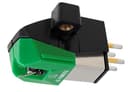
Audio-Technica AT-VM95E

Audio-Technica AT-VM95E

The upgrade almost everyone should make first: a moving-magnet cartridge with an elliptical stylus that pulls noticeably more detail from the groove than the conical pickups on budget decks — for a modest price. It shares the VM95 body, so you can later step up just the stylus.

Best overall upgrade
$55.00 · View on Amazon

$74.0026% off

Price as of July 25, 2026. #ad How we’re funded

2
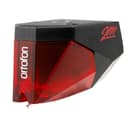
Ortofon 2M Red

Ortofon 2M Red

The step-up standard: an elliptical moving-magnet cartridge that's the factory choice on many mid-price decks, with a clean, slightly forward sound and a well-known upgrade path (fit a 2M Blue stylus later). A safe, widely loved improvement for a good tonearm.

Best step-up
$103.60 · View on Amazon

$109.996% off

Price as of July 25, 2026. #ad How we’re funded

3
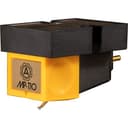
Nagaoka MP-110

Nagaoka MP-110

The enthusiast's warm pick: a Japanese moving-permalloy cartridge with an elliptical stylus, prized for a smooth, full-bodied tone that flatters older and busier pressings. If the 2M Red reads a touch bright to you, this is the antidote.

Best warm sound
$157.38 · View on Amazon

Price as of July 25, 2026. #ad How we’re funded

4
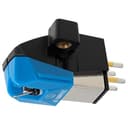
Audio-Technica AT-VM95C

Audio-Technica AT-VM95C

The budget entry in the VM95 family: a conical stylus on the same upgradeable body. It's the cheapest way into the range, and its real value is the upgrade path — start here, then fit an elliptical or microline stylus when you're ready, with no new cartridge or alignment.

Best budget entry
$53.85 · View on Amazon

Price as of July 25, 2026. #ad How we’re funded

5
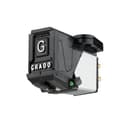
Grado Prestige Green4

Grado Prestige Green4

The hand-built American alternative: Grado's moving-iron design gives a rich, organic tone that fans describe as more 'analog' than the mainstream moving magnets. A distinctive step up if you want a different flavor from the Audio-Technica and Ortofon house sounds.

Best hand-built alternative
$140.00 · View on Amazon

Price as of July 25, 2026. #ad How we’re funded

The picks in full

#1Best overall upgrade

Audio-Technica AT-VM95E

The upgrade almost everyone should make first: a moving-magnet cartridge with an elliptical stylus that pulls noticeably more detail from the groove than the conical pickups on budget decks — for a modest price. It shares the VM95 body, so you can later step up just the stylus.

Strengths

  • Elliptical stylus tracks more of the groove than a conical
  • Shares the VM95 stylus mount — upgrade the tip without a new cartridge
  • High output that suits any moving-magnet phono input

Trade-offs

  • Needs a tonearm with adjustable tracking force to get the best from it
  • Moving magnet, so it won't satisfy someone chasing moving-coil detail
TypeMoving magnet (MM)
StylusElliptical (replaceable)
Output4.0 mV
Tracking force1.8 - 2.2 g (2.0 g typical)
MountStandard 1/2-inch

Note. Its killer feature is the shared VM95 body: start with this elliptical, and you can drop in a VM95ML microline stylus years later for a big jump with no re-alignment.

Specifications read from the manufacturer / product listing, on July 24, 2026. “Not published” means the maker does not state that figure.

#2Best step-up

Ortofon 2M Red

The step-up standard: an elliptical moving-magnet cartridge that's the factory choice on many mid-price decks, with a clean, slightly forward sound and a well-known upgrade path (fit a 2M Blue stylus later). A safe, widely loved improvement for a good tonearm.

Strengths

  • Refined elliptical stylus with a detailed, lively presentation
  • Fit a 2M Blue stylus later for a drop-in upgrade
  • A known quantity found on many respected decks

Trade-offs

  • Higher tracking mass suits a mid-quality arm, not the flimsiest ones
  • Some listeners find the top end a touch bright
TypeMoving magnet (MM)
StylusElliptical (replaceable)
Output5.5 mV
Tracking force1.6 - 2.0 g (1.8 g typical)
MountStandard 1/2-inch

Note. Like the AT-VM95, the 2M series shares stylus assemblies, so the Red is the on-ramp to Blue and beyond without buying a whole new cartridge.

Specifications read from the manufacturer / product listing, on July 24, 2026. “Not published” means the maker does not state that figure.

#3Best warm sound

Nagaoka MP-110

The enthusiast's warm pick: a Japanese moving-permalloy cartridge with an elliptical stylus, prized for a smooth, full-bodied tone that flatters older and busier pressings. If the 2M Red reads a touch bright to you, this is the antidote.

Strengths

  • Smooth, warm, musical character that suits a wide record collection
  • Elliptical stylus with excellent tracking for the price
  • A long-standing enthusiast favorite

Trade-offs

  • Less widely stocked than Audio-Technica and Ortofon
  • Warm tone is a preference — detail-chasers may want the elliptical ATs
TypeMoving magnet / moving permalloy (MM)
StylusElliptical (replaceable)
OutputNot published (high output, MM-compatible)
Tracking force1.5 - 2.0 g (1.8 g typical)
MountStandard 1/2-inch

Note. Nagaoka doesn't publish an output figure as prominently as Ortofon; it runs as a standard high-output MM into any moving-magnet input, which is what matters for compatibility.

Specifications read from the manufacturer / product listing, on July 24, 2026. “Not published” means the maker does not state that figure.

#4Best budget entry

Audio-Technica AT-VM95C

The budget entry in the VM95 family: a conical stylus on the same upgradeable body. It's the cheapest way into the range, and its real value is the upgrade path — start here, then fit an elliptical or microline stylus when you're ready, with no new cartridge or alignment.

Strengths

  • Lowest-cost way into the VM95 family
  • Conical stylus is forgiving and easy to set up
  • Upgrade to an elliptical/microline stylus later on the same body

Trade-offs

  • Conical stylus retrieves less detail than an elliptical
  • You'll likely want the VM95E soon — many should just start there
TypeMoving magnet (MM)
StylusConical (replaceable)
Output3.5 mV
Tracking force1.8 - 2.2 g (2.0 g typical)
MountStandard 1/2-inch

Note. If your budget stretches even slightly, the VM95E elliptical is the better buy for a small premium — but the shared body means upgrading later costs only a stylus, not a cartridge.

Specifications read from the manufacturer / product listing, on July 24, 2026. “Not published” means the maker does not state that figure.

#5Best hand-built alternative

Grado Prestige Green4

The hand-built American alternative: Grado's moving-iron design gives a rich, organic tone that fans describe as more 'analog' than the mainstream moving magnets. A distinctive step up if you want a different flavor from the Audio-Technica and Ortofon house sounds.

Strengths

  • Moving-iron design with a rich, full, musical tone
  • Hand-built in Brooklyn, New York
  • A genuinely different character from the mainstream MM cartridges

Trade-offs

  • Grado cartridges can hum on some direct-drive decks (unshielded motor)
  • House sound is warm and forward — a matter of taste
TypeMoving iron (MI), high output
StylusElliptical (replaceable)
Output5 mV (high output, MM-compatible input)
Tracking force1.5 - 2.0 g
OriginHand-built in the USA

Note. One real compatibility note: Grado's moving-iron cartridges can pick up hum from the unshielded motors of some direct-drive turntables. On a belt-drive deck this is rarely an issue.

Specifications read from the manufacturer / product listing, on July 24, 2026. “Not published” means the maker does not state that figure.

How to choose your cartridge

For most upgraders, the Audio-Technica AT-VM95E is the answer: an elliptical stylus, a big jump over the conical pickups on budget decks, and a body that accepts higher styli later. To step up further, the Ortofon 2M Red is the mid standard, with its own upgrade path to the 2M Blue stylus. If you want a warmer tone— smoother, fuller, easy on busy or older pressings — the Nagaoka MP-110 is the enthusiast pick, and the Grado offers a distinctive hand-built American moving-iron character.

Two compatibility notes. First, confirm your deck uses the standard half-inch mount (most do); some entry automatics use a proprietary snap-in cartridge instead. Second, if you have a direct-drive deck, note that Grado’s moving-iron cartridges can pick up hum from some unshielded motors — a non-issue on belt drive. Whatever you choose, set it up carefully; our setup guide covers tracking force and alignment.

Frequently asked questions

Is upgrading a turntable cartridge worth it?

It's usually the best-value upgrade you can make. Moving from a conical stylus to an elliptical (say, the AT-VM95E) pulls out detail the cheaper tip skates over. The one caveat: your tonearm needs adjustable tracking force to get the most from a better cartridge.

What's the difference between a cartridge and a stylus?

The stylus is the replaceable tip (the diamond and cantilever) that traces the groove; the cartridge is the whole assembly that holds it and converts the movement into an electrical signal. On families like the VM95 and 2M, you can replace or upgrade just the stylus.

Conical or elliptical stylus — which should I get?

Elliptical, if your budget allows. A conical (spherical) tip is cheaper and forgiving but retrieves less detail; an elliptical contacts more of the groove wall for clearly better sound. Microline and Shibata tips go further still, at higher prices.

Will any cartridge fit my turntable?

Most use the standard half-inch, two-screw mount, which fits the great majority of decks. Some budget automatics use a proprietary snap-in cartridge that only takes the maker's replacement. Check your deck's mount type before buying.

Do I need a special preamp for these cartridges?

No — every pick here is a moving-magnet or high-output moving-iron cartridge that works with any standard MM phono input or preamp. Only low-output moving-coil cartridges need a special MC stage, which is why we've kept those off this list.

Sources

Keep reading