PLATTER & PLINTH

Essential Soul & Funk Records on Vinyl

The genre where the format and the music fit together best — these are albums built as continuous sides, and several of them are the most revealing records you can own for the money.

By Stephen V.Last updated How we pick

Soul and funk have a better claim than any other genre here to being album music, and it happened at a specific moment. Through the 1960s soul was a singles business: labels sold 45s and albums were compilations of them. Around 1969 to 1971 that changed, and a handful of records — two of them below — were built as continuous sides with tracks running into one another.

That matters on vinyl in a way it does not on a streaming service. When the music was designed to run for a side, a side is the correct unit, and the thing people find tedious about vinyl — getting up to flip it — stops being an interruption and becomes the structure.

The second reason this genre is worth collecting early is more practical: it contains the quietest, most revealing records on this site. The Al Green and Donny Hathaway albums below are performances held deliberately at low level, which means most of what makes them work sits just above your system’s noise floor. Records like that tell you more about a turntable in five minutes than a loud record does in an hour.

If you arrived here from the hip-hop list, this is the shelf most of those samples came from, and the two collections sit naturally next to each other.

How this is funded:we earn a commission if you buy through our links, at no extra cost to you. It never changes which product we recommend, and we’ll tell you plainly when to skip one. Full disclosure.

Quick picks

Ordered for someone building from nothing, on availability, price and how each record uses the format. No listening claims — we have not heard these pressings; here is exactly what we do instead.

#ProductBest forPrice
1
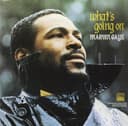
Marvin Gaye What's Going On

Marvin Gaye What's Going On

1971, and the record that turned soul from a singles business into an album one — tracks flow into each other, so a side plays as a continuous piece. It is also warm, uncluttered and easy to live with, which makes it one of the best first records on the whole site regardless of genre.

Start here
$20.99 · View on Amazon

$29.9930% off

Price as of September 7, 2026. #ad How we’re funded

2
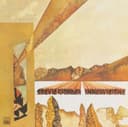
Stevie Wonder Innervisions

Stevie Wonder Innervisions

A 1973 record largely played by one person, with synthesizers used as instruments rather than effects. The arrangements are busy but clean, and the bass lines are melodic and mixed forward — which makes it a genuinely useful record for hearing whether your speakers are placed properly.

Best for speaker placement
$29.99 · View on Amazon

Price as of September 7, 2026. #ad How we’re funded

3
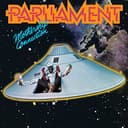
Parliament Mothership Connection

Parliament Mothership Connection

1975, and the loudest, most physical record in this group — horn section, several bass players' worth of low end, and grooves that run long enough to fill a side. It is the funk record to buy first, and the one that will tell you quickly whether your speakers can actually move air.

Best low-end test
$20.99 · View on Amazon

$29.9930% off

Price as of September 7, 2026. #ad How we’re funded

4
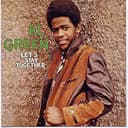
Al Green Let's Stay Together

Al Green Let's Stay Together

1972, recorded in Memphis with a house band playing softly behind a singer who never pushes. It is the quietest record in this set and the one that most rewards a low-noise setup, because so much of what makes it work sits just above the noise floor. Reissued by Fat Possum, which has kept the Hi Records catalog in print.

Best noise-floor test
$25.56 · View on Amazon

Price as of September 7, 2026. #ad How we’re funded

5
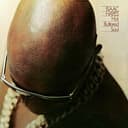
Isaac Hayes Hot Buttered Soul

Isaac Hayes Hot Buttered Soul

A 1969 album with four tracks on it, one of them running past eighteen minutes. That is the point: it was built for the album format at a time when soul was still a singles genre, and it is the record in this set that most obviously could not exist as a playlist.

Best long-form listen
$29.98 · View on Amazon

Price as of September 7, 2026. #ad How we’re funded

6
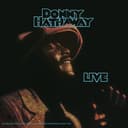
Donny Hathaway Live

Donny Hathaway Live

A 1972 live album recorded in small clubs, with an audience close enough that they function as part of the band. Like the Bill Evans record on the jazz list, it is a room recording — and room recordings are the most informative thing you can put on a system you are still setting up, because the space either appears or it does not.

Best room recording
$31.80 · View on Amazon

Price as of September 7, 2026. #ad How we’re funded

The picks in full

#1Start here

Marvin Gaye What's Going On

1971, and the record that turned soul from a singles business into an album one — tracks flow into each other, so a side plays as a continuous piece. It is also warm, uncluttered and easy to live with, which makes it one of the best first records on the whole site regardless of genre.

Strengths

  • Continuous sides make it a natural fit for the format
  • Warm and uncluttered — flattering on a modest system
  • Consistently among the cheapest canonical albums in print

Trade-offs

  • The listing publishes no weight or mastering credit
  • Many Motown reissues exist at many prices and we have not compared them
  • Short album; you will be up to flip it quickly
ArtistMarvin Gaye
Edition (per listing)Standard vinyl issue
LabelMotown Records
FormatVinyl LP
Stated weightNot published
Listing verified2026-09-07, live Creators API

Specifications read from the manufacturer / product listing, on September 7, 2026. “Not published” means the maker does not state that figure.

#2Best for speaker placement

Stevie Wonder Innervisions

A 1973 record largely played by one person, with synthesizers used as instruments rather than effects. The arrangements are busy but clean, and the bass lines are melodic and mixed forward — which makes it a genuinely useful record for hearing whether your speakers are placed properly.

Strengths

  • Busy but clean arrangements — detailed without being congested
  • Prominent, tuneful bass makes speaker placement audibly matter
  • Long-running Motown catalog issue at sensible money

Trade-offs

  • Early-synthesizer textures date it more than the other soul picks
  • No stated weight or mastering source on the listing
  • Multiple competing reissues; provenance is not published by any of them
ArtistStevie Wonder
Edition (per listing)Standard vinyl issue
LabelMotown Records
FormatVinyl LP
Stated weightNot published
Listing verified2026-09-07, live Creators API

Specifications read from the manufacturer / product listing, on September 7, 2026. “Not published” means the maker does not state that figure.

#3Best low-end test

Parliament Mothership Connection

1975, and the loudest, most physical record in this group — horn section, several bass players' worth of low end, and grooves that run long enough to fill a side. It is the funk record to buy first, and the one that will tell you quickly whether your speakers can actually move air.

Strengths

  • Deep, sustained bass that genuinely tests a small speaker
  • Long grooves suit the side-length format
  • Among the cheaper canonical funk titles in print

Trade-offs

  • Demanding on the low end — a small bookshelf pair will run out before it does
  • No stated weight or mastering credit
  • Deliberately busy mixes; not a clarity showcase
ArtistParliament
Edition (per listing)Standard vinyl issue
LabelMercury
FormatVinyl LP
Stated weightNot published
Listing verified2026-09-07, live Creators API

Specifications read from the manufacturer / product listing, on September 7, 2026. “Not published” means the maker does not state that figure.

#4Best noise-floor test

Al Green Let's Stay Together

1972, recorded in Memphis with a house band playing softly behind a singer who never pushes. It is the quietest record in this set and the one that most rewards a low-noise setup, because so much of what makes it work sits just above the noise floor. Reissued by Fat Possum, which has kept the Hi Records catalog in print.

Strengths

  • Restrained, low-level performances make surface noise and hum obvious
  • Fat Possum has kept the catalog in print and affordable
  • Short, consistent album with no weak track

Trade-offs

  • Quiet by design — if your phono stage hums, this is where you will hear it
  • No weight or mastering credit published on the listing
  • Less immediately impressive than the louder soul records here
ArtistAl Green
Edition (per listing)Standard vinyl issue
LabelFat Possum
FormatVinyl LP
Stated weightNot published
Listing verified2026-09-07, live Creators API

Note. A useful diagnostic record. If you hear hum under the quiet passages, the problem is almost always a missing ground wire rather than the pressing.

Specifications read from the manufacturer / product listing, on September 7, 2026. “Not published” means the maker does not state that figure.

#5Best long-form listen

Isaac Hayes Hot Buttered Soul

A 1969 album with four tracks on it, one of them running past eighteen minutes. That is the point: it was built for the album format at a time when soul was still a singles genre, and it is the record in this set that most obviously could not exist as a playlist.

Strengths

  • Extremely long tracks make the format's side length the structure
  • Lush orchestral arrangements with a lot of space in them
  • Concord has kept it in print as a standard catalog reissue

Trade-offs

  • Very long sides mean the cut is working hard; inner-groove behavior matters
  • Four tracks will feel thin to anyone expecting a conventional album
  • No published weight or mastering chain
ArtistIsaac Hayes
Edition (per listing)Standard vinyl issue
LabelConcord Music Group
FormatVinyl LP
Stated weightNot published
Listing verified2026-09-07, live Creators API

Specifications read from the manufacturer / product listing, on September 7, 2026. “Not published” means the maker does not state that figure.

#6Best room recording

Donny Hathaway Live

A 1972 live album recorded in small clubs, with an audience close enough that they function as part of the band. Like the Bill Evans record on the jazz list, it is a room recording — and room recordings are the most informative thing you can put on a system you are still setting up, because the space either appears or it does not.

Strengths

  • Close-miked club recording with genuine spatial information
  • The audience is part of the performance rather than an intrusion
  • Atlantic catalog reissue rather than a limited pressing

Trade-offs

  • Live recording with real-world limitations — not a clean studio product
  • No stated weight or mastering source
  • Priced above the cheapest soul picks here
ArtistDonny Hathaway
Edition (per listing)Standard vinyl issue
LabelAtlantic Catalog Group
FormatVinyl LP
Stated weightNot published
Listing verified2026-09-07, live Creators API

Specifications read from the manufacturer / product listing, on September 7, 2026. “Not published” means the maker does not state that figure.

Why quiet records are the useful ones

The instinct when testing a new system is to put on something loud and impressive. It is exactly backwards. Loud, dense, compressed material masks problems; quiet material exposes them, because there is nothing else happening at that level to hide behind.

Three faults that only quiet records reveal:

  • Hum. A steady low tone under quiet passages is almost always a grounding problem — most often the thin ground wire between turntable and phono stage left unattached, because it looks optional and is not. Let’s Stay Together is the best test on this page: if you hear hum under it, connect the ground before you conclude anything else. The phono stage explainer covers where that wire goes.
  • Surface noise you have caused. Quiet records make it obvious whether crackle is in the pressing or on it. Dust generates a random, scattered crackle that a brush removes; damage generates a repeating tick locked to the rotation that nothing removes. A cleaning kit settles which one you have in about a minute.
  • A stylus past its life. Worn tips turn quiet high-frequency detail into a smear. On these records that is unmissable. The published hour figures are lower than most owners assume.

The other extreme: what funk asks of your speakers

Mothership Connection is the opposite test and just as useful. Funk from this era is built on sustained, deep bass lines with a lot of energy below 80 Hz, and that is the region where small speakers simply stop.

This is worth knowing because it changes what an upgrade should be. If funk sounds thin, the limitation is nearly always the speakers rather than the turntable, the cartridge or the pressing — a 4-inch woofer cannot move enough air regardless of what feeds it. The relevant page is bookshelf speakers for vinyl, where the published low-frequency limits are set out per model.

The second thing heavy bass does is travel back into the turntable through whatever furniture both are standing on, and reach the cartridge, which cannot tell the difference between that and the groove. Played loud, that becomes the rising howl of acoustic feedback. Moving the speakers onto their own stands breaks the path — see speaker stands.

Continuous sides, and buying for the format

Three of these six were built to be played straight through, and it changes what a good purchase looks like.

  • What’s Going On runs its tracks into each other, so a side is a single piece of music. It is also short, which means a comfortable cut with room for the low end.
  • Hot Buttered Soul takes it to the extreme: four tracks total, one of them past eighteen minutes. A whole side is one song. Long sides do mean the cutting engineer has less room, so inner-groove performance matters more here than on a record with eight short tracks.
  • Live is a club recording with the audience close enough to function as part of the band, which is the same property that makes the Bill Evans record useful: real spatial information that either survives your setup or does not.

What is missing, and why

Three genuine omissions, all for the same reason — they are not currently purchasable as standard in-print pressings, and this hub does not point readers at listings we would not buy ourselves.

  • Curtis Mayfield, Super Fly — the in-stock listings are single graded second-hand copies of the 1972 original at collector prices, not a current reissue.
  • Bill Withers, Still Bill — available chiefly as part of an expensive multi-album audiophile set rather than as a standalone record.
  • Aretha Franklin, I Never Loved a Man the Way I Love You — showing a single copy at a price well above the rest of this page.

All three belong on this list on merit. Vinyl listings churn faster than anything else this site covers, so check again in a month — and in the meantime the six above are all reliably in print.

Where this genre goes next

Soul and funk sit at the center of a web of other genres, which makes it an unusually good place to start if you do not yet know what you collect. Hip-hop is built directly on these records — most obviously the Parliament and Isaac Hayes sides. Jazz shares the players and the recording practices. And if you want to hear how much of this is one continuous story, put Aquemini on after Mothership Connection and the connection makes itself.
Frequently asked questions

What soul album should I buy on vinyl first?

Marvin Gaye's What's Going On. It is one of the cheapest canonical albums in print, it is warm and uncluttered so it flatters a modest system rather than exposing it, and its tracks run into one another so a side plays as a single continuous piece — which is the format working with the music instead of against it. It is a strong candidate for a first record regardless of genre.

Why do quiet records reveal more about a turntable than loud ones?

Because there is nothing happening at low level to mask problems. Hum from a disconnected ground wire, surface noise from dust, and the smearing caused by a worn stylus all sit at roughly the noise floor — so loud, compressed material buries them and quiet material puts them on display. Al Green's Let's Stay Together and Donny Hathaway's Live are the two best tests on this page for exactly that reason.

Why does funk sound thin on my system?

Almost always the speakers rather than the turntable or the pressing. Funk from the 1970s carries sustained energy below 80 Hz, and a small bookshelf speaker with a 4-inch woofer physically cannot move enough air to reproduce it — no cartridge or phono stage upgrade changes that. Check the published low-frequency limit of your speakers before spending anything on the front end.

What causes a humming noise when I play records?

In most cases the ground wire between the turntable and the phono preamp is not connected. It is a thin separate wire, it looks optional, and it is not — without it the tonearm and cartridge act as an aerial for mains hum. Connect it first. If the hum persists, move the turntable away from the amplifier and any power supply, and check that the interconnects are fully seated.

Is crackle on a record dust or damage?

You can tell them apart by the pattern. Dust produces random, scattered crackle spread unevenly across the side, and a carbon fiber brush or a wet clean removes most of it. Damage produces a tick or pop that repeats at the same point on every rotation, locked to the rotation speed, and no amount of cleaning removes it. Clean first, then listen again before concluding a record is damaged.

Why are some classic soul albums not on this list?

Because they are not currently available as standard in-print pressings. Curtis Mayfield's Super Fly is showing only graded second-hand originals at collector prices, Bill Withers's Still Bill is mainly available inside an expensive multi-album audiophile set, and Aretha Franklin's I Never Loved a Man the Way I Love You is showing a single copy well above this page's price range. All three belong here on merit — vinyl listings churn constantly, so it is worth checking again later.

Sources

Keep reading