How these were ranked
- The maker has to publish manual operation. Every deck here carries a published Operation: Manual or Fully manual line in its specification. That is a deliberately narrow gate, and it keeps out decks that are manual in practice but never say so, and semi-automatics like the Denon DP-450USB, which publishes auto lift and stop and therefore belongs on the automatic list rather than this one.
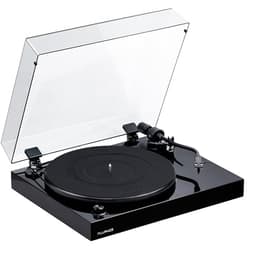
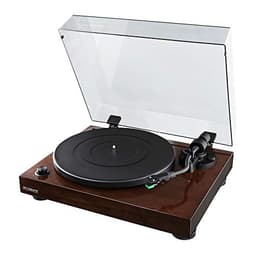
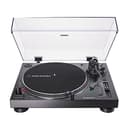
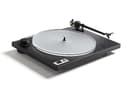
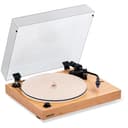
- What the cartridge is, by name.Deleting the automatic mechanism should buy you something, and on this page it mostly buys cartridge. The RT82 ships with an Ortofon OM10, the RT85 with an Ortofon 2M Blue, the AT-LP120XUSB with an AT-VM95E and the U-Turn Orbit Plus with an Ortofon OM series. All four are elliptical or better, all four are user-replaceable, and three of them have a factory stylus upgrade path that does not require touching the alignment — see our cartridge roundup.
- Whether a phono stage is included, and whether it can be bypassed. This is the hidden cost line. The RT81 and the AT-LP120XUSB publish switchable built-in stages; the RT81 publishes a full bypass, which means the internal stage gets completely out of the signal path when you outgrow it. The RT82, the RT85 and the standard Orbit publish no internal stage at all, so budget for a separate phono preamp on top of the deck price.
- What the motor is doing to the platter. The RT85 publishes an isolated speed-control motor; the AT-LP120XUSB is direct drive with the motor under the platter and a pitch control on the plinth. These are genuinely different engineering answers to the same problem and our belt drive vs direct drive page covers which one suits which room.
Manual does not mean difficult
The practical routine on every deck here is the same four steps: set the platter speed, lift the cue lever, move the arm until the stylus sits over the lead-in, drop the lever. At the end of the side, raise the lever and swing the arm back. With a cue lever the stylus descends on a damped piston, so it lands more gently than most automatic mechanisms manage.
What manual does mean is that two adjustments are now yours. Tracking force has to be set with the counterweight rather than fixed at the factory, and anti-skate has to match it. Our tonearm balancing guide walks through both in about ten minutes with no tools, and a cheap digital gauge removes the guesswork for about the price of two records. Getting this right is the single biggest thing standing between a manual deck and a worn record, which is why we would rather you read those two pages than buy a more expensive turntable.
Who should not buy a manual deck
Three cases, stated plainly. If the deck will be used by people who did not choose it — children, house guests, a shared living room — an automatic removes the one moment where a record gets scratched. If you listen in bed, an automatic or at least a defeatable auto-stop saves the run-out groove from an hour of needless play. And if you want the record to start the moment you press a button, with no further involvement, the whole premise of this page is wrong for you; the automatic roundup is the right list.
We own none of these decks. Every figure above is read from the maker’s published specification or the product listing on a dated visit, and where a maker publishes nothing the table says so — our methodology explains why we would rather print that than an estimate.