PLATTER & PLINTH

The Best Record Cleaning Machines Under $200

The serious machines start at $350 and run past $600. Here is what the money below $200 actually buys, and when it is enough.

By Stephen V.Last updated How we pick

The verdict

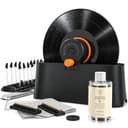
The Spin-Clean Record Washer Kit is the pick under $200.It is a manual bath — you fill it, you turn the record by hand, you dry it — and that is the point: there is no motor to fail, no filter to replace and no power supply, so the whole budget goes into the thing that does the work. It is for anyone with a stack of second-hand records and no interest in spending $600. If you want the job done for you, the HumminGuru EZ Record Washer is the powered option that still fits the budget. The budget pick is the Vinyl Styl Deep Groove Record Washer, the cheapest machine here and the one to take if you are cleaning a dozen records rather than a hundred.

Spin-Clean Record Washer Kit

Best under $200

Spin-Clean Record Washer Kit

$63.99 · View on Amazon

$79.9920% off

Price as of November 22, 2026. #ad How we’re funded

Record cleaning splits at about $200. Above it you are buying automation and ultrasonic cavitation — the HumminGuru HG01 at around $600 washes and dries unattended, and the Record Doctor VI vacuums fluid back out of the groove. Below it you are buying a bath and a brush, and you are supplying the labor.

That is a real distinction and this page will not blur it: nothing under $200 reaches the bottom of a groove the way 40 kHz cavitation does. What a $70 to $110 washer does do is hold the record steady in fluid while brushes work both sides at once, which is a genuine step up from a cloth and a spray bottle, and it does it for the price of two new LPs.

Every price on this page comes from our daily price feed with its own as-of date on the button. Three products in our registry sat under $200 at the last refresh and all three are here — we have not padded the list, and we have not moved anything over the line to fill a slot.

How this is funded: we earn a commission if you buy through our links, at no extra cost to you. It never changes which product we recommend, and we’ll tell you plainly when to skip one. Full disclosure.

Quick picks

Ranked on published specs, drive/motor design and buyer fit. Select a row to jump to the full write-up. We have not heard most of these units — here is exactly what we do instead.

#ProductBest forPrice
1
Spin-Clean Record Washer Kit

Spin-Clean Record Washer Kit

The long-standing default for deep-cleaning records without electricity: a basin, wedge-fit brushes that clean both sides at once, snap-in rollers for different record sizes and an alcohol-free concentrate you dilute in the bath. Nothing about it is clever, and that is exactly why it keeps working.

Best overall
$63.99 · View on Amazon

$79.9920% off

Price as of November 22, 2026. #ad How we’re funded

2
HumminGuru EZ Record Washer

HumminGuru EZ Record Washer

A manual bath washer with the two features that separate a good one from an improvised one: a watertight label-protecting clamp that presses straight down, and goat-hair brushes soft enough to work the groove without scouring it. Handles 7, 10 and 12 inch records and drains without a mess.

Best powered option
$109.99 · View on Amazon

Price as of November 22, 2026. #ad How we’re funded

3
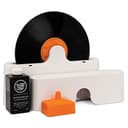
Vinyl Styl Deep Groove Record Washer

Vinyl Styl Deep Groove Record Washer

A self-contained bath system that washes 7, 10 and 12 inch records, with a label clamp that keeps the paper dry. It is the mid-point between wiping a record and buying a motorized machine, and the clamp is the reason it is safer than improvising in a sink.

Budget pick
$69.99 · View on Amazon

Price as of November 22, 2026. #ad How we’re funded

The picks in full

#1Best overall

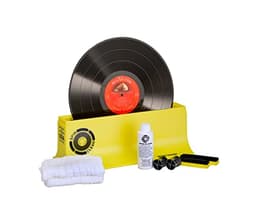
Spin-Clean Record Washer Kit

The long-standing default for deep-cleaning records without electricity: a basin, wedge-fit brushes that clean both sides at once, snap-in rollers for different record sizes and an alcohol-free concentrate you dilute in the bath. Nothing about it is clever, and that is exactly why it keeps working.

Strengths

  • Cleans both sides simultaneously between wedge-fit brushes
  • Alcohol-free concentrate — safe for the vinyl and for most labels
  • No power, no motor, nothing to fail; brushes and rollers are replaceable

Trade-offs

  • The bath needs changing regularly or you are washing records in dirt
  • Slow if you have hundreds of records to work through
TypeManual bath washer
Record sizes33, 45 and 78 RPM records
SolutionAlcohol-free concentrate (4 oz), diluted in the basin
IncludesBasin with lid, brush pair, roller pair, two drying cloths
PowerNone required

Note. Change the bath water more often than feels necessary. The failure mode of every manual washer is the same: it stops cleaning and starts redistributing.

Specifications read from the manufacturer / product listing, on August 11, 2026. “Not published” means the maker does not state that figure.

#2Best powered option

HumminGuru EZ Record Washer

A manual bath washer with the two features that separate a good one from an improvised one: a watertight label-protecting clamp that presses straight down, and goat-hair brushes soft enough to work the groove without scouring it. Handles 7, 10 and 12 inch records and drains without a mess.

Strengths

  • Watertight label clamp — wet-clean without ruining paper labels
  • Ultra-soft goat-hair brushes rather than stiff synthetic bristles
  • Handles 7, 10 and 12 inch records, with a drying rack and dual drain outlets

Trade-offs

  • Manual — you turn the handle, one record at a time
  • No vacuum or ultrasonic action, so heavily contaminated records still need repeat passes
TypeManual bath washer
Record sizes7", 10" and 12" (45 RPM adapter included)
Label protectionWatertight clamp
BrushesGoat hair
PowerNone required

Note. The clamp is what makes this safer than a sink. Wet-cleaning a record without sealing the label is the fastest way to destroy an original pressing's value.

Specifications read from the manufacturer / product listing, on August 12, 2026. “Not published” means the maker does not state that figure.

#3Budget pick

Vinyl Styl Deep Groove Record Washer

A self-contained bath system that washes 7, 10 and 12 inch records, with a label clamp that keeps the paper dry. It is the mid-point between wiping a record and buying a motorized machine, and the clamp is the reason it is safer than improvising in a sink.

Strengths

  • Label protection clamp lets you wet-wash without ruining the paper labels
  • Handles 7, 10 and 12 inch records, with a 45 RPM adapter included
  • Self-contained — nothing to source separately once it arrives

Trade-offs

  • Manual and slow compared with a motorized or ultrasonic machine
  • Takes up real shelf space next to the turntable
TypeManual bath washer
Record sizes7", 10" and 12"
Label protectionYes — clamp included
Includes45 RPM adapter

Note. A bath system is for records that are actually dirty — secondhand finds, inherited collections, anything stored in a garage. New records need a brush, not a bath.

Specifications read from the manufacturer / product listing, on August 11, 2026. “Not published” means the maker does not state that figure.

How these were ranked

  • What the machine actually does to the record. A bath that holds the disc upright between brushes cleans both sides evenly and keeps the label dry. That is the mechanism all three share, and it is the reason any of them beats wiping by hand.
  • What happens to the fluid afterwards. This is the real difference between a sub-$200 washer and a $350 machine: none of these three extracts the fluid. You dry the record, and how carefully you do that decides how much of the loosened grime ends up back in the groove. Budget for microfiber cloths.
  • Consumables and parts. A manual bath has brushes and fluid. A powered unit adds a filter and a motor. Over five years the manual option is usually the cheaper one, which is part of why it is ranked first.
  • Throughput. If you are cleaning one record before you play it, any of these is fine. If you have just bought forty records at a fair, the powered unit is the one that will still be in use at record thirty.

When to skip all three and save

Three cases, stated plainly, because a machine is the most commonly regretted purchase in record care.

If your records are mostly new. A sealed modern pressing has pressing residue and dust on it, not decades of grime. A brush-and-fluid kit handles that completely for a fraction of the price, and our accessories under $25 page covers the whole maintenance layer.

If the problem is clicks in the same place every revolution. That is damage, not dirt, and no machine at any price fills a scratch. Our guide to spotting a bad pressing covers telling the two apart before you spend money on the wrong fix.

If you are buying used records in volume and plan to keep doing it. Here the advice runs the other way: wait and buy the ultrasonic machine. At forty records a month the labor of a manual bath is the binding constraint, and the unattended cycle is what you are really paying for. The full case is in the HG01 review, including the argument against it.

What to buy alongside it

Two things, and neither is optional. Microfiber cloths, because every machine on this page leaves the record wet and the drying step is where a careless owner undoes the clean. And fresh inner sleeves— returning a cleaned record to the paper sleeve it arrived in puts fibers and static straight back onto it, which our storage and sleeves page covers properly.

Then keep the stylus clean. A spotless record played with a dirty stylus sounds like a dirty record, because the debris sits between the diamond and the groove. Two minutes with a brush, in the direction described in how to clean a turntable stylus, protects the work the machine just did.
Frequently asked questions

Is a record cleaning machine under $200 worth it?

Yes if you buy second-hand records regularly, no if your collection is mostly new. Under $200 you are buying a bath that holds the record steady between brushes and cleans both sides evenly, which is a real step up from wiping by hand. You are not buying fluid extraction or ultrasonic cavitation, and this page does not pretend otherwise.

What is the difference between a washer under $200 and an ultrasonic machine?

Mechanism and labor. A sub-$200 washer uses brushes in a fluid bath, which works on the record surface and the upper groove walls. An ultrasonic machine forms and collapses microscopic cavitation bubbles throughout the liquid, which reaches the full depth of the groove where a brush fiber physically cannot fit. The ultrasonic machine also runs unattended and dries the record for you. It costs roughly three to six times as much.

Do these machines dry the records?

Not the manual baths - you dry those yourself with microfiber cloths, and doing it carelessly undoes much of the clean. Budget for cloths as part of the purchase. Powered units in this band handle more of the process, but none of the three on this page extracts fluid from the groove the way a vacuum machine does.

How many records can I clean before replacing the fluid?

It depends on how dirty the records are, and the honest answer is that you will see it: the bath goes cloudy. Change the fluid when it does rather than counting records. Fluid and brushes are the running cost of a manual washer, and over several years they are usually still cheaper than the filter and motor of a powered machine.

Will cleaning remove clicks and pops?

It removes the ones caused by debris, which is many of them on a second-hand record. It cannot remove the ones caused by damage - groove wear from a heavy or worn stylus, or a scratch. The test is repeatability: a click in the same spot on every revolution is physical damage, and no machine addresses it.

Are the prices on this page current?

Each button carries its own as-of date from our daily price feed. If the feed cannot confirm a price, the button reads "Check price on Amazon" rather than showing a number. Products qualify for this page on the price at the last refresh, so one that has since crossed $200 may still be listed here.

Sources

Keep reading