Does a Good Phono Preamp Make a Difference?
Yes, no, and it depends — in that order of honesty. The size of the difference is set by what you are replacing, and there is a case where the answer is genuinely nothing.
How this is funded: we earn a commission if you buy through our links, at no extra cost to you. It never changes which product we recommend, and we’ll tell you plainly when to skip one. Full disclosure.
The short answer: the size of the difference is decided by what you are replacing, not by what you are buying. Replace nothing— a deck with no stage at all — and it is the difference between music and a thin whisper. Replace a cheap built-in stage under a good cartridge and it is a real, moderate improvement you will hear mostly as a quieter background and a better-matched level. Replace the stage inside an all-in-one record player and it is nothing at all, because the signal you would be improving never leaves the box.
What the box is doing in the first place
A phono stage has two jobs, and neither is optional. The first is gain: a moving-magnet cartridge puts out a few thousandths of a volt — Audio-Technica publishes 4.0 mV for the AT-VM95E, Ortofon 5.5 mV for the 2M Red and 2M Blue — where a line input expects something in the region of a hundred times that.
The second is RIAA equalization. When a record is cut, bass is reduced and treble lifted, because otherwise the low-frequency excursion would be too wide for the groove spacing and the high-frequency detail would sit too close to the noise floor. Playback has to apply the exact mirror of that curve. This is why a turntable plugged into a line input sounds thin and bass-light rather than merely quiet: turning the volume up restores the level but never the tonal balance.
So the first question is not “is my preamp good?” but “do I have one?” — do I need a phono preamp settles that in one look at the back panel.
What actually varies between stages
Four things, all of which the better makers publish and the worse ones do not.
Gain, and whether you can change it.A fixed stage is set for a typical moving-magnet output. If your cartridge sits below that, the whole system plays quiet and you end up running the volume control near the top, where most amplifiers are least happy. The Fosi Box X2 switches between 39, 42 and 45 dB and the ART DJ PRE II has a continuously adjustable control — the cheapest cure available for a level problem.
Loading. This is the specification that justifies spending more, and only when your cartridge publishes a figure to meet. Ortofon asks for 47 kOhm with 150 to 300 pF of capacitancefor the 2M Blue — the cartridge fitted to a Fluance RT85 and RT87. A stage with fixed loading either happens to be in that window or does not, and you cannot find out; the Pro-Ject Phono Box can be set to it. Gain and impedance works through what the mismatch actually does.
Noise floor.iFi publishes −141 dBV for the Zen Air Phono 2, which is the kind of number you can hold a maker to. Most budget stages say “low noise” and leave it there. Noise is the specification you notice in the quiet grooves between tracks and under a solo voice, and it is the most common honest answer to “what did the upgrade change?”.
Filtering and build.A subsonic filter — published on the Zen Air Phono 2 — removes the sub-20 Hz energy a warped record produces, which you cannot hear but your woofers can; cutting it tidies the whole midrange on a dished pressing. A metal case and an external power supply matter for a reason that is physical rather than aesthetic: a few-millivolt signal next to a mains transformer picks up what the transformer is doing.
The three cases, by payoff
Case one: your deck has no stage at all. Difference: total.A Fluance RT82, RT85, RT85N or RT87 publishes “built-in preamp: no”, as do most decks above about $400 and nearly every older turntable. Here the preamp is not an upgrade, it is the component that makes the system work, and the question is only which one — see phono preamps for Fluance decks.
Case two: your deck has a built-in stage and a cartridge worth more than it. Difference: real, moderate, and mostly noise. This is the AT-LP120XUSB with an upgraded stylus, or an RT81 with a new cartridge fitted. The internal circuit shares a chassis with a motor and was built to a price inside a product sold on other features. Moving to an external box with its own supply typically buys a quieter background and a level that suits the cartridge. It does not transform the deck, and anyone promising that is selling something.
Case three: an all-in-one or suitcase player. Difference: none. The stage is inside and inseparable, feeding internal speakers directly; there is no point in the chain where an external preamp can be inserted. If such a player has an RCA line output, that output is already past the internal stage. Spending on a preamp here buys nothing, and the money belongs in a different deck entirely — our suitcase player guide explains why.
Where it sits against other upgrades
Honestly: usually second. On most systems the stylus or cartridge is the component with the most to give, because it is the part physically reading the groove — and a conical tip on a fixed tonearm limits what any electronics downstream can show you. After that comes the phono stage, and after that the cables, which are last for a reason. Our upgrade order guide ranks the whole queue.
There is one exception worth stating plainly. If your system is quietrather than dull — you find yourself at three-quarters volume for a normal listening level — the phono stage jumps to the front, because that is a gain-matching problem and nothing else on the list can fix it.
What a better preamp will not do
It will not fix hum that comes from an unlanded ground wire, though it will give the wire somewhere proper to land — hum and grounding covers the order to work through. It will not fix dull, muffled sound, which is usually a dirty or worn stylus: why vinyl sounds muffledranks those causes. It will not fix skipping, speed error or a deck that cannot be set to its cartridge’s published tracking force.
And it will not help if you install it wrong. Exactly one phono stage belongs in the chain: switch the deck’s internal stage to bypass when the external one arrives. Two in series sounds loud and harsh, and it is the most common wiring mistake in vinyl — the Audio-Technica preamp page covers the switch on those decks specifically, since every current AT model has one.
We have not measured any of these stages. Everything above is read from what the makers publish, which is exactly why the published figures — gain in decibels, loading in ohms and picofarads, noise in dBV — are the ones this site ranks on.
Three stages that publish what you are paying for, with live prices
Chosen because each one puts a figure or a feature on the specification sheet rather than an adjective: the Fluance PA10 as the metal-cased moving-magnet baseline, the Pro-Ject Phono Box for adjustable loading when a cartridge publishes a load it wants, and the iFi Zen Air Phono 2 for a published -141 dBV noise floor and a subsonic filter.
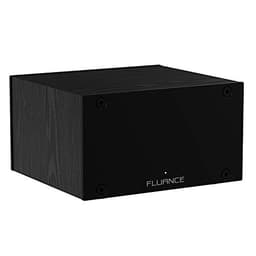
Fluance PA10
A solid mid-priced MM upgrade
Price as of October 16, 2026. #ad How we’re funded
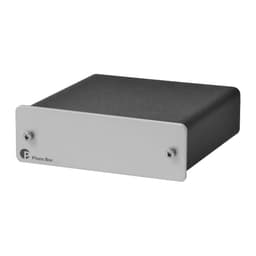
Pro-Ject Phono Box
A refined MM/MC upgrade for a separates system
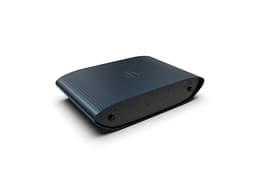
iFi Zen Air Phono 2
A quiet, properly specified stage that also tames warped records
Price as of October 16, 2026. #ad How we’re funded
Frequently asked questions
Does a good phono preamp make a difference?
It depends entirely on what it replaces. Replacing nothing - a deck with no stage at all - is the difference between music and a thin whisper, which is total. Replacing a budget built-in stage on a deck carrying a good cartridge is a real but moderate improvement, mostly in noise floor and in gain that suits the cartridge. Replacing the stage inside an all-in-one record player changes nothing, because the signal never leaves on the path you would be improving.
What does a phono preamp actually do?
Two jobs. It applies about 40 dB of gain, because a moving-magnet cartridge puts out a few millivolts where a line input expects hundreds. And it reverses the RIAA equalization curve, which is applied when a record is cut - bass reduced, treble lifted - so that the groove can physically hold the signal. Without the curve reversed, playback sounds thin and bass-light however loud you make it.
Is an external phono preamp better than a built-in one?
Usually, for two structural reasons rather than any magic. An external box has its own power supply and its own chassis, away from a motor and a mains transformer - and a phono signal is small enough that proximity to either matters. And external stages publish their specifications: noise floor, gain settings, loading options. Built-in stages almost never do, which is itself informative about what they are.
What specifications should I compare between phono preamps?
Four. Gain, and whether it is adjustable - the Fosi Box X2 switches between 39, 42 and 45 dB. Cartridge support, MM only or MM and MC. Loading, which matters when your cartridge publishes a figure: Ortofon asks for 47 kOhm with 150 to 300 pF for the 2M Blue, and only an adjustable stage can be set to it. And the noise floor, where a published number like iFi's -141 dBV is worth more than the phrase 'low noise'.
Will a better phono preamp make my records louder?
If the gain is better matched to your cartridge, yes - and that is the commonest real-world improvement people notice. An Audio-Technica AT-VM95E publishes 4.0 mV output and an Ortofon 2M Blue 5.5 mV; into a fixed low-gain stage, either can land quiet enough that you listen at three-quarters volume all evening. A switchable or adjustable stage fixes the level without changing anything else.
Does a phono preamp fix hum?
Only indirectly. Hum is a grounding problem: the turntable's earth wire belongs on the ground post of whichever box holds the phono stage, so adding an external preamp gives the wire a proper home and often cures it for that reason. A better-built stage with a metal case and an external supply also picks up less interference. But if the wire is not landed, no preamp at any price will be quiet.
Do I need a phono preamp if my turntable has one built in?
No - and the rule is that exactly one phono stage belongs in the chain. If you do add an external one, switch the deck's internal stage to bypass or PHONO. Two stages in series is the loud, harsh, uncontrollable fault, and it is the most common wiring mistake in vinyl.
Is a $200 phono preamp better than a $50 one?
It publishes more, and the extra money mostly buys adjustability and a lower noise floor rather than a different kind of sound. The honest ranking is by what you own: with a conical cartridge on a fixed tonearm, a $50 stage is not the limiting part of your system. With an Ortofon 2M Blue on an acrylic-platter deck, the adjustable loading on a $140 stage is the difference between hearing what the cartridge publishes and not.
Sources
- Crutchfield — How to choose a phono preamp — On why a phono signal needs a preamp and never running two at once (accessed July 24, 2026)
- Elliott Sound Products — Phono preamp / RIAA equalization — Technical reference on RIAA pre-emphasis and the inverse playback curve (accessed July 24, 2026)
- Ortofon — 2M Blue, published specifications — The maker's own table, read live on this date: output voltage "5.5 mV", channel balance at 1 kHz "1.5 dB", channel separation at 1 kHz "25 dB", frequency range "20-20.000 Hz + 2 / - 1 dB", tracking ability at 315 Hz "80 um", compliance (dynamic, lateral) "20 um/mN", stylus type "Nude Elliptical diamond", stylus tip radius "r/R 8/18 um", tracking force range "1.6-2.0 g (16-20 mN)" with "1.8 g (18 mN)" recommended, tracking angle 20 degrees, internal impedance (DC resistance) "1.3 kOhm", internal inductance "700 mH", recommended load resistance "47 kOhm", recommended load capacitance "150-300 pF", cartridge colour "Black/Blue", cartridge weight "7.2 g", cantilever "Aluminium", coil wire "OFC Wire". Listed at 199,00 EUR and showing "Unavailable" in Ortofon's own European store on the access date — the cartridge is current, but Ortofon is not the channel to buy it from (accessed October 5, 2026)
- Audio-Technica — AT-VM95E cartridge — Manufacturer specs: 0.3 x 0.7 mil elliptical stylus on an aluminum cantilever, 4.0 mV output at 1 kHz / 5 cm/sec, 1.8-2.2 g tracking force (2.0 g standard), 20-22,000 Hz, 20 dB channel separation at 1 kHz, half-inch mount, AT-VMN95E replacement stylus, and the maker's own statement that "all VM95 Series share the same body" so the stylus "can be replaced with any of the six interchangeable AT-VMN95 replacement styli". Re-read on the access date below, which corrected a tracking-force range previously noted here as 1.8-2.3 g (accessed September 26, 2026)
- Fluance — RT85 Reference turntable, published specifications — Manufacturer specification table: 0.07% wow and flutter, 69 dB weighted S/N, acrylic platter 1.56 kg / 16 mm, static balanced S-type aluminum arm 224 mm / 27.5 g, H-4 bayonet headshell, Ortofon 2M Blue 0.3 x 0.7 mil nude elliptical, no built-in preamp, 7.6 kg (accessed September 3, 2026)
- Audio-Technica — AT-LP120XUSB user manual, full published specification — The complete published table, re-read in full on this date (this manual was previously cited on this site only for the deck's dimensions). Turntable: type "Direct drive", motor "DC servo motor", "3-speed, fully manual operation" at 33-1/3, 45 and 78 RPM, die-cast aluminum platter, starting torque "> 1.0 kgf.cm", braking system "Electronic brake", wow and flutter "< 0.2% WRMS (33 RPM) at 3 kHz", signal-to-noise "> 50 dB", output PHONO "4 mV nominal at 1 kHz, 5 cm/sec" and LINE (MM) "240 mV nominal at 1 kHz, 5 cm/sec", phono pre-amp gain "36 dB nominal, RIAA equalized". Tonearm: "Static balanced S-shaped tonearm", effective length 230.5 mm, overhang 16 mm, maximum tracking error angle "Less than 3", stylus pressure adjustment range "0 to 4 g", applicable cartridge weight range "3.5 to 8.5 g". Cartridge and headshell: AT-VM95E, VM type, 47,000 ohms recommended load, 4.0 mV output, "0.3 x 0.7 mil bonded elliptical stylus", aluminum pipe cantilever, tracking force range "1.8 to 2.2 g (2.0 g standard)", cartridge weight 6.1 g, headshell AT-HS6 at 9 g including lead wire, headshell overhang adjustment "+/- 5 mm". USB function "16 bit 44.1 kHz or 48 kHz USB A/D, D/A selectable", computer interface "USB 1.1 Compliant". General: 452.0 mm (17.80") x 352.0 mm (13.86") x 141.6 mm (5.57"), 8 kg (17.6 lbs) without dust cover, 2.75 W, replacement stylus AT-VMN95E, replacement headshell AT-HS6, with a stylus target light, USB cable and RCA audio cable in the box (accessed October 5, 2026)
Keep reading
Do I Need a Phono Preamp?
The question before this one: whether your chain has a stage in it at all.
Read the guideGain and Impedance Explained
The two numbers behind most of this page, in full and with the arithmetic.
Read the guideBest Phono Preamps Under $100
Where the money starts to buy published specifications rather than adjectives.
See the picksHow to Upgrade a Turntable
Where the phono stage sits in the upgrade order, and what beats it to the front of the queue.
Read the guide