Which Fluance do you have? That settles most of it
| Deck | Fitted cartridge | Built-in preamp | What to buy |
|---|
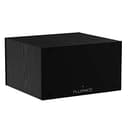
| RT81 / RT81+ | Audio-Technica AT95E (bonded elliptical) | Yes — switchable, full bypass | Nothing required. The PA10 or Phono Box is a real step up later |
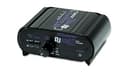
| RT82 | Ortofon OM10 (elliptical) | No | PA10, or the DJ PRE II on the tightest budget |
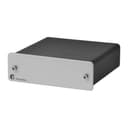
| RT85 | Ortofon 2M Blue (nude elliptical) | No | Pro-Ject Phono Box — adjustable loading for the 2M Blue |
| RT85N | Nagaoka MP-110 (moving magnet) | No | Phono Box or Zen Air Phono 2 |
| RT87 | Ortofon 2M Blue (nude elliptical) | No | Pro-Ject Phono Box, for the same reason as the RT85 |
One rule runs through the table and through the whole category: exactly one phono stage in the chain. If you own an RT81 and add an external preamp, switch the deck’s own stage to bypass. Two stages in series is the loud, harsh, uncontrollable fault, and it is the commonest wiring mistake in vinyl.
What to look for, in the order it matters
- Moving-magnet support, which is table stakes. Every Fluance cartridge is MM, so an MM-only stage is not a compromise. MM/MC stages like the Phono Box and the Zen Air Phono 2 are bought for their adjustability and their noise figures, not because a Fluance needs the MC setting.
- Loading, if the deck carries an Ortofon 2M Blue. Ortofon publishes a recommended load of 47 kOhm with 150 to 300 pF of capacitance for the 2M Blue. The Pro-Ject Phono Box is the only pick here with adjustable loading, which is the whole argument for spending more on an RT85 or RT87 stage than on an RT82 one.
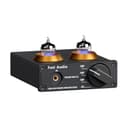
- Gain, if the volume knob ends up near the top.The 2M Blue publishes 5.5 mV output and the AT95E family about 4 mV, which are healthy figures — but a fixed 35 dB stage into a quiet amplifier still lands low. The Fosi Box X2 switches between 39, 42 and 45 dB and the ART DJ PRE II has a continuously adjustable gain control, which is the cheapest fix for a system that is always played at three-quarters volume.
- A subsonic filter, if your records are not perfectly flat. iFi publishes one on the Zen Air Phono 2 along with a −141 dBV noise floor. Warp produces energy below 20 Hz that you cannot hear and your woofers can; filtering it tidies up the midrange on a mildly dished pressing. The RT85 and RT87 both use a heavy acrylic platter, which flattens a record better than felt on steel does, but it does not iron it.
- A metal case and an external supply. A phono signal is a few thousandths of a volt, which is small enough to pick up hum from a nearby power brick. The PA10, Phono Box and Zen Air Phono 2 are all metal-cased; the DJ PRE II is the budget pick and its wall-wart is the compromise you are accepting.
What a phono stage will not fix
If the deck hums, that is a grounding problem and not a preamp problem — land the ground wire on the stage you just bought, not on the amplifier, and read hum and grounding. If the sound is dull rather than quiet, the stylus or the tracking force is the place to look first: why vinyl sounds muffled works through that in order. And if you are weighing a preamp against a cartridge, the cartridge usually wins on an RT82 and the preamp usually wins on an RT85, because the 2M Blue it already carries is better than anything a cheap stage can show you.
For the wider field at each price, our phono preamp roundup ranks everything we cover, and gain and impedance explains the two numbers above in full. If you own an Audio-Technica deck rather than a Fluance, the Audio-Technica version of this page starts from a different place, because most of those decks have a stage inside already.