How to Upgrade a Turntable: the Order That Pays
Most upgrade advice is a shopping list in no particular order. This is the order, with the published figure that justifies each step — and the two steps that cost nothing.
How this is funded: we earn a commission if you buy through our links, at no extra cost to you. It never changes which product we recommend, and we’ll tell you plainly when to skip one. Full disclosure.
The short answer: get the setup right, then buy a stylus, then a cartridge, then a phono stage, and only then think about mats, isolation and speakers. That order is not a matter of taste. A vinyl chain starts with a diamond reading a groove and nothing downstream can recover information the stylus failed to read, so money spent early in the chain does more than the same money spent late. The first step on the list costs nothing, the second is the cheapest real improvement available to most owners, and the expensive ones are at the bottom for a reason.
Step 0: the free upgrade almost everybody skips
Before any purchase, three things should be true: the deck is level, the tracking force is set to the figure the cartridge maker publishes, and the records are clean. Audio-Technica publishes 1.8 to 2.2 g for the AT-VM95E with 2.0 g standard; Ortofon publishes 1.6 to 2.0 g for the 2M Red. A deck running at 3 g because the counterweight was never balanced sounds duller and wears records faster than the same deck set correctly, and no cartridge you buy will fix that.
This step has a cost in attention rather than money, and it is the one that eliminates most “my turntable sounds bad” complaints outright. Our tonearm balancing guide covers the counterweight arithmetic, leveling covers the surface, and record cleaning covers the third. If you want to confirm the force rather than trust a dial, a tracking force gauge is the cheapest tool on this site.
Step 1: the stylus
A stylus is a consumable. Published lives run in the hundreds of hours — Audio-Technica publishes roughly 300 to 500 hours for the conical ATN3600LC and about 300 for the elliptical ATN3600LE — and a worn tip does not announce itself; it just sounds progressively harsher on loud passages. If you do not know how many hours yours has done, assume it has done them.
The reason this is step one is that on most modern cartridges the stylus is the upgradeable part. Every AT-VM95-series body takes any VMN95 stylus: conical, elliptical, micro-linear or Shibata, in ascending order of how much of the groove the tip can follow. Changing it is a two-second pull-and-click with no realignment, no screws and no lead wires, which means a step up in tip profile costs a fraction of a new cartridge and carries none of the risk of setting one up badly. Ortofon’s 2M series and Nagaoka’s MP series work the same way.
Step 2: the cartridge
Buy a whole cartridge when the body is the limit: you are changing brands, the cantilever is bent, or your deck came with something that has no stylus ladder above it. The rule that decides whether you can is physical — your arm needs a standard half-inch mount and an adjustable counterweight. A fixed-arm automatic has neither, which is why there is no cartridge upgrade for an AT-LP60X at any price.
Two published figures govern the choice. The stylus profile — the AT-VM95E publishes a 0.3 x 0.7 mil elliptical, the AT-VM95ML a 2.2 x 0.12 mil micro-linear — and the cartridge mass, against what your arm supports. That second one catches people out: Fluance publishes a 3.5 to 6.5 g supported cartridge weight for the RT81 arm and Ortofon publishes the 2M Red at 7.2 g, so the most-recommended upgrade in the category is above the most-recommended entry deck’s stated window. Our fitment pages for Fluance decks and Audio-Technica decks work through both brands deck by deck.
Step 3: the phono stage
A phono preamp undoes the RIAA curve records are cut with and raises a signal measured in millivolts to line level. Audio-Technica publishes 4 mV nominal from the AT-VM95E against 240 mV from the same deck’s LINE output — that is the size of the job. If your turntable has no built-in stage and your amplifier has no phono input, this is not an upgrade at all; it is the missing part of the system, and records play quiet, thin and bass-light without it.
If you already have a working phono stage, the honest ranking of this step is lower than the internet suggests. Going from nothing, or from a sealed stage inside a suitcase player, to a competent outboard unit is a clear change. Going from one competent solid-state unit to another is subtle, and we have measured none of them. Our picks under $100 cover the useful end of the market, and gain and impedance explains the two numbers that decide whether a stage suits your cartridge.
Step 4: the mat, and the things that are nearly free
A platter mat is a cheap, completely reversible change that does two measurable things: it changes how the record couples to the platter, and it changes your arm height by its thickness difference. Fluance publishes 3 mm for its cork mat with a 0.5 mm label recess; a felt mat is usually thinner. If you swap a thin felt mat for a thick cork or acrylic one, the back of the cartridge rises slightly relative to the record, which is a real change to vertical tracking angle — small, but the reason to make the change deliberately rather than by accident.
Two others belong in this tier. A record weight flattens a slightly dished record and loads the bearing — useful on some decks, actively unwanted on light-platter designs that publish a maximum. And outer and inner sleeves are not a sound upgrade at all; they are the cheapest way to stop your collection getting worse, which over a decade beats most of what is above them on this page.
Step 5: isolation, and only for a real problem
Isolation is last because it is the only step on the list that treats a symptom. If footfalls make the stylus skip, if the bass turns boomy at volume, or if the deck shares furniture with the speakers, then decoupling the turntable from its surface is the fix and nothing else is. If none of those is happening, isolators will change very little.
When you do buy, buy on the published load rating rather than the material: IsoAcoustics publishes 8 lb per OREA Bronze puck with a minimum of three recommended per component, which is 24 lb of capacity — enough for an 8 kg (17.6 lb) AT-LP120XUSB, and the range runs from 4 lb to 32 lb per unit for heavier or lighter decks. Our isolation picks rank the class on that figure and on footprint, which is the other thing that rules products out.
What this order is not
It is not an argument for upgrading forever. Three honest stopping points: if your deck has a fixed arm and a ceramic cartridge, almost none of this applies and a different deck is the upgrade — see best for the money. If you have done steps 0 to 3 and the sound still disappoints, the next real gain is usually the speakers and the room rather than anything on the turntable. And if a specific symptom is driving this — a hum, a skip, a wavering pitch — stop shopping and diagnose it: hum and grounding, record skipping and general troubleshooting each cover faults that no purchase on this page will fix.
The four purchases, with live prices
One per step, in the order the guide recommends. The stylus is the cheapest real improvement available to most owners; the isolator is the one to buy last and only if the furniture is the problem.
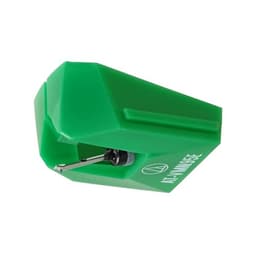
Audio-Technica AT-VMN95E Replacement Stylus
Replacing a worn stylus without touching the alignment
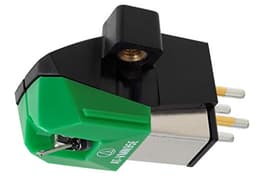
Audio-Technica AT-VM95E
The first cartridge upgrade for most decks
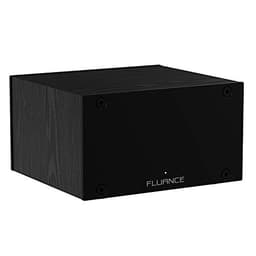
Fluance PA10
A solid mid-priced MM upgrade
Price as of October 10, 2026. #ad How we’re funded
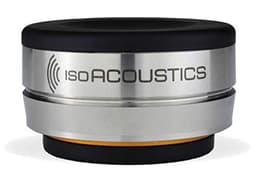
IsoAcoustics OREA Bronze Isolator
Matching the load rating exactly, on a deck from about 12 lb to 24 lb
Price as of October 10, 2026. #ad How we’re funded
Frequently asked questions
What is the first thing to upgrade on a turntable?
Setup, then the stylus. Correct tracking force, anti-skate and a level deck cost nothing and fix more complaints than any purchase - Audio-Technica publishes 1.8 to 2.2 g for the AT-VM95E, and a deck set to 3 g sounds worse than the same deck set correctly. Once setup is right, the stylus is the cheapest part that measurably changes what you hear, and on a VM95-series cartridge it snaps on with no realignment at all.
Is it worth upgrading a turntable cartridge?
On a deck with an adjustable counterweight and a half-inch mount, yes - it is the single biggest change available for the money, because the stylus profile decides how much of the groove is read. The step from a conical tip to an elliptical is the one most people hear most clearly. On a fixed-arm automatic there is usually no cartridge upgrade at all, only a stylus, and on an AT-LP60X that is one specific elliptical stylus.
Will a better phono preamp improve my sound?
It will if you do not currently have a real one. A phono stage does two jobs - it undoes the RIAA curve and raises a very small signal to line level - and the built-in stage in a cheap all-in-one is the weakest link in that chain. Going from no phono stage, or a sealed one, to a proper outboard unit is a clear change. Going from one competent solid-state stage to another is far less so, and we have not measured any of them.
Does a turntable mat make a difference?
It makes a measurable mechanical difference and a smaller audible one. Swapping felt for cork or acrylic changes how the record couples to the platter and how much the platter rings, and it changes the arm height by the thickness difference - Fluance publishes 3 mm for its cork mat, with a 0.5 mm label recess. It is a cheap, reversible change. It is not a substitute for a better stylus.
What order should I upgrade a hi-fi system in?
Start where the signal starts and work forward: setup, stylus or cartridge, phono stage, then speakers and the room. The reasoning is that nothing downstream can recover information the stylus failed to read, and the earliest components in a vinyl chain operate at the smallest signal levels, which is where errors are proportionally largest. Isolation is the exception to the ordering - buy it when you have a real vibration problem, not on principle.
Should I upgrade my turntable or buy a new one?
Add up the upgrades against the price of the next deck. If your turntable has an adjustable counterweight, anti-skate and a half-inch cartridge mount, upgrading is almost always the better value - those three features are what you are paying for in a better deck. If it has a fixed arm, a ceramic cartridge or sealed speakers, there is very little to upgrade and the money is better spent on a deck that can be improved.
Do turntable isolation feet actually work?
They do a specific job: they decouple the deck from the surface it stands on, which is what stops footfalls, speaker vibration and furniture resonance from reaching the stylus. The published figure that decides whether they work is the load rating - IsoAcoustics publishes 8 lb per OREA Bronze puck and recommends a minimum of three per component, so three carries 24 lb. Buy for a problem you can actually hear, after the cheaper steps.
What is the most overrated turntable upgrade?
Anything bought before the setup is right, and anything bought to fix a problem that is actually elsewhere. A record weight will not cure a hum, an isolation platform will not cure a worn stylus, and a new cartridge into a missing phono stage is inaudible. The two genuinely free upgrades - setting tracking force with a gauge and cleaning your records - routinely beat a purchase.
Sources
- Audio-Technica — AT-VM95E cartridge — Manufacturer specs: 0.3 x 0.7 mil elliptical stylus on an aluminum cantilever, 4.0 mV output at 1 kHz / 5 cm/sec, 1.8-2.2 g tracking force (2.0 g standard), 20-22,000 Hz, 20 dB channel separation at 1 kHz, half-inch mount, AT-VMN95E replacement stylus, and the maker's own statement that "all VM95 Series share the same body" so the stylus "can be replaced with any of the six interchangeable AT-VMN95 replacement styli". Re-read on the access date below, which corrected a tracking-force range previously noted here as 1.8-2.3 g (accessed September 26, 2026)
- Audio-Technica — VM95 Series cartridges — The shared-body VM95 range and its interchangeable stylus upgrade path (accessed July 24, 2026)
- Audio-Technica — AT-VMN95E replacement stylus — Manufacturer page for the elliptical VM95-series replacement stylus and its fitment list (accessed August 11, 2026)
- Audio-Technica — AT-VM95ML cartridge — Manufacturer page for the micro-linear VM95 cartridge and its stylus profile (accessed August 11, 2026)
- Audio-Technica — Balancing the tonearm and setting tracking force — Manufacturer procedure for zero-balancing an arm, then dialing tracking force and anti-skate (accessed August 19, 2026)
- Elusive Disc — Elliptical or Shibata stylus, and when to replace one — Retailer reference: "Replace the stylus every 800-1000 hours (dependent on usage and model)" (accessed August 19, 2026)
- Elliott Sound Products — Phono preamp / RIAA equalization — Technical reference on RIAA pre-emphasis and the inverse playback curve (accessed July 24, 2026)
- Fluance — Turntable Cork Platter Mat (TA21) — Manufacturer specs: cork, 3 mm (0.12 in) thick, 11.75 in diameter, 0.5 mm label recess, 7 mm spindle hole (accessed August 28, 2026)
- IsoAcoustics — OREA Series isolation feet — The published load ladder for the class: Graphite 4 lb (1.8 kg), Bronze 8 lb (3.6 kg), Indigo 16 lb (7.2 kg) and Bordeaux 32 lb (14.5 kg) PER UNIT, with diameters from 1.6 to 2.6 in and heights from 1.1 to 1.4 in, "made of machined stainless steel". The quantity rule is published too — the pucks are "packaged individually to allow greater flexibility when determining the number of units to use" and "We recommend a minimum of 3 units under each component, depending on weight" — and IsoAcoustics names turntables as one of the components "particularly sensitive to vibration" (accessed September 11, 2026)
- Crutchfield — Phono cartridge guide — Reference on cartridge types, styli and mounting (accessed July 24, 2026)
- Crutchfield — How to choose a phono preamp — On why a phono signal needs a preamp and never running two at once (accessed July 24, 2026)
- Library of Congress — Caring for and cleaning grooved discs — Preservation guidance on cleaning and storing records to prevent damage (accessed July 24, 2026)
Keep reading
Best Replacement Styli
Step two in full: the cheapest upgrade in the category, by cartridge family.
See the picksBest Turntable Cartridges
Step three, when the body itself is the limit rather than the tip.
See the picksBest Phono Preamps
Step four, and the step that makes the biggest difference if you have none.
See the picksHow to Set Up a Turntable
Step one, which is free and which most of these purchases depend on.
Read the guide