How these were ranked
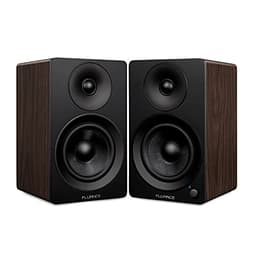
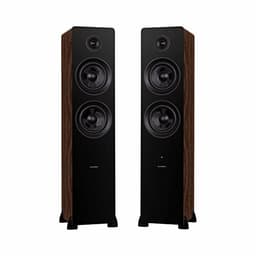
- What the system still needs after you buy.This is the first question and it outranks every other spec. The Ai41 and the Ai81 publish their own amplification — 90 W total and 150 W continuous average respectively — so with a deck that has a phono stage, nothing else is required. The XL8F publishes a power handling range of 80 to 160 W RMS, which is a statement about what it can accept, not what it contains. It needs an amplifier.
- Published low-frequency limit, compared like for like.Fluance publishes 35 Hz for the XL8F and 30 Hz for the Ai81, with the Ai81’s figure marked DSP enhanced — which means the number is reached with processing in the signal path rather than purely by the cabinet. Those are not identical claims, and we would rather flag the difference than line the two numbers up as though they were.
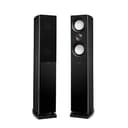
- How the deep bass is produced. The XL8F is a three-way with four drivers, and its 8-inch woofer is isolated and down-firing, so the two 6.5-inch midranges never have to attempt the bottom octave. That is a real engineering answer rather than a bigger number, and it is why the passive pair reaches lower than the powered bookshelf despite having no DSP to help it.
- What gets connected, and how many things.The Ai41 takes RCA, optical and Bluetooth 5 and has a subwoofer output. The Ai81 takes two RCA pairs, optical TOSLINK and Bluetooth 5.0, with a subwoofer output and a published 80 Hz low-pass cutoff. The XL8F takes speaker cable into gold-plated five-way binding posts and that is the entire list — everything else happens at your amplifier.
Powered or passive, decided in two questions
Do you already own an amplifier or receiver you are happy with? If yes, the XL8F is the pick, because you are not paying twice for amplification and you keep the ability to change either half later. If no, a powered pair removes a box, a pair of cables and a shelf from the problem, and the amplifier inside was chosen by the people who designed the drivers.
How big is the room? A 5-inch driver in a bookshelf cabinet runs out of air before a tower does, and no amount of watts changes that. The Ai41 suits a desk, a bedroom or a small living room; the Ai81 and the XL8F are for a room with furniture in it. Our powered vs passive comparison takes both questions further.
The two things that make any of these sound better for nothing
Placement first, because it is free. Get the bookshelf pair off the desk surface and onto stands at roughly ear height, pull all three models away from the wall behind them so the rear ports are not loading into plasterboard, and give the towers a few inches of breathing room at the sides. Our placement guide covers the distances.
Then check the stylus, because speakers reproduce whatever arrives at them including the problems. A worn tip sounds dull on every pair on this page, and a replacement costs far less than new cabinets. We have not heard any of these three speakers; every figure above is read from Fluance’s own published specifications on a dated visit, per our methodology.