PLATTER & PLINTH

Alternatives to the Klipsch The Fives

The Fives II is a powered pair with a phono input, an HDMI socket and a streaming platform inside. Only one of those three is why most people buy it - so here are five alternatives, one per reason.

By Stephen V.Last updated How we pick

The verdict

The Klipsch R-50PM is the alternative most people looking at The Fives should buy. It is the same brand with the same switchable phono/line input and ground screw terminal, it publishes 120 W total and a 104 dB maximum output — a higherpublished maximum than The Fives II’s 103 dB — and it costs roughly half as much. What it does not have is HDMI or Wi-Fi, and that is the entire trade. The budget pick is the Andover Spinbase 2, a single cabinet with the phono stage inside that the turntable physically sits on top of, for anyone whose constraint is furniture rather than money. If the reason you were looking at The Fives is that the room is big, the Fluance Ai81 Elite is a powered tower with 150 W and a published 30 Hz for less money than The Fives.

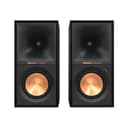
Klipsch R-50PM

Best alternative

Klipsch R-50PM

$449.99 · View on Amazon

$649.9931% off

Price as of November 22, 2026. #ad How we’re funded

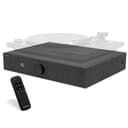
Andover Audio Spinbase 2

Budget pick

Andover Audio Spinbase 2

$299.00 · View on Amazon

$349.0014% off

Price as of November 22, 2026. #ad How we’re funded

What The Fives II is known for, and what nothing on this page takes away from it: it is a powered pair with a dedicated RCA phono input, so a turntable connects directly without giving up the line input, plus HDMI-ARC/eARC with CECso the same speakers serve a television with one cable and one remote, plus Wi-Fi with Google Cast, AirPlay 2, Spotify Connect, Tidal Connect and Qobuz Connect, plus Bluetooth 5.4, USB-C, USB-A and optical. Klipsch publishes 50 Hz – 25 kHz ±3 dB and a 103 dB maximum output. It is a one-box system for a whole living room, and it is priced accordingly.

The reason people go looking for alternatives is almost always the same: they want one or two of those things, not all of them. If the turntable is the only source, you are paying for an HDMI socket and a streaming platform that will never be used. If the TV connection is the point, you are a different buyer from someone building a vinyl system. If the room is larger than bookshelves suit, a tower is a better answer than a more expensive bookshelf.

So each pick below answers one of those reasons, and each entry states what you give up. One thing to be clear about up front, because it decides the page for some people: none of the five alternatives has HDMI. If the speakers must also be the television’s speakers with one cable and CEC volume control, The Fives II is the product and there is no cheaper substitute here.

How this is funded: we earn a commission if you buy through our links, at no extra cost to you. It never changes which product we recommend, and we’ll tell you plainly when to skip one. Full disclosure.

Quick picks

Ranked on published specs, drive/motor design and buyer fit. Select a row to jump to the full write-up. We have not heard most of these units — here is exactly what we do instead.

#ProductBest forPrice
1
Klipsch R-50PM

Klipsch R-50PM

The shortest complete Klipsch system for a record player. Klipsch's own spec sheet lists the analog input as "Phono/Line analog (with switch and ground screw terminal)", so a deck with no preamp plugs straight in and its earth wire has a post to land on - and the manual carries a page headed CONNECTIONS - TURNTABLE. 120 W total, a 5.25" TCP woofer and a published 55 Hz limit.

Best alternative overall
$449.99 · View on Amazon

$649.9931% off

Price as of November 22, 2026. #ad How we’re funded

2
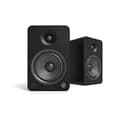
Kanto YU6

Kanto YU6

The one-box answer for a turntable: powered speakers with a built-in phono preamp, so a preamp-less deck plugs straight in with nothing between them. Add Bluetooth, a subwoofer output and real 5.25-inch drivers and it's the tidiest good-sounding vinyl system you can buy.

Best for a turntable only
$579.99 · View on Amazon

Price as of November 22, 2026. #ad How we’re funded

3
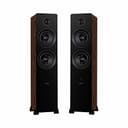
Fluance Ai81 Elite

Fluance Ai81 Elite

The tower that deletes the amplifier. Fluance builds 150 W of Class D (2 x 75 W RMS) into the active cabinet and publishes 30 Hz - 20 kHz with DSP, so a deck with a switchable phono stage plugs straight into one of the two RCA inputs and the system is finished. Read one row before you buy, though: Fluance's own table prints Phono Preamp as No.

Best for a bigger room
$599.98 · View on Amazon

Price as of November 22, 2026. #ad How we’re funded

4
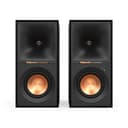
Klipsch R-40PM

Klipsch R-40PM

The R-50PM's smaller sibling with the same input panel - switchable phono/line with a ground screw terminal - in a cabinet 2.2 inches shorter and 1.3 inches narrower. 70 W total against 120 W, and a published 60 Hz limit against 55 Hz. Klipsch badges it PC READY as well as TURNTABLE READY, which is exactly the overlap it serves.

Best smaller Klipsch
$399.99 · View on Amazon

$549.0027% off

Price as of November 22, 2026. #ad How we’re funded

5
Andover Audio Spinbase 2

Andover Audio Spinbase 2

A single-box speaker system the turntable physically sits on top of, with the phono stage inside. Its patented ISOGroove anti-feedback design exists precisely because a deck on a speaker is normally a terrible idea — this is the one product built to make that arrangement work when you have one shelf and no more.

Best value
$299.00 · View on Amazon

$349.0014% off

Price as of November 22, 2026. #ad How we’re funded

The picks in full

#1Best alternative overall

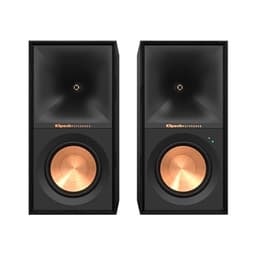
Klipsch R-50PM

The shortest complete Klipsch system for a record player. Klipsch's own spec sheet lists the analog input as "Phono/Line analog (with switch and ground screw terminal)", so a deck with no preamp plugs straight in and its earth wire has a post to land on - and the manual carries a page headed CONNECTIONS - TURNTABLE. 120 W total, a 5.25" TCP woofer and a published 55 Hz limit.

Strengths

  • Switchable phono/line input WITH a ground screw terminal - the detail most powered speakers leave off
  • 120 W total system power and a published 55 Hz - 20 kHz response, the most of any powered model here
  • Optical, USB, 3.5 mm, Bluetooth and a subwoofer output, so the turntable is not the only thing it serves

Trade-offs

  • One cabinet is active and the other is passive, so mains has to reach the right speaker and the supplied 4 m of wire has to reach the left
  • Klipsch publishes no sensitivity or nominal impedance for it - normal for a powered design, but it means you cannot compare it with the passive pairs on the figure that decides those
  • Bluetooth is input-only and there is no network streaming at this price; that is what The Fives II adds
TypePowered (active) bookshelf pair, bass-reflex (rear port)
Phono preampYes - switchable phono/line with ground screw terminal
Woofer5.25" spun-copper TCP
Tweeter1" aluminum LTS on a 90x90 square Tractrix horn
Frequency response55 Hz - 20 kHz (dynamic bass extension 44 Hz)
Total system power120 W (240 W peak), 60 W per channel continuous at under 1% THD
Maximum output104 dB
Crossover1,663 Hz (passive)
SensitivityNot published
InputsBluetooth, phono/line RCA, 3.5 mm, USB digital, optical digital
OutputsSingle RCA line-level subwoofer output
CabinetMDF, 14 x 7 x 10.8", 24.8 lbs

Note. The ground screw terminal is why this sits above the powered pairs that offer only a phono input. A moving-magnet cartridge picks up mains hum through an unearthed deck, and a phono input with nowhere to put the earth wire is a phono input you may end up not using. Klipsch prints the terminal on the spec sheet and labels it in the manual.

Specifications read from the manufacturer / product listing, on September 29, 2026. “Not published” means the maker does not state that figure.

#2Best for a turntable only

Kanto YU6

The one-box answer for a turntable: powered speakers with a built-in phono preamp, so a preamp-less deck plugs straight in with nothing between them. Add Bluetooth, a subwoofer output and real 5.25-inch drivers and it's the tidiest good-sounding vinyl system you can buy.

Strengths

  • Built-in phono preamp — connect a turntable directly, no extra box
  • Bluetooth plus a subwoofer output for future expansion
  • 5.25-inch Kevlar drivers with genuine output

Trade-offs

  • Costs more than a preamp-less powered pair plus a cheap phono box
  • One phono input — set its preamp mode to match your deck
TypePowered (active) bookshelf
Phono preampYes — built in
Drivers5.25-inch Kevlar
BluetoothYes
ExtrasSubwoofer output, remote

Note. The built-in phono stage is the reason to pick these over the Edifiers: with a preamp-less turntable (like the Fluance RT82 or a bare U-Turn) they're a complete system with no third box to buy.

Specifications read from the manufacturer / product listing, on August 28, 2026. “Not published” means the maker does not state that figure.

#3Best for a bigger room

Fluance Ai81 Elite

The tower that deletes the amplifier. Fluance builds 150 W of Class D (2 x 75 W RMS) into the active cabinet and publishes 30 Hz - 20 kHz with DSP, so a deck with a switchable phono stage plugs straight into one of the two RCA inputs and the system is finished. Read one row before you buy, though: Fluance's own table prints Phono Preamp as No.

Strengths

  • Amplifier built in — 150 W Class D continuous (2 x 75 W RMS), so there is no separate box to buy, site or power
  • 30 Hz - 20 kHz published (DSP enhanced), the lowest figure on this page from the smallest of the three big cabinets
  • Two RCA inputs plus optical TOSLINK and Bluetooth 5.0, with a subwoofer output at an 80 Hz cutoff

Trade-offs

  • No phono preamp — Fluance prints that row as No, so the deck needs its own stage or you add one
  • Only the right cabinet is active: it needs mains power and a speaker cable run across to the passive side
  • A DSP-enhanced 30 Hz is not the same claim as a passive -3 dB point, and Fluance publishes no tolerance for it
TypePowered (active) 2-way floorstander
Sold asPair (one active cabinet, one passive)
Phono preampNo
AmplificationClass D, 150 W continuous average (2 x 75 W RMS)
WoofersDual 6.5" woven glass fiber composite, butyl rubber surrounds
Tweeter1" silk soft dome, neodymium, ferrofluid cooled
Frequency response30 Hz - 20 kHz (DSP enhanced)
Inputs2 x RCA L/R, digital optical TOSLINK, Bluetooth 5.0
OutputsSubwoofer out, 80 Hz low-pass cutoff
Cabinet37.8" H x 8.5" W x 10.24" D; 30.61 lbs active, 29.02 lbs passive

Note. Fluance's own Ai-series manual points owners at its PA10 phono preamp for exactly this gap. If your turntable already has a switchable built-in stage — most Fluance, Audio-Technica and Sony decks do — you need nothing extra.

Specifications read from the manufacturer / product listing, on October 3, 2026. “Not published” means the maker does not state that figure.

#4Best smaller Klipsch

Klipsch R-40PM

The R-50PM's smaller sibling with the same input panel - switchable phono/line with a ground screw terminal - in a cabinet 2.2 inches shorter and 1.3 inches narrower. 70 W total against 120 W, and a published 60 Hz limit against 55 Hz. Klipsch badges it PC READY as well as TURNTABLE READY, which is exactly the overlap it serves.

Strengths

  • The same switchable phono/line input with a ground screw terminal as the R-50PM
  • Small footprint: 11.8 x 5.7 x 10.1 inches, and 18.3 lbs for the pair
  • USB digital, optical and 3.5 mm alongside the phono input, so it doubles as a computer speaker honestly

Trade-offs

  • The 4" woofer and a published 60 Hz limit mean no deep bass without using the subwoofer output
  • Klipsch publishes no sensitivity or nominal impedance, so it cannot be compared with the passive pairs on that figure
  • Costs more than the passive R-50M while giving up the bigger driver; you are paying for the electronics
TypePowered (active) bookshelf pair, bass-reflex (rear port)
Phono preampYes - switchable phono/line with ground screw terminal
Woofer4" spun-copper TCP
Tweeter1" aluminum LTS on a 90x90 square Tractrix horn
Frequency response60 Hz - 20 kHz (dynamic bass extension 52 Hz)
Total system power70 W (240 W peak), 35 W per channel continuous at under 1% THD
Maximum output100 dB
Crossover1,730 Hz (passive)
SensitivityNot published
InputsBluetooth, phono/line RCA, 3.5 mm, USB digital, optical digital
OutputsSingle RCA line-level subwoofer output
CabinetMDF, 11.8 x 5.7 x 10.1", 18.3 lbs (pair)

Note. If you searched for Klipsch computer speakers and you also own a turntable, this is the answer rather than the ProMedia 2.1 - Klipsch publishes only a miniplug input and a headphone jack for that one, so a record player would need a separate phono preamp and an adapter to reach it. The R-40PM takes the deck directly.

Specifications read from the manufacturer / product listing, on September 29, 2026. “Not published” means the maker does not state that figure.

#5Best value

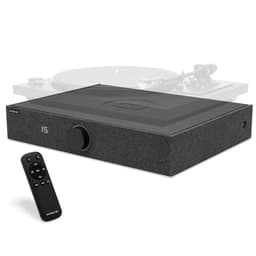
Andover Audio Spinbase 2

A single-box speaker system the turntable physically sits on top of, with the phono stage inside. Its patented ISOGroove anti-feedback design exists precisely because a deck on a speaker is normally a terrible idea — this is the one product built to make that arrangement work when you have one shelf and no more.

Strengths

  • Phono input built in, so a preamp-less deck needs nothing else
  • ISOGroove anti-feedback design is engineered for a turntable placed on top of it
  • Bluetooth, analog, optical and USB inputs alongside the phono stage

Trade-offs

  • One cabinet means no stereo separation worth the name — soundstage is the price of the footprint
  • Not upgradeable: you cannot keep the speakers and add a better preamp later
TypeSingle-cabinet powered speaker system for turntables
Phono inputYes — built in
Other inputsBluetooth, analog, optical digital, USB
AmplificationDual Direct Drive (published)
IsolationPatented ISOGroove anti-feedback
ControlIR remote — input, volume, tone

Note. Andover does not publish an RMS power figure or a frequency response for the Spinbase 2, which is why neither appears above. Buy it for the footprint and the feedback engineering, not for a spec sheet.

Specifications read from the manufacturer / product listing, on August 19, 2026. “Not published” means the maker does not state that figure.

The five reasons, and the speaker that answers each

  • “I only want the phono input and the Klipsch sound.” The R-50PMpublishes a switchable phono/line input with a ground screw terminal — arguably a better turntable connection than The Fives’ dedicated phono socket, because the ground terminal is what stops hum. It publishes 120 W total, 60 W per channel continuous at under 1% THD, a 55 Hz limit with dynamic bass extension to 44 Hz, and a 104 dB maximum. What you give up: HDMI, Wi-Fi streaming and the higher-frequency reach of The Fives’ published 25 kHz.
  • “The turntable is the only source.” The Kanto YU6is built around that assumption: a built-in phono preamp, 5.25-inch Kevlar drivers, Bluetooth, a subwoofer output and a remote, with no television features to pay for. What you give up: published power and frequency figures — Kanto states less about this pair than Klipsch does about either of theirs, and our table says so.
  • “The room is bigger than bookshelves suit.” The Fluance Ai81 Elite is a powered floorstander: 150 W continuous average as 2 × 75 W RMS, a published 30 Hz with DSP, two RCA inputs, optical and Bluetooth, and a subwoofer output with an 80 Hz low-pass. A tower moves more air than any bookshelf at the same money. What you give up: the phono input — Fluance publishes none, so a deck without its own stage needs a phono preamp.
  • “The Fives are too big, or too much.” The R-40PMis the R-50PM’s smaller sibling with the identical input panel: 70 W total, 35 W per channel continuous at under 1% THD, a published 60 Hz limit and a cabinet 2.2 inches shorter and 1.3 inches narrower. What you give up: output, and roughly 5 Hz of bass extension.
  • “There is nowhere to put two speakers.” The Andover Spinbase 2is one cabinet with the phono stage inside that the turntable sits directly on top of, with a patented anti-feedback design that exists because that arrangement is normally a bad idea. What you give up: stereo separation, by definition — two drivers in one cabinet a foot apart cannot do what two cabinets six feet apart do.

Reading the published numbers honestly

The most useful comparison on this page is between The Fives II and the R-50PM, because Klipsch publishes both sheets in the same format. The Fives reaches lower and higher on paper (50 Hz – 25 kHz ±3 dB against 55 Hz – 20 kHz), while the R-50PM publishes the highermaximum output (104 dB against 103 dB) and a continuous power figure with a distortion condition attached. Neither sheet publishes sensitivity. Those are the facts; the conclusion that the cheaper pair is “worse” does not follow from them.

What the extra money on The Fives buys with certainty is connectivity: HDMI-ARC/eARC with CEC, Wi-Fi and Ethernet, and five streaming platforms built in. That is a real feature set worth real money to the right buyer, and a wasted premium to a listener with a turntable and a Bluetooth phone. Our powered speakers under $500 roundup is the whole field below The Fives’ price, and speakers with a phono preamp is the list filtered to the ones that remove the extra box.

Before you spend the difference

Placement is free and changes more than the gap between any two pairs here: off the desk surface, onto stands at seated ear height, away from the wall behind so rear ports are not loading into plasterboard. Our placement guide has the distances.

And check the source before the speakers. A worn stylus sounds dull through The Fives too, and replacing one costs a fraction of any pick on this page. We have not heard any of these speakers; every figure above is read from the maker’s published specification on a dated visit, per our methodology.
Frequently asked questions

What is a good alternative to the Klipsch The Fives?

The Klipsch R-50PM for most people. It is the same brand with the same switchable phono/line input plus a ground screw terminal, it publishes 120 W total and a 104 dB maximum output - a higher published maximum than The Fives II - and it costs about half as much. What it does not have is HDMI-ARC or Wi-Fi streaming, which is the entire reason to pay the difference.

Do any cheaper powered speakers have HDMI like The Fives?

Not among the alternatives here - none of the five publishes an HDMI input. If the speakers must also serve a television over one cable with CEC volume control, The Fives II is the product and the alternatives on this page do not replace it. If the TV will connect by optical instead, several of them will take that.

Is the Klipsch R-50PM as good as The Fives?

On the figures Klipsch publishes for both, it is close and it wins one row. The Fives II publishes 50 Hz to 25 kHz plus or minus 3 dB; the R-50PM publishes 55 Hz to 20 kHz with dynamic bass extension to 44 Hz, and a 104 dB maximum output against 103 dB. Neither publishes sensitivity. The real gap is connectivity, not drivers.

Which alternative is best if I only use a turntable?

The Kanto YU6, because everything in it is aimed at that one job: a built-in phono preamp, 5.25-inch Kevlar drivers, Bluetooth for a phone and a subwoofer output, with no television features in the price. The caveat is that Kanto publishes fewer figures than Klipsch does, so there is less to compare on.

Can I put my turntable on top of these speakers?

Only the Andover Spinbase 2, which is designed for exactly that and publishes a patented ISOGroove anti-feedback design. On any pair of bookshelf speakers, including The Fives, a deck sitting on the cabinet will eventually feed back through the stylus. Keep the turntable on a separate, solid surface.

Do I need a phono preamp with these?

Not with the Klipsch R-50PM, the R-40PM, the Kanto YU6 or the Andover Spinbase 2 - all four publish a built-in phono input. You do with the Fluance Ai81 Elite, which publishes none, so a turntable without its own switchable stage needs an external preamp added to the budget.

Is a powered tower better than powered bookshelves for vinyl?

In a larger room, usually - a tower moves more air and reaches lower for the same money, which is why the Fluance Ai81 publishes 30 Hz where bookshelf pairs here publish 55 to 60 Hz. In a small room or on a desk it is the wrong shape, and a bookshelf pair on stands will image better and overload the room less.

Sources

  • Klipsch — The Fives II spec sheet (PDF) — Manufacturer specification table, read live: "Powered Monitor (pair)", frequency response 50 Hz - 25 kHz +/-3 dB, max output "103 dB (1M Stereo Pair)", "1" (2.5cm) Titanium LTS vented tweeter with Tractrix horn", "5.25" Jet Cerametallic woofer", "MDF with genuine wood veneer", bass-reflex via rear-firing port, high-resolution audio 96 kHz / 24-bit, "2.4Ghz/5Ghz 802.11ac (2x2 MIMO) Wi-Fi" plus Ethernet, "Bluetooth 5.4 - A2DP CODECS: SBC, AAC", inputs "HDMI-ARC/eARC with CEC, Bluetooth, RCA Phono, RCA Analog, USB-C Audio, USB-A, Optical digital", outputs a single RCA subwoofer line out plus an HDMI output, 12.9" (327 mm) H x 7.2" (181 mm) W x 10.7" (273.1 mm) D, "PRIMARY: 18.2 lbs (8.26kg) - SECONDARY: 15.5 lbs (7.16kg)", finishes Walnut, Ebony and Red Oak. The description names the built-in streaming platforms (Google Cast, Apple AirPlay 2, Spotify Connect, Tidal Connect, Qobuz Connect) and the Onkyo electronics collaboration. Like the other powered models, it prints no sensitivity and no nominal impedance (accessed September 29, 2026)
  • Klipsch — R-50PM powered monitors spec sheet (PDF) — Manufacturer specification table, read live. System description "Powered Monitor (pair)", frequency response 55 Hz - 20 kHz, "DYNAMIC BASS EXTENSION 44Hz", maximum output 104 dB, "120W Total System Power (240W Peak)" and "60W per channel cont. @ <%1 THD", 1" (2.5 cm) aluminum LTS tweeter on a 90 x 90 square Tractrix horn, "Single 5.25" (13.3cm) spun-copper TCP woofer", crossover "1663 Hz (Passive)", MDF, "Bass-reflex via rear-firing port", 14" (35.6 cm) H x 7" (17.8 cm) W x 10.8" (27.4 cm) D, 24.8 lbs (11.2 kg). The input list is the reason this model is on the page: "Bluetooth wireless technology / Phono/Line analog (with switch and ground screw terminal) / 3.5mm analog mini jack / USB digital / Optical digital", with a "Single RCA line level output for connection to subwoofer". The header badges read TURNTABLE READY, PC READY, TV READY and NO RECEIVER NEEDED. NO sensitivity and NO nominal impedance row is printed — which is why this site records both as not published for the powered models (accessed September 29, 2026)
  • Klipsch — R-40PM powered monitors spec sheet (PDF) — Manufacturer specification table, read live, printed in the same format as the R-50PM's. System description "Powered Monitor (pair)", frequency response 60 Hz - 20 kHz, "DYNAMIC BASS EXTENSION 52Hz", maximum output 100 dB, "70W Total System Power (240W Peak)" and "35W per channel cont. @ <%1 THD", 1" (2.5 cm) aluminum LTS tweeter on a 90 x 90 square Tractrix horn, "Single 4" (10.2cm) spun-copper TCP woofer", crossover "1730 Hz (Passive)", MDF, bass-reflex via rear-firing port, the same input list including "Phono/Line analog (with switch and ground screw terminal)", the same single RCA subwoofer output, 11.8" (30 cm) H x 5.7" (14.5 cm) W x 10.1" (25.65 cm) D and "18.3 lbs (8.3 kg) (pair)". In the box: remote, "4M speaker wire with soldered tips", a 2 m power cord and a 2 m USB A-to-B cable. No sensitivity or impedance row, as above (accessed September 29, 2026)
  • Klipsch — R-40PM and R-50PM owner's manual (PDF) — The manual both powered models share. Cited for three things the spec sheet only implies: the contents page carries a section headed "CONNECTIONS - TURNTABLE" (page 9), the rear-panel legend labels a "Phono/Line Switch", "Phono Inputs" and a "Ground Screw Terminal" as separate numbered items, and the diagram labels the pair as "RIGHT SPEAKER (ACTIVE)" — so the powered cabinet is the right one, the left is passive, and the supplied 4 m speaker wire has to span the gap (accessed September 29, 2026)
  • Fluance — Ai81 Elite powered floorstanding tower speakers, published specifications — Fluance's own product page, cited above all for the row that decides whether a turntable can use these: "Phono Preamp: No". The rest of the published table: amplification "Class D 150 Watts Continuous Average Output (2x 75 Watts RMS)", audio inputs "2x RCA L/R, Bluetooth, & Digital Optical TOSLINK", subwoofer output "Yes, 80 Hz Low-pass Frequency Cutoff", frequency response "30Hz-20kHz (DSP Enhanced)", tweeter "1 inch Silk Soft Dome Neodymium Ferrofluid Cooled", woofers "Dual 6.5 inch Woven, Glass Fiber Composite Drivers with Butyl Rubber Surrounds", Bluetooth 5.0, 37.8 x 8.50 x 10.24 inches (96 x 21.6 x 26 cm), 30.61 lbs active cabinet and 29.02 lbs passive cabinet, listed at 599.98 USD for the pair with remote, power cable and speaker wire in the box (accessed October 3, 2026)
  • Andover Audio — Spinbase 2 — Manufacturer page: phono input, ISOGroove anti-feedback design for a turntable placed on top (accessed August 19, 2026)
  • Crutchfield — Home speakers buying guide — Reference on choosing passive vs powered speakers, room size and amplifier pairing (accessed August 11, 2026)

Keep reading