PLATTER & PLINTH

The Best Turntables Under $1,000

The tier where the turntable stops being the weakest part of your system — and where you start paying for what the deck leaves out as much as what it includes.

By Stephen V.Last updated How we pick

Something changes between $500 and $1,000. Below it, a turntable is competing on features: does it have Bluetooth, is it automatic, does it include a preamp. Above it, decks compete on platter mass, motor isolation, tonearm bearings and the cartridge fitted at the factory— and several of the best ones deliberately leave the preamp out to keep the signal path short.

That is the thing to understand before you spend here. A $600 deck with no phono stage is not worse-equipped than a $300 deck with one. It is aimed at someone who already has, or is about to buy, a better preampthan any manufacturer would fit inside a plinth for free. If you are not planning to buy one, budget for it now — a preamp-less deck plugged into a line input makes a sound so quiet and thin that people routinely assume the turntable is broken.

Every deck below is a real, currently-purchasable model with a live price. We have not heard most of them, and we explain what we do instead.

How this is funded:we earn a commission if you buy through our links, at no extra cost to you. It never changes which product we recommend, and we’ll tell you plainly when to skip one. Full disclosure.

Quick picks

Ranked on published specs, drive/motor design and buyer fit. Select a row to jump to the full write-up. We have not heard most of these units — here is exactly what we do instead.

#ProductBest forPrice
1
Fluance RT85

Fluance RT85

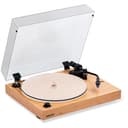
An acrylic platter and an Ortofon 2M Blue on a deck that still costs less than the cartridge-plus-turntable route usually does. Fluance publishes a 0.07% wow and flutter figure and leaves the preamp out entirely — this is a listening deck, not a convenience deck, and it is the clearest value in the sub-$600 tier.

Best overall under $1,000
$549.99 · View on Amazon

Price as of August 31, 2026. #ad How we’re funded

2
Pro-Ject Debut Carbon EVO

Pro-Ject Debut Carbon EVO

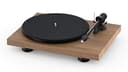
The reference for what a few hundred dollars more buys you: a one-piece carbon-fiber tonearm, a heavy damped steel platter, height-adjustable isolation feet and a factory-fitted Sumiko Rainier cartridge. It's manual and preamp-free — a deck for people who already know they want the good stuff.

Best tonearm
$649.00 · View on Amazon

Price as of August 31, 2026. #ad How we’re funded

3
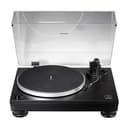
Audio-Technica AT-LP5X

Audio-Technica AT-LP5X

The grown-up direct-drive Audio-Technica: a J-shaped tonearm modeled on the brand's 1960s designs, a removable AT-HS6 headshell, the AT-VM95E cartridge and three speeds including 78 RPM. It is fully manual and aimed at listeners rather than DJs, which is exactly what separates it from the LP120X.

Best direct drive
$599.00 · View on Amazon

$649.008% off

Price as of August 31, 2026. #ad How we’re funded

4
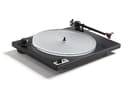
U-Turn Audio Orbit Special (Gen 2)

U-Turn Audio Orbit Special (Gen 2)

The Orbit Plus with the two upgrades that matter most: electronic 33/45 speed switching with a better motor controller, and a seamless silicone belt that takes motor noise further out of the picture. Still assembled in Massachusetts, still manual, still built for people who would rather spend on the platter than on features.

Best built in the USA
$549.00 · View on Amazon

Price as of August 31, 2026. #ad How we’re funded

5
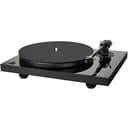
Music Hall MMF-2.3

Music Hall MMF-2.3

A two-speed manual belt-drive deck from a specialist audio brand rather than a mass-market one — the sort of turntable a hi-fi dealer sells rather than a big-box store. It is the least feature-laden deck at this price and deliberately so: no preamp, no Bluetooth, no automation, just the mechanical basics done properly.

Best specialist-brand entry
$449.00 · View on Amazon

Price as of August 31, 2026. #ad How we’re funded

6
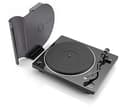
Denon DP-450USB

Denon DP-450USB

The most complete record-digitizing deck we can find: one-touch USB-A recording straight to a thumb drive with no computer involved, three speeds including 78 RPM, a weighted belt-driven platter and a curved tonearm with auto lift and stop at the end of a side. It is expensive for what it is, and it is also the only deck here that will archive a shellac 78 without a laptop.

Best for archiving a collection
$719.00 · View on Amazon

$799.0010% off

Price as of August 31, 2026. #ad How we’re funded

The picks in full

#1Best overall under $1,000

Fluance RT85

An acrylic platter and an Ortofon 2M Blue on a deck that still costs less than the cartridge-plus-turntable route usually does. Fluance publishes a 0.07% wow and flutter figure and leaves the preamp out entirely — this is a listening deck, not a convenience deck, and it is the clearest value in the sub-$600 tier.

Strengths

  • Ortofon 2M Blue nude elliptical cartridge fitted from the factory — a genuine step above the 2M Red and OM series
  • High-mass acrylic platter damps resonance without a separate mat
  • Published 0.07% wow and flutter with an isolated, speed-controlled motor

Trade-offs

  • No built-in phono preamp — you must supply one
  • Fully manual, with no Bluetooth or USB output
DriveBelt drive, isolated speed-control motor
OperationManual
CartridgeOrtofon 2M Blue (nude elliptical)
PlatterHigh-density acrylic
Built-in preampNo
Wow and flutter0.07%
Speeds33 1/3 and 45 RPM

Note. The 2M Blue alone sells for roughly the price of an entry turntable, which is most of why this deck reads as good value — but budget for a phono preamp on top, because there is none inside.

Specifications read from the manufacturer / product listing, on August 11, 2026. “Not published” means the maker does not state that figure.

#2Best tonearm

Pro-Ject Debut Carbon EVO

The reference for what a few hundred dollars more buys you: a one-piece carbon-fiber tonearm, a heavy damped steel platter, height-adjustable isolation feet and a factory-fitted Sumiko Rainier cartridge. It's manual and preamp-free — a deck for people who already know they want the good stuff.

Strengths

  • Carbon-fiber tonearm and a heavy, damped metal platter for low resonance
  • Factory-fitted Sumiko Rainier moving-magnet cartridge
  • Electronic speed change and adjustable isolation feet

Trade-offs

  • No built-in preamp — needs an external phono stage
  • Manual; the premium build is wasted on a casual listener
DriveBelt drive (electronic speed change)
OperationManual
TonearmOne-piece carbon fiber
CartridgeSumiko Rainier (moving magnet)
Built-in preampNo
Speeds33 1/3 and 45 RPM (78 with belt change)

Note. This is the point where the deck itself, not the electronics, becomes the limiting factor in your system. Pair it with a real phono preamp and speakers to hear what it does.

Specifications read from the manufacturer / product listing, on July 24, 2026. “Not published” means the maker does not state that figure.

#3Best direct drive

Audio-Technica AT-LP5X

The grown-up direct-drive Audio-Technica: a J-shaped tonearm modeled on the brand's 1960s designs, a removable AT-HS6 headshell, the AT-VM95E cartridge and three speeds including 78 RPM. It is fully manual and aimed at listeners rather than DJs, which is exactly what separates it from the LP120X.

Strengths

  • J-shaped tonearm with a removable AT-HS6 headshell makes cartridge swaps trivial
  • Ships with the elliptical AT-VM95E, whose stylus upgrades snap straight on
  • Three speeds including 78 RPM for shellac and early pressings

Trade-offs

  • Fully manual — no auto return, no auto lift
  • Costs meaningfully more than the AT-LP120XUSB without adding USB
DriveDirect drive, low-noise motor
OperationFully manual
TonearmJ-shaped, AT-HS6 removable headshell
CartridgeAudio-Technica AT-VM95E (dual moving magnet, elliptical)
Built-in preampYes — switchable phono/line output
Speeds33 1/3, 45 and 78 RPM

Note. The removable headshell is the underrated feature here: it turns a cartridge change from a fiddly alignment job into a two-minute swap, which matters if you plan to keep the deck for a decade.

Specifications read from the manufacturer / product listing, on August 11, 2026. “Not published” means the maker does not state that figure.

#4Best built in the USA

U-Turn Audio Orbit Special (Gen 2)

The Orbit Plus with the two upgrades that matter most: electronic 33/45 speed switching with a better motor controller, and a seamless silicone belt that takes motor noise further out of the picture. Still assembled in Massachusetts, still manual, still built for people who would rather spend on the platter than on features.

Strengths

  • Electronic 33/45 speed control — no lifting the platter to move the belt
  • Upgraded motor controller and seamless silicone belt for lower noise and better speed accuracy
  • Assembled in the USA with a documented upgrade path for platter, cartridge and preamp

Trade-offs

  • This configuration has no built-in preamp — the built-in-stage version costs more
  • Fully manual, and stock levels on individual finishes move quickly
DriveBelt drive, seamless silicone belt
Speed controlElectronic 33/45 RPM
OperationManual
Built-in preampNo (this configuration)
Speeds33 1/3 and 45 RPM
CartridgeFactory-fitted moving magnet — configuration dependent

Note. U-Turn sells several configurations of this deck and the retail listings vary by finish and options. Check whether the exact one you are ordering includes the preamp before you buy, especially if your speakers have no phono input.

Specifications read from the manufacturer / product listing, on August 11, 2026. “Not published” means the maker does not state that figure.

#5Best specialist-brand entry

Music Hall MMF-2.3

A two-speed manual belt-drive deck from a specialist audio brand rather than a mass-market one — the sort of turntable a hi-fi dealer sells rather than a big-box store. It is the least feature-laden deck at this price and deliberately so: no preamp, no Bluetooth, no automation, just the mechanical basics done properly.

Strengths

  • Specialist audio brand with a long-running, well-supported turntable line
  • Purist signal path — no built-in preamp or wireless circuitry to color the output
  • Belt drive with a manual arm, the standard recipe for quiet home listening

Trade-offs

  • The retail listing publishes almost no specifications — you are buying on the brand's reputation
  • No preamp, no USB, no automation; everything is on you
DriveBelt drive
OperationManual
Speeds33 1/3 and 45 RPM
Built-in preampNo
CartridgeNot published
Wow and flutterNot published

Note. The listing for this deck states only that it is a two-speed manual audiophile turntable, so we have left the cartridge and wow-and-flutter rows unpublished rather than guess. If the fitted cartridge matters to you, confirm it with the seller before ordering.

Specifications read from the manufacturer / product listing, on August 11, 2026. “Not published” means the maker does not state that figure.

#6Best for archiving a collection

Denon DP-450USB

The most complete record-digitizing deck we can find: one-touch USB-A recording straight to a thumb drive with no computer involved, three speeds including 78 RPM, a weighted belt-driven platter and a curved tonearm with auto lift and stop at the end of a side. It is expensive for what it is, and it is also the only deck here that will archive a shellac 78 without a laptop.

Strengths

  • One-touch USB-A recording to a drive — no computer, no recording software
  • Semi-automatic: the arm lifts and playback stops at the end of a side
  • Supports both MM and MC cartridges, and plays 78 RPM shellac

Trade-offs

  • Costs roughly twice what a computer-based USB deck does
  • Semi-automatic only — you still cue the arm at the start of a side
DriveBelt drive, weighted platter
OperationSemi-automatic (auto lift and stop)
DigitalOne-touch USB-A recording
Cartridge supportMoving magnet and moving coil
Built-in preampYes — built-in phono equalizer
Speeds33 1/3, 45 and 78 RPM

Note. The USB-A recording writes to a drive you plug into the deck itself. That is the whole point of the price premium — if you are happy running a cable to a laptop, the AT-LP120XUSB does the same job for far less.

Specifications read from the manufacturer / product listing, on August 11, 2026. “Not published” means the maker does not state that figure.

The four things your money buys in this tier

Spend $600 instead of $300 and the improvement is concentrated in four specific places. Knowing which of them you actually care about is how you avoid overpaying for the wrong one.

1. The platter

Below $400 you get stamped or cast aluminum. Here you get acrylic(the Fluance RT85, the U-Turn Orbit Special) or a heavier damped alloy. Acrylic matters for two reasons: its mass smooths out small speed variations, and its surface impedance is close enough to vinyl that it damps groove resonance without a separate mat. That is why acrylic platters usually ship without a felt mat — adding one undoes the point.

2. The motor and its isolation

A motor is a vibrating object bolted to the same chassis as a stylus reading grooves measured in microns. Decks in this tier isolate it, suspend it, or control it electronically. The Fluance RT85 publishes 0.07% wow and flutter and the U-Turn Orbit Special switches speed electronically instead of making you lift the platter and move a belt. Both are engineering spent on the same problem.

3. The tonearm

The Pro-Ject Debut Carbon EVO’s one-piece carbon arm is the clearest example of where the money goes: a stiff, light, resonance-free tube holding the cartridge steady while the groove tries to shake it. The Audio-Technica AT-LP5X takes a different route with a J-shaped arm and a removable AT-HS6 headshell, which trades a little rigidity for the ability to swap cartridges in two minutes rather than an evening.

4. The cartridge

This is the least glamorous line item and often the biggest audible one. The Fluance RT85 ships with an Ortofon 2M Blue, a nude elliptical cartridge that sells on its own for around a third of the deck’s price. On a spec sheet that reads as one line. In practice it is most of what you hear. Our cartridge comparison covers what the various tips do differently.

Preamp or no preamp: read this before you order

Of the six decks here, the Denon DP-450USB has a built-in phono equalizer and the Audio-Technica AT-LP5X has a switchable phono/line output. The Fluance RT85, the Pro-Ject Debut Carbon EVO, the Music Hall MMF-2.3 and this configuration of the U-Turn Orbit Special have none.

That is not an oversight. A phono stage is a very-low-noise amplifier handling a signal of a few thousandths of a volt, sitting inches from a motor and a mains transformer. Manufacturers who care about the last few decibels of noise floor would rather you put that circuit in its own box. The practical consequence is a purchase you must plan for: an amplifier with a phono input, powered speakers with one built in, or a separate stage.

If you want to understand the numbers behind the matching — how many decibels of gain your cartridge needs and why 47 kOhm keeps appearing on every spec sheet — our gain and impedance explainer works through it with actual arithmetic.

Belt or direct drive at this price?

Five of these are belt drive and one, the AT-LP5X, is direct drive. At the budget end, direct drive is associated with DJ decks; at this level it is a legitimate listening choice. The AT-LP5X is fully manual with a J-shaped arm and no DJ pitch fader — it is a direct-drive deck built for people who sit down and listen to a side.

The general rule still holds: belt drive isolates motor vibration and is the default for home listening; direct drive gives instant, unwavering speed and the torque to survive a hand on the platter. Our belt vs direct drive guide covers the trade properly. At this price both are executed well enough that the cartridge and setup will matter more than the choice.

Who each deck is for

  • You want the most performance per dollar: the Fluance RT85. Acrylic platter, 2M Blue, published wow and flutter, and a price that undercuts the cartridge-plus-deck route.
  • You want the best arm: the Pro-Ject Debut Carbon EVO. The one-piece carbon tonearm is the single most-copied design at this price for a reason.
  • You expect to change cartridges: the Audio-Technica AT-LP5X. The removable headshell turns a fiddly alignment job into a swap.
  • You care where it was built: the U-Turn Orbit Special, assembled in Massachusetts with a documented upgrade path.
  • You want a dealer-brand deck with nothing extra:the Music Hall MMF-2.3 — though note its listing publishes almost no specifications, which we have flagged rather than filled in with guesses.
  • You are digitizing a collection: the Denon DP-450USB, which records to a USB drive with no computer involved. See the USB turntable roundup for the cheaper alternatives.

What you should not expect

None of these will sound dramatically better than a well-set-up $350 deck on a mediocre system. The improvements here are real but they are the last 15 percent, and they only surface when the preamp, amplifier and speakers downstream are good enough to show them. If your current speakers cost less than the cartridge on the Fluance RT85, spend the money there first — the bookshelf speaker roundup is the more productive place to start.
Frequently asked questions

Is a $1,000 turntable worth it over a $500 one?

The gains are real but incremental: a heavier platter, a better arm, a nicer cartridge. It is worth it if the rest of your system — preamp, amplifier, speakers — is already good enough to reveal the difference. If it is not, upgrade downstream first.

Why do expensive turntables not include a phono preamp?

A phono stage amplifies a signal of a few thousandths of a volt, and putting that circuit next to a motor and a transformer adds noise. Leaving it out shortens the signal path and lets you choose a stage matched to your cartridge. The trade is that you must buy one separately.

Which turntable under $1,000 has the best cartridge?

The Fluance RT85 ships with an Ortofon 2M Blue, a nude elliptical cartridge that sells separately for a substantial fraction of the turntable's price. That factory fitment is a large part of why the RT85 reads as good value at this level.

Do I need a special mat for an acrylic platter?

No — and you generally should not add one. Acrylic's surface impedance is close to vinyl's, so it damps the record directly. Putting a felt mat on top separates the record from the surface that was designed to couple with it.

Is direct drive a bad choice at this price?

No. The DJ association comes from the budget end of the market. The Audio-Technica AT-LP5X is a fully manual direct-drive deck with a J-shaped tonearm and no pitch fader — designed for listening, with the speed stability that direct drive does well.

Can I upgrade the cartridge on these later?

Yes, and all of them are designed for it. The AT-LP5X makes it easiest thanks to its removable headshell. The Fluance and Pro-Ject decks use standard half-inch mounts, so any common cartridge fits — you just have to align it yourself.

Sources

Keep reading