How Long Do Vinyl Records Last?
There is no published play count for a record, and any specific number you have been told was invented. What is published is the service life of the stylus — which is the part that decides the answer.
How this is funded: we earn a commission if you buy through our links, at no extra cost to you. It never changes which product we recommend, and we’ll tell you plainly when to skip one. Full disclosure.
The short answer: a record outlasts the person who bought it, provided the stylus playing it is in good condition and it is stored upright in a decent sleeve. There is no published play count for a record and we will not invent one — the variable that matters is not how many times you played it but what you played it with. That is also the only part of this with real published numbers: Audio-Technica states roughly 300 to 500 hours for the conical stylus on its entry decks, and a retailer reference puts a typical elliptical or Shibata tip at 800 to 1,000 hours. Replace the tip on that schedule and the collection is a durable asset. Run past it and you are machining your own records.
Why nobody publishes a play count
A record’s lifespan is not a property of the record. It is a property of a system: the tip profile, how worn that tip is, the tracking force, the alignment, how clean the groove was, and the storage conditions between plays. Change any one of those and the answer moves by an order of magnitude. That is why no pressing plant and no cartridge maker states “good for N plays,” and why any page that gives you a confident number is telling you something it cannot know.
What makers do publish is stylus life, and that is the useful substitute. The published figures vary by profile and by model — Audio-Technica states approximately 300 to 500 hours for the conical ATN3600LC fitted to its entry turntables and approximately 300 hours for the ATN3600LE elliptical upgrade to that same body, while one retailer reference puts a typical elliptical or Shibata stylus at 800 to 1,000 hours. Our stylus replacement guide turns those hours into a realistic date for your own listening.
The four things that actually consume a record
1. A worn stylus
This is first by a wide margin. As a tip wears, its contact area changes shape, which concentrates force on parts of the groove wall that were not designed to take it. The damage is cumulative and permanent, and it happens across every record you play while the tip is in that condition — which is what makes it the expensive failure. Cleaning does not fix it and a new record will not sound right played with it.
2. Tracking force set by eye
Too much force accelerates wear; too little lets the stylus skate and chatter in the groove, which is worse. Most decks give you a counterweight dial, and dials drift. A gauge is how you find out what the arm is really doing — the one we rank highest publishes a 0.005 g resolution and measures at 2 to 3 mm above the mat, which is the height a stylus actually sits at. Our tonearm balancing guide covers the procedure, and the gauge picks cover verifying it.
3. Dirt in the groove
A stylus does not politely step over grit; it drives it along the groove wall under a couple of grams of force. Cleaning before play is therefore a wear-prevention measure rather than a cosmetic one, and so is dealing with static, since a charged record pulls dust out of the air continuously. The routine is in our cleaning guide and the products are on our cleaning kit page.
4. Storage
Records deform under sustained load and in heat. Stacked horizontally, the discs at the bottom carry the weight of everything above them for years; stored upright but leaning, they take a constant asymmetric load. Library of Congress preservation guidance for grooved discs is consistent about stable, moderate conditions and upright storage, and our page on storing vinyl vertically covers why that is the cheapest preservation decision available.
Sleeves: the slow damage people never attribute correctly
A plain paper inner sleeve does two things over years of use. It abrades the playing surface every time the record goes in or out, and it sheds fibers into the groove. Anti-static rice paper or poly-lined inners do neither, and they also stop the record being charged on the way out of the jacket. At roughly the price of one album for a hundred sleeves, this is the highest ratio of preservation to money anywhere in vinyl — our storage and sleeve picks rank the packs.
Outer sleeves are a different purchase with a different purpose: they protect the jacket and therefore the resale value, not the record. If you can only do one, do the inners.
How to tell wear from dirt from a bad pressing
These three get confused constantly, and they need different responses. Clean the record and the stylus first — that removes the most common cause. Then listen to where the problem lives.
- Worse as the side progresses, sibilant on vocals, cleaning did not help. That points at groove wear or a setup problem rather than dirt.
- Continuous crackle or rustle that cleaning improves. Dirt. Keep cleaning.
- Present from the first play on a brand new record, in the same place every time. That is the pressing, not your system — our guide to spotting a bad pressing covers what to do about it, and which pressing to buy covers avoiding it next time.
So what is the lifespan, in practice?
Long enough that it is the wrong thing to worry about. Records pressed in the 1950s and 1960s are still playing well today where they were looked after, and that is the real evidence available on the question. The things worth worrying about instead are on a much shorter clock: your stylus has a published service life measured in hundreds of hours, your tracking force is probably not exactly what you think it is, and the sleeve your favorite record lives in may be made of the wrong material. Fix those three and the collection takes care of itself.
The spec matrix
The three purchases that actually extend a record's life, in order of how much difference they make: the stylus that plays it, the sleeve that stores it, and the gauge that confirms the force.
| Specification | AT-VMN95E Replacement StylusAudio-Technica | 100x Inner & 100x Outer SleevesHudson Hi-Fi | Record-Level Stylus VTF GaugeRiverstone Audio |
|---|---|---|---|
| What it protects against | Groove wear from a tip that is past its hours | Sleeve abrasion, static and airborne dust | A tracking force set by eye rather than measured |
| Type | Replacement stylus for the AT-VM95 cartridge family | 100 anti-static inner sleeves plus 100 outer sleeves | Digital strain-gauge scale with a detachable record-level arm |
| The published figure that matters | 0.3 x 0.7 mil elliptical, bonded shank | Anti-static rice paper inners, acid-free | 0.005 g resolution, stated accuracy within +/- 0.005 g |
| Fitment or coverage | Any AT-VM95-series body; AT-LP120X series, AT-LP3XBT, AT-LPW30/40/50, AT-LP5X, AT-LP8X | Single, double and gatefold LP jackets | Measures 2-3 mm above the mat, which is where a stylus actually sits |
| Is it a consumable | Yes - this is the part with a service life | No | No - needs one AAA alkaline battery, not included |
| Fitting effort | Snaps on - no tools, no realignment | An afternoon for 100 records | A fiddly minute to attach the extension arm |
Values are read from each maker’s published specification or the listing cited under that product below, on the date shown there. We have measured nothing on this page and we publish no play-count estimate, because no maker publishes one. Prices are live on each button and dated. “Not published” means the figure is not stated in the sources cited below — it is never a value we estimated. Rows marked same are the ones where these decks do not differ.
What preserves a collection, with live prices
Buy them in this order. A fresh stylus is the one that stops damage happening; the sleeves stop the slower kind; the gauge tells you whether the first one is doing its job correctly.
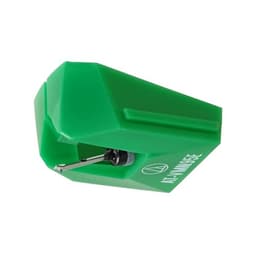
Audio-Technica AT-VMN95E Replacement Stylus
Replacing a worn stylus without touching the alignment
Price as of October 6, 2026. #ad How we’re funded
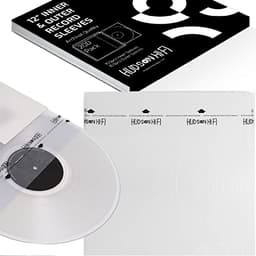
Hudson Hi-Fi 100x Inner & 100x Outer Sleeves
Sleeving 100 records in one go
Price as of October 6, 2026. #ad How we’re funded
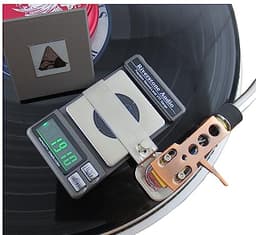
Riverstone Audio Record-Level Stylus VTF Gauge
Anyone who has set tracking force once and wants to know it was right
Price as of October 6, 2026. #ad How we’re funded
Frequently asked questions
How long do vinyl records last?
Decades, if the stylus playing them is in good condition and they are stored upright in anti-static sleeves away from heat. There is no published play count, and we will not invent one - what degrades a record is not the number of plays but the condition of the tip and the tracking force. A record played 500 times with a fresh, correctly balanced stylus will be in better shape than one played 50 times with a worn tip.
Do records wear out from being played?
Playing a record is a contact process, so the groove does change over time. But the rate is dominated by the stylus rather than by the play count: a worn or chipped tip concentrates force on a smaller area and reshapes the groove wall, and a force set too high or too low does its own damage. Keep the tip fresh and the force correct, and wear from normal listening is very slow.
How many times can you play a record before it wears out?
No manufacturer publishes a figure, so any specific number you see is someone's estimate presented as a fact. The useful version of the question is how long your stylus lasts, because that is published: Audio-Technica states approximately 300 to 500 hours for the conical stylus on its entry turntables and approximately 300 hours for the elliptical upgrade to that body, and one retailer reference puts a typical elliptical or Shibata tip at 800 to 1,000 hours.
What actually damages vinyl records?
In roughly this order: a worn or damaged stylus, a badly set tracking force, dirt and grit in the groove being ground against by the tip, heat and uneven pressure in storage, and handling the playing surface. Notice that four of those five are things you control, and none of them is the number of times you played the record.
Do unplayed records last longer?
Only if they are stored properly, and a sealed record is not automatically safe. Heat warps, horizontal stacking applies constant uneven load, and a plain paper inner sleeve can abrade the surface and shed fibers into the groove over years. Preservation guidance for grooved discs is consistent on the basics: stable moderate conditions and upright storage.
How can I tell if a record is worn out?
Listen for distortion that is consistent on a particular passage and gets worse as the side progresses, plus sibilance on vocals that cleaning does not improve. Check against another copy or a digital version if you can. The important diagnostic step is to clean the record and check the stylus first, because a dirty record and a worn tip both imitate groove wear.
Does playing a record on a cheap turntable ruin it?
It can, and the mechanism is tracking force and tip profile rather than the price tag. Players that do not publish their cartridge or tracking force are the ones to be careful with, because you cannot verify what they are doing to the groove. We have a separate page on exactly this question for suitcase-style players.
What is the single best thing I can do to make my records last?
Replace the stylus on schedule. It is the only part of the system with a published service life, it is cheap relative to a collection, and on most decks it snaps on in seconds with no realignment. Second best: anti-static inner sleeves, stored upright. Third: confirm the tracking force with a gauge rather than trusting the counterweight dial.
Sources
- Elusive Disc — Elliptical or Shibata stylus, and when to replace one — Retailer reference: "Replace the stylus every 800-1000 hours (dependent on usage and model)" (accessed August 19, 2026)
- Audio-Technica — ATN3600LC replacement stylus — The replacement conical stylus for the AT3600L cartridge fitted to the AT-LP60X, and the only place Audio-Technica publishes that cartridge's tracking-force range: "Vertical Tracking Force 3.0 to 4.0 g (3.5 g standard)"; "Conical bonded", 0.6 mil; stylus life "Approx. 300-500 hours"; compatible with the AT-LP60X series, AT-LP60 series, AT-LP2D series, AT-PL300 series, AT-SB727, AT-SB2022, AT-LPGO-BT and AT-PL50 (accessed September 18, 2026)
- Audio-Technica — ATN3600LE elliptical replacement stylus — The AT-LP60X's one upgrade rung, from the maker: "This elliptical bonded stylus makes it easy to upgrade the sound quality of any turntable equipped with an ATN3600L or ATN3600LC conical stylus, such as the turntables in our popular AT-LP60X series"; stylus shape "Elliptical bonded", dimensions "0.3 x 0.7 mil"; "Vertical Tracking Force 3.0 to 4.0 g (3.5 g standard)"; stylus life "Approx. 300 hours"; the same compatibility list as the ATN3600LC. Read alongside the VM95C page, this is the fact the comparison turns on: the LP60X's elliptical option still tracks at 3.5 g, because the force is set by the arm and the cartridge body it was designed for, not by the stylus (accessed September 18, 2026)
- Audio-Technica — AT-VMN95E replacement stylus — Manufacturer page for the elliptical VM95-series replacement stylus and its fitment list (accessed August 11, 2026)
- Library of Congress — Caring for and cleaning grooved discs — Preservation guidance on cleaning and storing records to prevent damage (accessed July 24, 2026)
- Library of Congress — Care, handling and storage of audio-visual materials — Preservation guidance on vertical storage, sleeve materials and storage environment (accessed August 11, 2026)
- Riverstone Audio — Record-Level Stylus VTF Pressure Gauge (Graphite) — The maker's own page, and the argument the whole page is ranked on: "For accurate VTF measurement, the stylus tip should be at the same vertical position as the record surface - that is, at \"record level\"." With the patented arm (US Patent D878232) "vertical tracking force is measured approx. 2 mm to 3 mm from the surface of a turntable mat or platter - which is the height of a stylus tip resting on an LP record (LP's have a thickness range of 1.9 mm to 2.9 mm)", while "less expensive gauges typically have a stylus tip measurement distance between 6 and 8 mm". Published figures: 0.005 g resolution; "All gauges we ship will have a measurement error within +/-0.005 g" after "a rigorous multi-point calibration procedure"; two calibration masses (5 g and 20 g) supplied; re-calibratable "for use up to 100 g" with additional masses; housing "durable plastic", arm "316 stainless steel, a premium non-ferromagnetic grade", locking screw "machined from brass"; 52 mm x 91 mm x 12 mm; one AAA alkaline, not included; a warning about counterfeit copies of the design on marketplaces; and the honest line that fitting the arm "requires a good pair of glasses, a bit of technical savvy, and a good dose of patience" (accessed September 15, 2026)
- Audio-Technica — Balancing the tonearm and setting tracking force — Manufacturer procedure for zero-balancing an arm, then dialing tracking force and anti-skate (accessed August 19, 2026)
Keep reading
How Often Should You Replace a Stylus?
The published hour figures and how to turn them into a date.
Read the guideHow to Store Vinyl Records
The storage half of this answer, in detail.
Read the guideBest Stylus Force Gauges
How to confirm the number instead of trusting the dial.
See the picksDo Cheap Turntables Ruin Records?
The other half of the wear question, answered on published figures.
Read the guide