The five reasons, and the deck that answers each
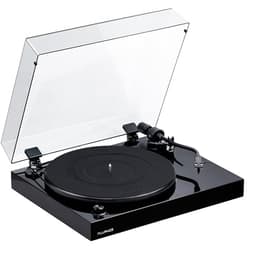
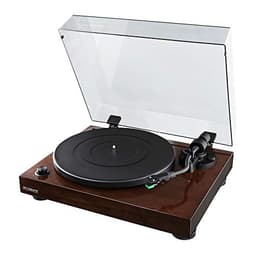
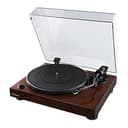
- “I do not want direct drive.” The LP120X puts the motor directly under the platter, which is why DJs use the format and why some listeners worry about motor noise reaching the record. A belt interposes a compliant link between the two. The Fluance RT82 is the like-for-like belt-drive answer at the same money, with an isolated motor and an Ortofon OM10 fitted; our belt vs direct drive page covers what actually differs. What you give up: three speeds, the USB output and the internal phono stage, all of which the RT82 does not have.
- “I want Bluetooth.” The LP120XUSB has none. The AT-LP120XBT-USB is the same deck with Bluetooth output and a published adjustable dynamic anti-skate, so nothing else about the purchase has to change. What you give up: money, and that is all.
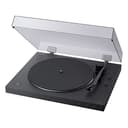
- “I want it to lift the arm itself.” The LP120X is fully manual. The Sony PS-LX310BTis fully automatic with a switchable built-in preamp, Bluetooth and a USB output, so it covers the LP120X’s convenience features while adding the one it lacks. What you give up: the heavy direct-drive platter, 78 RPM, and the ability to change the cartridge as freely. Our automatic roundup has the field.
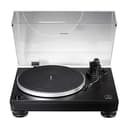
- “I want direct drive, but better.” The AT-LP5Xkeeps direct drive and fully manual operation, adds a J-shaped tonearm with a removable AT-HS6 headshell — which makes cartridge swapping a two-minute job instead of an alignment session — and keeps the switchable phono output and three speeds. What you give up: a significant amount of money.
- “It costs more than I wanted to spend.” The Fluance RT81 is the cheapest deck here and still publishes a switchable built-in phono preamp with a full bypass, which is a better specification than “has a preamp” — it means the internal stage leaves the signal path completely when you outgrow it. What you give up: direct drive, USB, 78 RPM.
The one thing none of these fixes
If you bought the LP120X for the USB outputspecifically — to digitise a record collection — only two decks on this page keep it: the LP120XBT-USB and the Sony PS-LX310BT. The Fluance decks and the AT-LP5X have no USB at all. There is a route around it: any deck can be digitised through an audio interface or a USB phono stage, which our recording vinyl to a computer guide walks through, and it generally produces a better result than a built-in converter. But it is another box, and it belongs in the comparison honestly.
Similarly, 78 RPMis on the LP120X, the LP120XBT and the AT-LP5X and on nothing else here. If you own shellac, that narrows the page to three decks immediately — see our 78 RPM roundup.
Where the LP120X is still the right buy
It remains the cheapest way to get a heavy direct-drive platter, three speeds, a good elliptical cartridge, a switchable phono stage and a USB output in one chassis, and no single alternative on this page matches that combination at that price. If you want all of those things at once, buy it. If you want most of them plus Bluetooth, buy the BT version. Everything else here is a deck that does one of those jobs better by giving up another.
Before you buy any of them, do the cheap things: a correctly set tracking force, a level plinth, and a fresh stylus change more than the difference between two decks at this price. We own none of these five turntables; every figure above is read from published specifications on a dated visit, per our methodology.