How these were ranked
- Same mount, so it is actually a swap. Every pick is a standard half-inch two-screw mount with a high enough output for a normal moving-magnet phono input. That is the definition of an alternative here: you unscrew one and screw in the other, re-set tracking force, and play.
- Published output, stylus profile and tracking force.Those three rows decide whether a cartridge works with your phono stage, how much of the groove it reads, and whether your arm can set it correctly. Where a maker does not publish one — and two listings here do not publish output — the table says so rather than carrying a borrowed number.
- A replaceable stylus, named. A cartridge whose tip cannot be renewed is a consumable pretending to be a component. All five here take a replacement stylus, and the Goldring even publishes its part number.
- Live and in stock, checked on the day this page was written. Prices render from the price feed with their own as-of stamp. One pick came back with limited stock, which is normal in this category and is why the button shows the current state rather than a figure we typed.
- No moving-coil cartridges. They need far more gain than a standard MM input provides, which makes them a phono-stage purchase as much as a cartridge purchase. Our MM vs MC page explains why, and phono preamps for moving coil covers the hardware that would have to come first.
Match the alternative to your reason
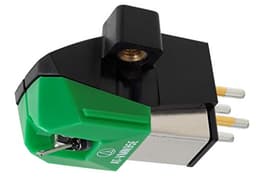
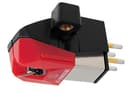
You want the same kind of upgrade for less.The AT-VM95E. It publishes an elliptical stylus, a 4.0 mV output and a 1.8–2.2 g tracking force on a half-inch mount, which is the same shape of product as a 2M Red at a lower price — and the VM95 body accepts every VMN95 tip, so the next upgrade is a stylus rather than a cartridge. Our AT-VM95E vs Ortofon 2M Red page settles those two head to head.
Your arm cannot carry 7.2 g.This is the fitment problem the 2M Red actually has, and it is specific rather than theoretical: some budget arms publish a supported cartridge weight range that a 2M Red sits at the top of or above. Check your arm’s published range first — our Fluance fitment tableis the worked example — and prefer a lighter body if it does not fit.
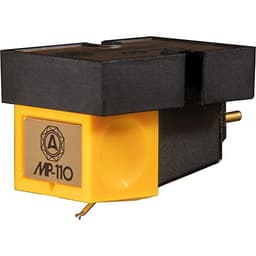
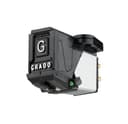
You want a different voice rather than a different price.The Grado Prestige Green4 is a moving-iron design, hand-built in the USA, publishing a 5 mV high output and a 1.5–2.0 g tracking force. Moving iron is a genuinely different generator topology from moving magnet, and that is the honest reason to consider it — not a claim from us about how it sounds, because we have not heard it.
You want a better stylus profile at this tier. The AT-VM95ML carries a micro-linear tip at 2.2 x 0.12 mil in place of a bonded elliptical. A narrower contact patch follows finer groove modulation and holds together better on inner grooves, where any elliptical struggles most. It is the biggest real step on this page and it costs accordingly. Our stylus roundup covers the profile ladder.
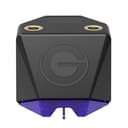
You want the fullest published specification.The Goldring E3 is the one here whose maker prints the most: a 3.5 mV output at 5 cm/s lateral, a bonded super-elliptical tip with a named replacement (GL0059), an aluminum cantilever, a 47 kΩ load, a 1.75–2.25 g force and a 6.8 g body. On a site that ranks what makers publish, that counts for something.
What changing a cartridge does and does not do
It does change how much of the groove is read, and on a worn or badly set deck it changes nothing you will enjoy. Before spending here, make sure the deck is level, the tracking force is set to the figure the cartridge publishes, and the existing stylus is not simply worn out — our stylus replacement page has the hours and the inspection method, and a fresh tip in the cartridge you already own is often the cheaper half of this decision.
It also does not change your phono stage. All five picks are high-output designs that a normal MM input handles, so no new box is required — which is exactly what makes them alternatives rather than projects. If your deck has no phono stage at all, that purchase comes first: our phono preamp picks cover it.
Finally, fitting one is a job with a method. Alignment, overhang and azimuth all matter more than the choice between two cartridges at the same price, and our cartridge setup guide walks it. If that sounds like more than you want to take on, a replacement stylus gets you most of the way with none of the alignment work.