How these were ranked
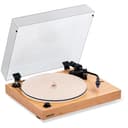
- What the belt is isolating from what. An isolated, speed-controlled motor in a heavy plinth is doing the job properly; a motor bolted to a light chassis is doing it nominally. Plinth mass and motor mounting are the two construction facts that matter most in this class, and Fluance publishes both.
- Published wow and flutter, where it exists.It is the measurement that describes speed stability — audible as pitch wavering on sustained notes. Where a maker prints it we use it; where it is absent the table says “Not published” and the pick is argued on construction instead.
- The cartridge on the arm, and whether you can change it. The stylus does more for how a record sounds than anything else on the deck. A removable headshell or a standard mount means the deck grows; a fixed pickup caps it.
- Whether the phono stage is switchable. A built-in stage with a full bypass works with powered speakers now and gets out of the way later. A deck with no stage at all needs a separate phono preamp on day one, which is a real cost and is stated on each pick.
- Live price at the last refresh, with the as-of date on every button.
The belt is a consumable, and that is fine
The one genuine downside of belt drive: the belt stretches and eventually slips. The symptom is a platter that never quite reaches speed, so everything plays slightly flat — and it is the first thing to check on any belt-drive deck that sounds wrong, which our page on a record player playing at the wrong speed covers.
Replacement belts for current Fluance and Audio-Technica decks cost a few dollars and take ten minutes. Over the life of a turntable that is a trivial running cost, and it is the reason belt drive remains the standard for hi-fi listening while direct drive owns the DJ booth. It is also a reason to check parts availability before buying a used deck, where a discontinued belt is a genuine problem.
Which of the five, by what you own
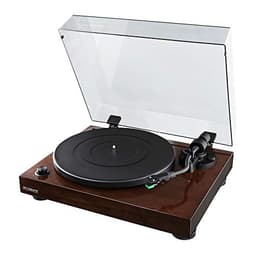
Powered speakers and nothing else. The RT81 or the AT-LP60X: both publish a switchable built-in phono stage, so the deck plugs straight into the speakers with no extra box. This is the commonest starting setup and our built-in preamp picks cover it in full.
An amplifier with a phono input. The RT82 becomes the value pick, because you are no longer paying for a phono stage you will bypass. Fluance publishes better wow and flutter and speed-variation figures for it than for the RT81, and an Ortofon OM10 cartridge in place of the Audio-Technica.
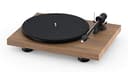
A system you intend to keep improving. The RT85 with its acrylic platter and Ortofon 2M Blue, or the Pro-Ject Debut Carbon EVO with its carbon fiber arm and electronic speed change. Both need a phono stage somewhere, and both reward the tracking-force setup that the automatic decks do not allow.
Someone who should not have to think about it.The AT-LP60X, every time. Full automation removes every setup mistake available to a beginner, and the arm returns on its own at the end of a side — which, on a deck that lives in a living room, is the feature that prevents the most stylus damage. Our automatic picks rank that class on its own.
What to spend the next money on
Not a new deck. In order: a level surface and a correctly set tracking force, both free; then a fresh stylus when the hours are up; then a better cartridge if the arm allows one; then a phono stage. Our upgrade order page sets out why that sequence beats replacing the turntable, and on a belt-drive deck the answer is almost always the stylus first.