Match the alternative to the omission
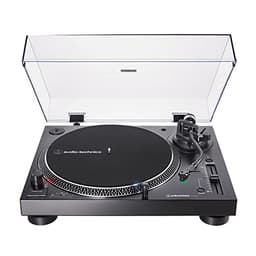
You need USB, 78 RPM, a pitch fader or a removable headshell. That is the AT-LP120XUSB, and it is not a close call — no Fluance offers any of the four. The trade is direct drive instead of belt drive, so the motor sits under the platter rather than behind a belt; our drive-type explainer sets out what that costs and buys. We have the two settled head-to-head in AT-LP120XUSB vs Fluance RT82, which is the comparison most people arriving here are really making.
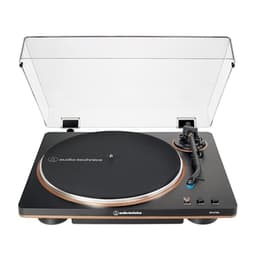
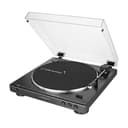
You want it to be automatic.No Fluance is. Every one requires you to cue the arm by hand and lift it at the end of a side — and an arm left riding a locked groove is a real source of stylus wear. The AT-LP70X is the automatic deck with a VM95-series cartridge and a switchable phono stage; our automatic picks rank that class on its own and automatic versus manual covers why it is not the compromise audiophiles imply.
The RT81 is more than you want to spend. The AT-LP60X is the cheapest component deck we rank: fully automatic, a replaceable magnetic cartridge, a switchable built-in phono stage. It gives up the adjustable counterweight and the elliptical cartridge, which is exactly what you are not paying for.
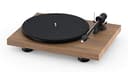
You want to go up, not sideways. The Pro-Ject Debut Carbon EVO sits above the entire Fluance range: a carbon fiber tonearm, electronic speed change, a damped metal platter and a Sumiko Rainier cartridge. It has no phono stage, so it needs one somewhere. Our picks under $1,000 cover that band, and the Debut Carbon EVO review is the full read.
Where Fluance is still the better buy
Two cases, and both are common. If the deck will only ever play albums through a system that already has a phono input, the RT82 and above put every dollar into the motor, platter and cartridge and none into features you will not use. Fluance publishes better wow and flutter and speed-variation figures for the RT82 than for the RT81, and fits an Ortofon cartridge rather than an Audio-Technica.
If you want an acrylic platter and an Ortofon 2M Blue without moving into four-figure decks, the RT85 is the cheapest honest route there, and the RT85N and RT87 extend the same idea. Our Fluance range roundup ranks the whole ladder on the row that caps each model, and the RT85 review covers the tier directly.
One practical note either way: on any Fluance above the RT81 there is no built-in phono stage, which means a phono input on your amplifier or a box from our phono preamp picks is part of the price. Two of the four alternatives on this page include a switchable stage instead, which is a genuine cost difference and not a specification detail.
What none of these changes
The stylus does more for how a record sounds than the choice between any two decks on this page. Whichever you buy, set the tracking force to the published figure if the arm allows it, level the deck, and replace the stylus on schedule — our styli under $50 page covers the Audio-Technica families fitted to three of these four. That sequence is worth more than the difference between a Fluance and its alternatives, and it is the argument our upgrade-order page makes at length.