How to Listen to Vinyl With Headphones
Almost no turntable can drive a pair of headphones, and the reason is the same reason it cannot drive a speaker. Three routes that work, and the one spec that decides whether yours will.
How this is funded: we earn a commission if you buy through our links, at no extra cost to you. It never changes which product we recommend, and we’ll tell you plainly when to skip one. Full disclosure.
The short answer: you need something between the turntable and the headphones, and the cheapest honest version of that something is a phono stage with a headphone amplifier built in. On this page that is the Douk Audio T4 PRO, which is a moving-magnet phono stage whose 3.5 mm output the maker rates for 32 to 300 ohm headphones — one box, no speakers, no amplifier. If you want speakers as well, a receiver with a phono input and a headphone jack does both jobs for one price. If you want no wires at all, a turntable that transmits Bluetooth pairs straight to wireless headphones. Those are the three routes, and the rest of this page is about which one suits what you already own.
Why you cannot just plug headphones into a turntable
A phono cartridge is a tiny generator. Its output is a small fraction of the level a line input expects, and it is deliberately not flat: records are cut with the RIAA curve, which reduces bass and lifts treble on the way to the lacquer so the groove stays narrow and quiet. A phono stage does two jobs — it undoes that curve and it raises the level. Without it you get something quiet, thin and bass-light, which is exactly what people describe when they say records sound wrong.
Even once that is solved, a line-level signal is not a headphone signal. Line level is a voltage with almost no current behind it; headphones are a load that needs power. So the two jobs you are shopping for are equalization and gain, then amplification into a low-impedance load. Every route below covers both. The differences are in what else comes in the box.
Route one: a phono stage with a headphone amp inside
This is the smallest, cheapest complete answer, and the only one on this page that exists specifically for this job. A single box takes the turntable’s phono output, applies RIAA equalization and gain, and drives headphones directly. The one we rank publishes a 32 to 300 ohm headphone range and a multi-level gain control, which matters: a gain switch is what lets the same box suit a low-output cartridge and a high-output one.
It is the right route when headphones are the destination rather than a fallback — a desk, a flat with thin walls, a room where speakers would be unwelcome after nine in the evening. It is the wrong route if you also want speakers, because a phono-stage-plus-headphone-amp has no power amplifier in it. For the wider field of phono stages, including the ones with no headphone output, see our picks under $100 and the tube versus solid-state guide — the box here happens to be a tube design, which is a flavor rather than a fidelity claim.
Route two: an amplifier or receiver with a headphone jack
If you want headphones and speakers, this is almost always the better buy. A two-channel receiver with a dedicated phono input replaces the phono stage, the headphone amp and the power amplifier in one chassis, and the headphone jack usually mutes the speakers when you plug in. The Sony STR-DH190 on this page publishes a phono input, 100 W per channel into 8 ohms, four RCA inputs, Bluetooth, FM and a full-size headphone jack.
The honest caveat is that very few makers publish a headphone impedance range for a receiver’s jack, so you are buying on the rest of the specification and trusting the socket. We have not measured any of them. What we can say is what the box replaces, which is the argument for it. Our amplifier picks rank this class properly, and do you need an amp covers the case where you do not.
Route three: Bluetooth, straight to wireless headphones
Several turntables transmit Bluetooth rather than only receiving it, and those pair directly with wireless headphones with nothing else in the chain at all. The AT-LP60XBT is the entry example: the same fully automatic deck as the AT-LP60X, with a transmitter added and the switchable phono preamp still inside for wired use.
Two things to know before choosing this route. First, “Bluetooth turntable” on a listing sometimes means it receives Bluetooth so you can play a phone through its speakers — which is the opposite of what you need. Look for an output, send or transmit claim. Second, the signal is compressed on the way across, so the same deck sounds better out of its RCA sockets. Our Bluetooth turntable picks sort out which decks transmit, and the Audio-Technica range page shows what the Bluetooth version costs over the wired one.
Route four: a player that already has a headphone jack
Some products solve this by containing their own amplifier. The all-in-one music centers we rank on our turntable and CD combo page mostly publish a headphone jack, because they already have a power amp driving built-in speakers; so does the Numark PT01 Scratch portable on our USB turntable page. If you own one of those already, you do not need anything on this page — plug in and play.
If you are buying new, be clear about what you are buying. A headphone jack on a $120 all-in-one is a convenience on a player whose cartridge and tracking force are usually unpublished. A headphone output on a phono stage is part of a signal path you can improve one box at a time. Those are different purchases that happen to share a socket.
What headphones do and do not fix
One genuine advantage: headphones break the acoustic loop between speakers and turntable. A deck that boomed or howled when the volume came up — the feedback problem every vinyl owner meets once — simply cannot do it when the sound is not in the room. If that is why you are here, headphones are a real fix, and so is proper isolation if you want the speakers back later.
What headphones do not fix is anything upstream. They are closer to your ears than speakers are, so a worn stylus, a dirty record and a mis-set tracking force are all more obvious, not less. If records sound harsh or sibilant on headphones, the first three things to check are the age of the stylus, the cleanliness of the record and the tracking force — in that order, and before you blame the headphones.
The spec matrix
The three routes side by side. Only one of them publishes a headphone impedance range, which is the figure that tells you whether your headphones will go loud enough.
| Specification | T4 PRODouk Audio | STR-DH190Sony | AT-LP60XBTAudio-Technica |
|---|---|---|---|
| What it is | Moving-magnet tube phono stage with a headphone amp built in | Two-channel stereo receiver with a phono input | Fully automatic belt-drive turntable with Bluetooth output |
| Phono stage includedsame | Yes - moving magnet, RIAA equalization | Yes - dedicated phono input | Yes - switchable, inside the deck |
| Headphone connection | 3.5 mm socket | Full-size headphone jack | Bluetooth, to wireless headphones |
| Published headphone impedance range | 32 - 300 ohms | Not published | Not published |
| Gain control | Multi-level gain knob | Not published | Not published |
| What else it does | 3.5 mm aux input, so a phone can share the headphone amp | 100 W x2 into 8 ohms, four RCA inputs, Bluetooth, FM, A/B speaker switching | Plays records; switchable phono/line output for a wired system too |
| What you still have to own | A turntable and a pair of headphones | A turntable, headphones, and speakers if you want them | A pair of Bluetooth headphones |
| Cartridge supportsame | Moving magnet (MM) | Moving magnet (phono input) | Fitted AT3600L, moving magnet |
Every value is read from the maker’s published specification or the retail listing cited under each product below, on the date shown there. Not published means that maker does not state the figure — it is not an estimate of ours. Prices are live on each button and dated. “Not published” means the figure is not stated in the sources cited below — it is never a value we estimated. Rows marked same are the ones where these decks do not differ.
The three routes, with live prices
One of these is a box that sits between your deck and your headphones, one is the whole amplifier, and one is a turntable that skips the wire entirely.
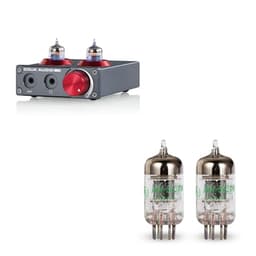
Douk Audio T4 PRO
Listening to records on headphones without a separate amp
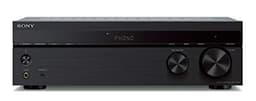
Sony STR-DH190
One box that replaces both the phono preamp and the amplifier
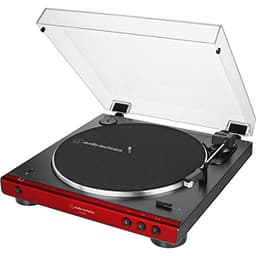
Audio-Technica AT-LP60XBT
A safe automatic deck that streams wirelessly
Frequently asked questions
Can you plug headphones directly into a turntable?
Almost never, and not on any deck that is built for hi-fi. A turntable's phono output is a very small signal that still needs RIAA equalization, and even a deck with its built-in preamp switched to LINE puts out a line-level signal with no power behind it. A few all-in-one players and portables do have a real headphone jack because they contain their own amplifier, but a conventional turntable does not.
What is the cheapest way to listen to records on headphones?
A phono stage with a headphone amplifier built into it, which replaces two boxes with one. The Douk Audio T4 PRO is the example on this page: it is a moving-magnet phono stage with RIAA equalization, a multi-level gain knob and a 3.5 mm output the maker rates for 32 to 300 ohm headphones. Anything cheaper than that route tends to mean a headphone jack on an all-in-one player rather than a hi-fi signal path.
Do I need a headphone amp for vinyl?
You need something that amplifies, and it does not have to be a dedicated headphone amp. The job can be done by a phono stage with a headphone output, by an integrated amplifier or receiver with a headphone jack, or by the Bluetooth receiver inside a pair of wireless headphones. What you cannot do is skip the amplification stage entirely.
What does the 32 to 300 ohm rating mean?
It is the range of headphone impedances the maker says its output is designed to drive. Headphones vary widely - many consumer pairs sit near 32 ohms, while some studio models are 250 or 300 ohms - and a higher-impedance pair needs more voltage to reach the same volume. A published range is a useful honesty signal: most budget boxes with a headphone socket do not state one at all.
Can I use Bluetooth headphones with a record player?
Yes, if the turntable transmits Bluetooth rather than only receiving it. The AT-LP60XBT and several other decks publish Bluetooth output, which pairs directly with wireless headphones and needs no other box. The trade is that the signal is compressed on the way across, so the same deck's wired output into a wired headphone chain is the better-sounding route.
Will a receiver's headphone jack sound as good as a dedicated headphone amp?
It depends entirely on the receiver, and we have not measured any of them. What is true and checkable is the structural point: a receiver with a phono input and a headphone jack replaces both the phono stage and the headphone amplifier for one price, and it also drives speakers. That makes it the better value when you want both, and the less focused choice when headphones are the only destination.
Why do records sound so quiet through my headphones?
Almost always because there is no phono stage in the chain. A cartridge's raw output is a fraction of line level and it carries the RIAA curve, so without equalization and gain the result is quiet and thin with no bass. Switch the turntable's output to LINE if it has a built-in preamp, or add a phono stage, and the level problem disappears.
Is listening to vinyl on headphones a bad idea?
No, and it has one real advantage: headphones remove the speaker-to-turntable feedback loop entirely, so a deck that hums or booms when the speakers are loud behaves perfectly on headphones. The thing headphones do not fix is anything upstream of them - a worn stylus, a dirty record or a badly balanced tonearm is more obvious through headphones, not less.
Sources
- Crutchfield — How to choose a phono preamp — On why a phono signal needs a preamp and never running two at once (accessed July 24, 2026)
- Crutchfield — How to choose the right turntable — Buying-guide reference on drive type, cartridges, preamps and setup (accessed July 24, 2026)
- Elliott Sound Products — Phono preamp / RIAA equalization — Technical reference on RIAA pre-emphasis and the inverse playback curve (accessed July 24, 2026)
- Audio-Technica — AT-LP60X turntable — Manufacturer specs for the fully automatic belt-drive AT-LP60X (accessed August 11, 2026)
- Audio-Technica — AT-LP60X user manual — The light end of the same question: 359.5 mm (14.15 in) wide x 97.5 mm (3.84 in) high x 373.3 mm (14.70 in) deep, 2.6 kg (5.73 lb). It fits every platform here with room to spare — and at about 1.4 lb per corner it sits below the load range every compliant isolator on this page publishes (accessed September 11, 2026)
- Crutchfield — Intro to home audio power amplifiers and preamps — On the preamp/power-amp split, integrated amplifiers and impedance stability (accessed August 11, 2026)
Keep reading
Best Phono Preamps Under $100
Where the headphone-capable phono stage on this page sits in the wider field.
See the picksBest Amplifiers for a Turntable
The receivers and integrated amps with a phono input, and which have headphone jacks.
See the picksBest Bluetooth Turntables
Every deck that can send a record to wireless headphones without a wire.
See the picksDo I Need a Phono Preamp?
The question underneath this one, answered in two sentences then explained.
Read the guide