PLATTER & PLINTH

Best Turntable Accessories Under $50

Six accessories under fifty dollars, one per job rather than six versions of the same one - and in the order that a new turntable actually benefits from them.

By Stephen V.Last updated How we pick

The verdict

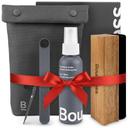
The Boundless Audio Record Cleaning Kit is the first accessory to buy for any turntable. It is a velvet record brush, a stylus brush, fluid and a pouch in one box, which covers the two routines that matter most — cleaning a record before it plays and cleaning the stylus after — for less than the price of a single album. It is for anyone whose deck is new and whose records are not. The budget pick is the DIGITNOW Digital Stylus Force Scale Gauge, the cheapest thing on this page and arguably the one that prevents the most damage: it reads to 0.01 g over a 0 to 5 g range, which turns tracking force from a guess into a number. If you buy only one more thing after the kit, make it 100 anti-static inner sleeves, because paper inners scuff records every time they move.

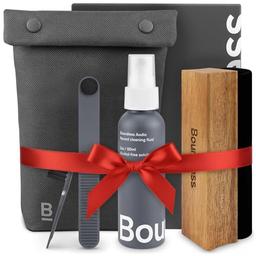
Boundless Audio Record Cleaning Kit

Buy this first

Boundless Audio Record Cleaning Kit

$22.74 · View on Amazon

$31.9929% off

Price as of November 22, 2026. #ad How we’re funded

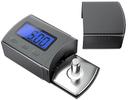
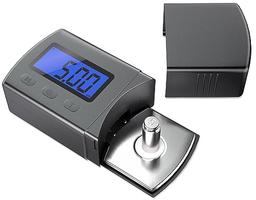
DIGITNOW Digital Stylus Force Scale Gauge (0.01 g / 5 g)

Budget pick

DIGITNOW Digital Stylus Force Scale Gauge (0.01 g / 5 g)

$11.39 · View on Amazon

$11.995% off

Price as of November 22, 2026. #ad How we’re funded

Every pick sat under $50 at the last price check, as of November 22, 2026, and each button carries that stamp with its own live number.

Accessories are where vinyl gets expensive by accident. It is easy to spend $300 in small amounts on things that overlap, and end up with three brushes, two fluids and still no way to check what the stylus is doing. So this page is organised around a rule rather than a budget: one product per job, six jobs, nothing over $50, and the jobs in the order a turntable actually benefits from them.

The six jobs are: get dust out of the groove before it plays, take static off the surface, keep the record clean while it is stored, give the record a stable interface with the platter, stop the deck picking up vibration from the furniture, and set the tracking force correctly. Everything else sold as a turntable accessory is either a luxury version of one of these, or it belongs in a different budget.

Two of these have a bigger effect than their price suggests, and they are the two people skip. A stylus force gaugeturns a tonearm setting from folklore into a measurement — our tonearm balancing guideuses one — and inner sleeves stop the slow scuffing that paper inners do to every record in a collection. Neither is exciting. Both outlast every other purchase on this page.

How this is funded: we earn a commission if you buy through our links, at no extra cost to you. It never changes which product we recommend, and we’ll tell you plainly when to skip one. Full disclosure.

Quick picks

One product per job rather than six versions of one, ordered by what a new turntable benefits from first, and compared on the figures each maker publishes. We have not tested these items; where a maker states no figure, the table says so.

#ProductBest forPrice
1
Boundless Audio Record Cleaning Kit

Boundless Audio Record Cleaning Kit

A sensible all-in-one cleaning kit: a velvet record brush, a stylus brush, cleaning fluid and a storage pouch — everything for a safe dry-and-damp routine in one box. The easy answer to 'what do I need to keep records clean' without overspending.

Best overall
$22.74 · View on Amazon

$31.9929% off

Price as of November 22, 2026. #ad How we’re funded

2
DIGITNOW Digital Stylus Force Scale Gauge (0.01 g / 5 g)

DIGITNOW Digital Stylus Force Scale Gauge (0.01 g / 5 g)

The cheapest branded gauge we could find with a live listing, and the one to buy if the whole job is a single check after a cartridge swap. It publishes a 0.01 g resolution, a tare function, a calibration weight in the box and two button batteries — and no accuracy figure at all, which is why it ranks below the Neoteck that costs a few dollars more and states one.

Best value
$11.39 · View on Amazon

$11.995% off

Price as of November 22, 2026. #ad How we’re funded

3
Hudson Hi-Fi 100x Inner & 100x Outer Sleeves

Hudson Hi-Fi 100x Inner & 100x Outer Sleeves

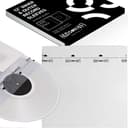
The same idea as the Big Fudge kit at double the count: 100 anti-static rice-paper inners and 100 clear outers, sized to fit single, double and gatefold jackets. If you have a real collection rather than a shelf, this is the cheaper way per record.

Best sleeves
$33.56 · View on Amazon

$39.9516% off

Price as of November 22, 2026. #ad How we’re funded

4
AudioQuest Carbon Fiber Record Brush

AudioQuest Carbon Fiber Record Brush

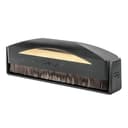
The one accessory every vinyl owner should have: a carbon-fiber anti-static brush that lifts dust and drains static charge from the record surface before each play. Cheap, effective, and the single habit that does most to keep playback quiet.

Best anti-static brush
$34.92 · View on Amazon

Price as of November 22, 2026. #ad How we’re funded

5
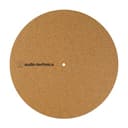
Audio-Technica AT-SMC1 Cork Slipmat

Audio-Technica AT-SMC1 Cork Slipmat

The thin one, and that is the whole reason to buy it. At 1.6 mm it is close enough to a typical factory felt mat that swapping it in barely moves the tonearm — which matters on the many decks whose arm height cannot be adjusted at all.

Best platter mat
$25.00 · View on Amazon

Price as of November 22, 2026. #ad How we’re funded

6
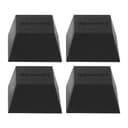
Hudson Hi-Fi IsoBlock Firm Silicone Isolation Feet

Hudson Hi-Fi IsoBlock Firm Silicone Isolation Feet

The cheapest branded way to get a turntable off a hard shelf, from a maker already on two of our accessory pages, and the Firm Block is the variant Hudson itself points at turntables. It is ranked last because its own published figures do not agree with each other: the spec block says 37.5 lb per pad, the body copy on the same page claims 150 lb, and the headline attenuation figure is quoted to two decimal places with no test method attached.

Best isolation
$22.95 · View on Amazon

Price as of November 22, 2026. #ad How we’re funded

The picks in full

#1Best overall

Boundless Audio Record Cleaning Kit

A sensible all-in-one cleaning kit: a velvet record brush, a stylus brush, cleaning fluid and a storage pouch — everything for a safe dry-and-damp routine in one box. The easy answer to 'what do I need to keep records clean' without overspending.

Strengths

  • Bundles the record brush, stylus brush and fluid you actually need
  • Enough for a proper dry-then-damp clean, not just a dust wipe
  • Inexpensive and beginner-friendly

Trade-offs

  • Manual cleaning — not a deep-clean machine for badly soiled records
  • Fluid quantity is modest for a very large collection
IncludesVelvet record brush, stylus brush, fluid, pouch
MethodManual dry + damp
ForRoutine cleaning and dust removal

Specifications read from the manufacturer / product listing, on July 24, 2026. “Not published” means the maker does not state that figure.

#2Best value

DIGITNOW Digital Stylus Force Scale Gauge (0.01 g / 5 g)

The cheapest branded gauge we could find with a live listing, and the one to buy if the whole job is a single check after a cartridge swap. It publishes a 0.01 g resolution, a tare function, a calibration weight in the box and two button batteries — and no accuracy figure at all, which is why it ranks below the Neoteck that costs a few dollars more and states one.

Strengths

  • Lowest price on this page from a company that puts its own name on the product
  • 0.01 g resolution over 5 g, tare, auto-off and a calibration weight, all in the box
  • Two button batteries included, so it works out of the packet
  • Described as non-magnetic and suitable for MM, MC and MI cartridges
  • Leather sheath for the drawer

Trade-offs

  • No accuracy figure is published anywhere in the listing — resolution is not accuracy
  • Flat-plate measurement at platform height
  • The calibration weight's mass is not stated in the feature copy
  • Button cells run down faster than a AAA and are less likely to be in the house when they do
TypeDigital flat-plate scale
Resolution0.01 g
Stated accuracyNot published
Range0-5.00 g
Measuring heightPlatform height (not published as a figure)
Calibration weightIncluded (mass not published)
DimensionsNot published (listing gives 3.82 x 1.6 x 0.7 in shipping figures)
Power2 button batteries (included); auto-off

Note. If you are buying this to check a fully automatic deck with a fixed arm, stop: there is nothing to adjust on the AT-LP60X, so a gauge can only tell you the factory setting, not change it.

Specifications read from the manufacturer / product listing, on September 15, 2026. “Not published” means the maker does not state that figure.

#3Best sleeves

Hudson Hi-Fi 100x Inner & 100x Outer Sleeves

The same idea as the Big Fudge kit at double the count: 100 anti-static rice-paper inners and 100 clear outers, sized to fit single, double and gatefold jackets. If you have a real collection rather than a shelf, this is the cheaper way per record.

Strengths

  • 100 of each — the lowest cost per record of the kits here
  • Anti-static rice paper inners rather than plain paper
  • Outers are cut for single, double and gatefold jackets

Trade-offs

  • A box of 200 sleeves is a genuine afternoon's work to fit
  • Clear outers show every fingerprint on the jacket you just protected
TypeInner and outer record sleeves
Quantity100 inner + 100 outer
Inner materialAnti-static rice paper
FitsSingle, double and gatefold LP jackets
Acid-freeYes

Note. Work through the collection in batches of twenty. Sleeving is the one job every record owner starts and almost nobody finishes in a single sitting.

Specifications read from the manufacturer / product listing, on August 11, 2026. “Not published” means the maker does not state that figure.

#4Best anti-static brush

AudioQuest Carbon Fiber Record Brush

The one accessory every vinyl owner should have: a carbon-fiber anti-static brush that lifts dust and drains static charge from the record surface before each play. Cheap, effective, and the single habit that does most to keep playback quiet.

Strengths

  • Carbon-fiber bristles reach into the groove and remove static
  • Fast to use before every side — builds a good habit
  • Inexpensive and long-lasting

Trade-offs

  • Dry dusting only — won't remove fingerprints or ground-in grime
  • Pairs best with a fluid clean for dirty records
TypeCarbon-fiber anti-static brush
MethodDry, before each play
ForDust and static removal

Specifications read from the manufacturer / product listing, on July 24, 2026. “Not published” means the maker does not state that figure.

#5Best platter mat

Audio-Technica AT-SMC1 Cork Slipmat

The thin one, and that is the whole reason to buy it. At 1.6 mm it is close enough to a typical factory felt mat that swapping it in barely moves the tonearm — which matters on the many decks whose arm height cannot be adjusted at all.

Strengths

  • 1.6 mm is around half the thickness of the usual 3 mm cork, so it disturbs arm geometry least
  • Audio-Technica states it does not shed particles the way loose-grain cork and felt do
  • Cork grip without the height penalty — fit it and forget it

Trade-offs

  • No label recess is published, so a thick paper label can still lift the record's center
  • The most expensive mat here per unit of material
  • 295 mm is a little under 12 inches, so a sliver of platter shows at the rim
MaterialCork
Thickness1.6 mm
Diameter295 mm (11.6 in)
Label recessNot published
WeightNot published
Listing first datedDecember 2025

Note. This is the mat for the case the others cannot serve: a fixed-height tonearm. If your arm has no height collar, the thinnest mat is the safest mat.

Specifications read from the manufacturer / product listing, on August 28, 2026. “Not published” means the maker does not state that figure.

#6Best isolation

Hudson Hi-Fi IsoBlock Firm Silicone Isolation Feet

The cheapest branded way to get a turntable off a hard shelf, from a maker already on two of our accessory pages, and the Firm Block is the variant Hudson itself points at turntables. It is ranked last because its own published figures do not agree with each other: the spec block says 37.5 lb per pad, the body copy on the same page claims 150 lb, and the headline attenuation figure is quoted to two decimal places with no test method attached.

Strengths

  • 37.5 lb per pad in the published spec block, which is ample for any turntable here
  • Platinum-cured silicone, non-adhesive and non-slip, so nothing is glued to the deck
  • Hudson states the Firm Block rather than the Soft Block is the one for turntables
  • Cheapest pick on the page, and a set of four plus four isolation dots is included

Trade-offs

  • The maker's own page prints two different capacities for this product — 37.5 lb per pad and 150 lb — in copy that appears reused from another item
  • The 95.32% vibration-absorption figure is published with no stated test method or frequency
  • No dimensions are published, so how much height it adds is unstated
  • No durometer figure is published for the IsoBlock specifically; the 60 Shore A number on the page sits with the 150 lb claim
TypeSilicone isolation feet (4-pack, plus 4 dots)
Load rating37.5 lb per pad (Firm Block)
Soft variant15 lb per pad (Soft Block), for lighter components
MaterialPlatinum-cured silicone
Temperature range-40 C to 240 C
DimensionsNot published
DurometerNot published for the IsoBlock

Note. Hudson sells the same block in two firmnesses and assigns them by component weight: Soft at 15 lb per pad for preamps, DACs and streamers, Firm at 37.5 lb per pad for turntables, amplifiers and receivers. For a turntable, the Firm Block is the one.

Specifications read from the manufacturer / product listing, on September 11, 2026. “Not published” means the maker does not state that figure.

The six jobs, in the order they pay off

  • 1. Dust in the groove, before it plays. A velvet or carbon-fibre brush drawn across a turning record lifts the loose dust that the stylus would otherwise plough into the groove wall. This is the highest-value habit in the hobby and it takes four seconds a side. Both the Boundless kit and the AudioQuest brush do it; the kit also includes the fluid for records that need more than a dry pass, which our cleaning solutions roundup covers in depth.
  • 2. Static on the surface.Static is what makes a record attract the dust you just removed and crackle while it plays. AudioQuest publishes a carbon-fibre anti-static construction for exactly this — the fibres conduct the charge away as they sweep. Our static guide explains why a dry climate makes this the first thing some people notice.
  • 3. Storage, which is where most damage happens. Records spend almost all their lives in a sleeve, and a plain paper inner is abrasive. Hudson publishes anti-static rice-paper inners and outer sleeves, acid-free, 100 of each, sized for single, double and gatefold jackets. Per record that is pennies, and it is the only item here that protects a collection rather than a playback.
  • 4. The platter interface.A mat sits between the platter and the record. The Audio-Technica AT-SMC1 is cork, 1.6 mm thick and 295 mm across; cork damps better than the rubber mat most decks ship with and weighs almost nothing, so it does not change the platter’s inertia much. Audio-Technica does not publish a label recess figure, and our mat roundup explains why that matters on some decks.
  • 5. Vibration from underneath.Isolation feet decouple the deck from whatever it is standing on, which matters most on a suspended wooden floor or a shared shelf with speakers. Hudson publishes a 37.5 lb per pad load rating for the Firm IsoBlock and 15 lb for the Soft variant — a published figure to match to your deck’s weight rather than a guess. The full field is in our isolation roundup.
  • 6. Tracking force, measured not assumed. A counterweight scale is a rough indicator; a digital gauge is a measurement. The DIGITNOW reads to 0.01 g across 0 to 5.00 g and includes a calibration weight. Too much force wears records, too little makes the stylus skate and mistrack, and both are solved by a number. Our stylus force gauge roundup covers the more precise options.

What we deliberately left off

Record weights and clamps.They are not wrong, but they add mass to a platter and bearing that may not be specified for it, and the effect is subtle on a flat record. That makes them a second-wave purchase rather than a first one — our record weight roundup covers which decks they suit.

A second brush.Owning a velvet brush and a carbon-fibre brush is reasonable; owning three is how accessory budgets disappear. The Boundless kit and the AudioQuest brush on this page overlap on purpose — one is the complete starter box, the other is the better dedicated tool — and most people should buy one of the two, not both.

Anything that needs a power cord. Cleaning machines genuinely work and they start well above this ceiling; the sub-$200 machines are the next step up if hand cleaning stops being enough.

How far $50 goes, honestly

Buying all six of these costs roughly the price of four new records, and it will do more for the sound of a budget system than any single component upgrade at the same money. That is not a sales line; it is a consequence of where the problems are. A dusty record played at the wrong tracking force through a clean signal path sounds worse than a clean record played correctly through a cheap one.

What $50 does not buy is a fix for a worn stylus, which is a genuine consumable and the one thing on a turntable that gets quietly worse without announcing it — how often to replace a stylus covers the intervals. And it does not buy deep cleaning for second-hand records with real contamination in the groove; that needs fluid and agitation, which our cleaning guide walks through.

We have not tested any of these six items. Every figure above is read from the maker’s published specification or the product listing on a dated visit, and where no figure is published the table says so rather than carrying an estimate — see our methodology.
Frequently asked questions

What turntable accessories are actually worth buying?

Six, one per job: a cleaning brush and fluid, an anti-static brush, anti-static inner sleeves, a platter mat, isolation feet and a digital stylus force gauge. Everything else sold as a turntable accessory is a luxury version of one of those or belongs in a bigger budget. Start with a cleaning kit and a force gauge - between them they cost under $40 and they prevent most avoidable record wear.

What is the first accessory to buy for a new record player?

A cleaning kit. The Boundless Audio kit includes a velvet record brush, a stylus brush, fluid and a pouch, which covers both of the routines that matter: cleaning a record before it plays and cleaning the stylus afterwards. Dust in the groove is the single most common cause of crackle on an otherwise healthy system.

Do I really need a stylus force gauge?

If your turntable is manual, yes. The numbers printed on a counterweight are a starting point, not a measurement, and they assume the arm was balanced perfectly first. A gauge reading to 0.01 g turns tracking force into a fact. Too much force wears grooves faster; too little lets the stylus mistrack and skate, which is worse. It is the cheapest insurance on this page.

Are anti-static inner sleeves worth the money?

They are the best value per record of anything here. A plain paper inner is mildly abrasive and sheds fibres, so every time a record goes in or out it picks up light scuffing and dust. A hundred anti-static, acid-free inners costs a few cents per record and protects the whole collection, not just the album you are playing today.

Will a cork mat improve my turntable?

It will change the interface between record and platter: cork damps resonance better than the thin rubber mat most budget decks ship with, and it is light enough that it does not meaningfully alter platter inertia. Whether you hear a difference depends on the deck. Audio-Technica publishes the thickness and diameter but not the label recess, which is the figure that decides fit on some platters.

Do isolation feet actually do anything?

On a suspended wooden floor, or on a shelf shared with speakers, yes - they decouple the deck from vibration that would otherwise reach the stylus as a rumble or as acoustic feedback. On a solid, heavy, separate surface the benefit is much smaller. Match the published load rating to your deck's weight: Hudson publishes 37.5 lb per pad for the Firm block and 15 lb for the Soft one.

How much should I spend on turntable accessories?

Around $50 covers the essentials properly if you buy one product per job rather than several versions of the same one. Beyond that, the next genuinely useful spend is usually not an accessory at all - it is a replacement stylus or a better cartridge, both of which change the sound more than anything on this page.

Sources

  • Library of Congress — Caring for and cleaning grooved discs — Preservation guidance on cleaning and storing records to prevent damage (accessed July 24, 2026)
  • Library of Congress — Care, handling and storage of audio-visual materials — Preservation guidance on vertical storage, sleeve materials and storage environment (accessed August 11, 2026)
  • camelcamelcamel — Boundless Audio record cleaning kit price history (B0C4HGWNYK) — Tracked since January 5, 2024. Third-party new: lowest ever $19.95 (July 18, 2024), highest $31.99 (October 7, 2025), $23.94 on September 1, 2026, average $24.05. The site's top-pick cleaning kit is at its average today; its all-time high was the first day of Prime Big Deal Days 2025 (accessed September 13, 2026)
  • camelcamelcamel — AudioQuest carbon fiber record brush price history (B06XK9V3KB) — Amazon-sold: lowest ever $27.92 (July 10, 2023), highest ever $29.95 (August 4, 2023), average $29.32. Third-party new: $35.00 on August 17, 2026, average $33.34. A two-dollar band on the Amazon-sold history — the accessory that never goes on sale because it barely moves at all (accessed September 13, 2026)
  • Audio-Technica — AT-SMC1 cork slipmat — Manufacturer page for the 1.6 mm cork slipmat and its low-shed claim (serves 403 to scripted agents; figures on this site are read from the live Amazon listing) (accessed August 28, 2026)
  • Hudson Hi-Fi — IsoBlock silicone isolation feet — Published spec block: "Material: Platinum-Cured Silicone", "Weight Capacity: Soft Block - 15 lbs/pad | Firm Block - 37.5 lbs/pad", temperature resistance -40 to 240 C, and a set of four feet plus four isolation dots. Hudson assigns the variants by component type — Soft for "preamps, DACs, or streaming devices", Firm for "heavier components like turntables, amplifiers, and receivers". The same page also prints a 150 lb capacity and a "Durometer 60 (Shore A)" figure in reused body copy, and an "absorb up to 95.32% of vibration and resonance" claim with no test method, which is why our spec rows read as they do (accessed September 11, 2026)

Keep reading