PLATTER & PLINTH

The Best Turntable Brands

Every brand in this market has a house style — a thing it does well and a corner it cuts. Here is what each one is for, with a representative deck from each.

By Stephen V.Last updated How we pick

Brand matters less in turntables than in most categories, because the parts that decide sound — cartridge, platter, arm — are visible on a spec sheet and comparable across makers. But brand is a useful shortcut for two things a spec sheet won’t tell you: what a company chooses to spend money on, and whether parts will still be available in five years.

This page is organized by brand rather than by price. Each entry names one representative deck with a live price so you can see the house style in a real product, and each says plainly where that brand is the wrong answer.

One brand is deliberately absent from the picks: Rega, which is widely respected and does not sell through the retailer our prices come from. We would rather say that than pad the list with a product we cannot price honestly.

How this is funded:we earn a commission if you buy through our links, at no extra cost to you. It never changes which product we recommend, and we’ll tell you plainly when to skip one. Full disclosure.

Quick picks

Ranked on published specs, drive/motor design and buyer fit. Select a row to jump to the full write-up. We have not heard most of these units — here is exactly what we do instead.

#ProductBest forPrice
1
Audio-Technica AT-LP60X

Audio-Technica AT-LP60X

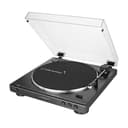
The default first turntable for a reason: it's fully automatic, so you press one button and it cues, plays and returns the arm on its own — nothing to set up wrong. The built-in switchable preamp lets it plug into anything, and it tracks safely enough to trust with your records.

Audio-Technica — the safe default
$179.00 · View on Amazon

$199.0010% off

Price as of August 31, 2026. #ad How we’re funded

2
Fluance RT81

Fluance RT81

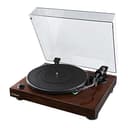
The best-value entry into real hi-fi: a manual belt-drive deck with an adjustable counterweight and anti-skate, an aluminum platter, and a genuine Audio-Technica elliptical cartridge — for the price of a good all-in-one. The switchable built-in preamp means it works today and upgrades later.

Fluance — most spec per dollar
$299.99 · View on Amazon

Price as of August 31, 2026. #ad How we’re funded

3
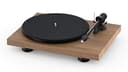
Pro-Ject Debut Carbon EVO

Pro-Ject Debut Carbon EVO

The reference for what a few hundred dollars more buys you: a one-piece carbon-fiber tonearm, a heavy damped steel platter, height-adjustable isolation feet and a factory-fitted Sumiko Rainier cartridge. It's manual and preamp-free — a deck for people who already know they want the good stuff.

Pro-Ject — the tonearm specialists
$649.00 · View on Amazon

Price as of August 31, 2026. #ad How we’re funded

4
U-Turn Audio Orbit Plus (Gen 2)

U-Turn Audio Orbit Plus (Gen 2)

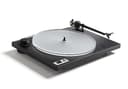
Assembled in Massachusetts, the Orbit Plus pairs a low-mass gimbal tonearm with an acrylic platter and an Ortofon OM cartridge — a genuinely audiophile recipe at a mid price. It's manual and preamp-free by default, aimed at people who want to hear the deck, not the electronics.

U-Turn — built in the USA
$399.00 · View on Amazon

Price as of August 31, 2026. #ad How we’re funded

5
Denon DP-300F

Denon DP-300F

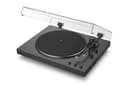
A fully automatic belt-drive deck with a built-in preamp and a die-cast aluminum platter — the convenient choice for someone who wants set-and-forget play but a more substantial build than the budget automatics. It has a proper counterweight, so it's automatic and adjustable.

Denon — automation done properly
$449.00 · View on Amazon

$499.0010% off

Price as of August 31, 2026. #ad How we’re funded

6
Music Hall MMF-2.3

Music Hall MMF-2.3

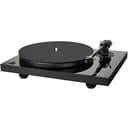
A two-speed manual belt-drive deck from a specialist audio brand rather than a mass-market one — the sort of turntable a hi-fi dealer sells rather than a big-box store. It is the least feature-laden deck at this price and deliberately so: no preamp, no Bluetooth, no automation, just the mechanical basics done properly.

Music Hall — the dealer brand
$449.00 · View on Amazon

Price as of August 31, 2026. #ad How we’re funded

7
Sony PS-LX310BT

Sony PS-LX310BT

The most flexible one-box deck: fully automatic, with Bluetooth out to a wireless speaker or headphones, a USB port for recording, and a switchable built-in preamp for wired setups. It does everything, which is exactly why it's the easiest recommendation for a first modern turntable.

Sony — mass-market wireless
$448.00 · View on Amazon

Price as of August 31, 2026. #ad How we’re funded

8
Victrola Eastwood II

Victrola Eastwood II

The all-in-one we can actually recommend: a belt-drive player with built-in speakers, a replaceable Audio-Technica cartridge, and Bluetooth in and out — so it plays records on day one but can also stream to a bigger speaker when you outgrow the built-ins. That upgrade path is what separates it from a throwaway suitcase.

Victrola — furniture first
$129.99 · View on Amazon

$149.9913% off

Price as of August 31, 2026. #ad How we’re funded

The picks in full

#1Audio-Technica — the safe default

Audio-Technica AT-LP60X

The default first turntable for a reason: it's fully automatic, so you press one button and it cues, plays and returns the arm on its own — nothing to set up wrong. The built-in switchable preamp lets it plug into anything, and it tracks safely enough to trust with your records.

Strengths

  • Fully automatic — start and stop at the touch of a button, no manual cueing
  • Switchable built-in preamp connects to powered speakers or a receiver
  • Tracks at a sane force with a replaceable Audio-Technica stylus

Trade-offs

  • Fixed tonearm — no counterweight or anti-skate to adjust
  • Conical (spherical) stylus is a rung below the elliptical on step-up decks
DriveBelt drive
OperationFully automatic
CartridgeAudio-Technica AT3600L (conical, replaceable stylus)
Built-in preampYes — switchable
Speeds33 1/3 and 45 RPM
Bluetooth / USBNo

Note. The fixed tonearm is the trade for the automation: you can't adjust tracking force, but you also can't set it wrong. That's the right trade for a first deck.

Specifications read from the manufacturer / product listing, on July 24, 2026. “Not published” means the maker does not state that figure.

#2Fluance — most spec per dollar

Fluance RT81

The best-value entry into real hi-fi: a manual belt-drive deck with an adjustable counterweight and anti-skate, an aluminum platter, and a genuine Audio-Technica elliptical cartridge — for the price of a good all-in-one. The switchable built-in preamp means it works today and upgrades later.

Strengths

  • Adjustable counterweight and anti-skate — you can set tracking force correctly, which the cheap automatics can't
  • Ships with an Audio-Technica AT95-type elliptical cartridge, a real step up from a conical
  • Built-in preamp is switchable, so you can bypass it when you add a better one

Trade-offs

  • Manual operation — you cue and lift the arm yourself
  • No Bluetooth or USB; this is a wired, listen-at-home deck
DriveBelt drive
OperationManual
CartridgeAudio-Technica elliptical (AT95-type)
Built-in preampYes — switchable
Speeds33 1/3 and 45 RPM
PlatterAluminum

Note. The counterweight and anti-skate are the reason this deck belongs in a different class from the sub-$150 automatics: it lets you dial in tracking force to the cartridge's spec instead of accepting a fixed factory setting.

Specifications read from the manufacturer / product listing, on July 24, 2026. “Not published” means the maker does not state that figure.

#3Pro-Ject — the tonearm specialists

Pro-Ject Debut Carbon EVO

The reference for what a few hundred dollars more buys you: a one-piece carbon-fiber tonearm, a heavy damped steel platter, height-adjustable isolation feet and a factory-fitted Sumiko Rainier cartridge. It's manual and preamp-free — a deck for people who already know they want the good stuff.

Strengths

  • Carbon-fiber tonearm and a heavy, damped metal platter for low resonance
  • Factory-fitted Sumiko Rainier moving-magnet cartridge
  • Electronic speed change and adjustable isolation feet

Trade-offs

  • No built-in preamp — needs an external phono stage
  • Manual; the premium build is wasted on a casual listener
DriveBelt drive (electronic speed change)
OperationManual
TonearmOne-piece carbon fiber
CartridgeSumiko Rainier (moving magnet)
Built-in preampNo
Speeds33 1/3 and 45 RPM (78 with belt change)

Note. This is the point where the deck itself, not the electronics, becomes the limiting factor in your system. Pair it with a real phono preamp and speakers to hear what it does.

Specifications read from the manufacturer / product listing, on July 24, 2026. “Not published” means the maker does not state that figure.

#4U-Turn — built in the USA

U-Turn Audio Orbit Plus (Gen 2)

Assembled in Massachusetts, the Orbit Plus pairs a low-mass gimbal tonearm with an acrylic platter and an Ortofon OM cartridge — a genuinely audiophile recipe at a mid price. It's manual and preamp-free by default, aimed at people who want to hear the deck, not the electronics.

Strengths

  • Acrylic platter adds mass and damping without a separate mat
  • Precision gimbal tonearm with an Ortofon OM cartridge
  • Built in the USA with a strong upgrade path

Trade-offs

  • No built-in preamp in the standard configuration — add one or choose the built-in-preamp option
  • Fully manual; no dust cover on some configurations
DriveBelt drive
OperationManual
CartridgeOrtofon OM series (elliptical)
Built-in preampNo (standard) — optional built-in stage
Speeds33 1/3 and 45 RPM
PlatterAcrylic

Note. Amazon listings and configurations vary; confirm whether the unit you're buying includes the built-in preamp before you order, especially if your speakers have no phono input.

Specifications read from the manufacturer / product listing, on July 24, 2026. “Not published” means the maker does not state that figure.

#5Denon — automation done properly

Denon DP-300F

A fully automatic belt-drive deck with a built-in preamp and a die-cast aluminum platter — the convenient choice for someone who wants set-and-forget play but a more substantial build than the budget automatics. It has a proper counterweight, so it's automatic and adjustable.

Strengths

  • Fully automatic start and stop with a real counterweight for tracking force
  • Built-in switchable phono preamp
  • Solid die-cast platter and a well-regarded, long-lived design

Trade-offs

  • Stock headshell/cartridge is basic; many owners upgrade it
  • Styling is dated next to newer decks
DriveBelt drive
OperationFully automatic
CartridgeDenon DSN-85 (included)
Built-in preampYes — switchable
Speeds33 1/3 and 45 RPM
PlatterDie-cast aluminum

Note. It's unusual in offering both full automation and an adjustable counterweight, which makes it a good fit for someone who wants convenience without the fixed-arm compromise of the cheapest automatics.

Specifications read from the manufacturer / product listing, on July 24, 2026. “Not published” means the maker does not state that figure.

#6Music Hall — the dealer brand

Music Hall MMF-2.3

A two-speed manual belt-drive deck from a specialist audio brand rather than a mass-market one — the sort of turntable a hi-fi dealer sells rather than a big-box store. It is the least feature-laden deck at this price and deliberately so: no preamp, no Bluetooth, no automation, just the mechanical basics done properly.

Strengths

  • Specialist audio brand with a long-running, well-supported turntable line
  • Purist signal path — no built-in preamp or wireless circuitry to color the output
  • Belt drive with a manual arm, the standard recipe for quiet home listening

Trade-offs

  • The retail listing publishes almost no specifications — you are buying on the brand's reputation
  • No preamp, no USB, no automation; everything is on you
DriveBelt drive
OperationManual
Speeds33 1/3 and 45 RPM
Built-in preampNo
CartridgeNot published
Wow and flutterNot published

Note. The listing for this deck states only that it is a two-speed manual audiophile turntable, so we have left the cartridge and wow-and-flutter rows unpublished rather than guess. If the fitted cartridge matters to you, confirm it with the seller before ordering.

Specifications read from the manufacturer / product listing, on August 11, 2026. “Not published” means the maker does not state that figure.

#7Sony — mass-market wireless

Sony PS-LX310BT

The most flexible one-box deck: fully automatic, with Bluetooth out to a wireless speaker or headphones, a USB port for recording, and a switchable built-in preamp for wired setups. It does everything, which is exactly why it's the easiest recommendation for a first modern turntable.

Strengths

  • Bluetooth output pairs straight to a wireless speaker — no other gear needed
  • Fully automatic, with a low-profile design and switchable preamp
  • USB output for digitizing records

Trade-offs

  • Bluetooth trades some fidelity versus a wired connection
  • Low-mass plastic build; the tonearm and cartridge are entry level
DriveBelt drive
OperationFully automatic
WirelessBluetooth output
Built-in preampYes — switchable
Speeds33 1/3 and 45 RPM
USB outputYes

Note. Bluetooth OUT (deck to speaker) is the useful direction here and what makes this deck so flexible; if you care most about sound, use the wired analog output into powered speakers instead.

Specifications read from the manufacturer / product listing, on July 24, 2026. “Not published” means the maker does not state that figure.

#8Victrola — furniture first

Victrola Eastwood II

The all-in-one we can actually recommend: a belt-drive player with built-in speakers, a replaceable Audio-Technica cartridge, and Bluetooth in and out — so it plays records on day one but can also stream to a bigger speaker when you outgrow the built-ins. That upgrade path is what separates it from a throwaway suitcase.

Strengths

  • Uses a replaceable Audio-Technica cartridge rather than a sealed ceramic one
  • Bluetooth OUT lets you send records to a proper speaker as you upgrade
  • Built-in speakers and preamp — genuinely plug-and-play

Trade-offs

  • Built-in speakers are convenient, not hi-fi — the sound ceiling is low
  • Not the deck for a collector who wants the best from valued pressings
TypeAll-in-one with built-in speakers
DriveBelt drive
CartridgeAudio-Technica (replaceable)
BluetoothIn and out
Built-in preampYes
Speeds33 1/3, 45 and 78 RPM

Note. The replaceable Audio-Technica cartridge and Bluetooth-out are the two features that make this a safe all-in-one: you can improve the stylus and route to a better speaker instead of being stuck with a sealed ceramic pickup.

Specifications read from the manufacturer / product listing, on July 24, 2026. “Not published” means the maker does not state that figure.

Audio-Technica

What they are good at:range and parts support. A-T makes everything from the $180 AT-LP60X to direct-drive decks, and — more importantly — makes the cartridges and replacement stylithat the rest of the industry fits. The VM95 stylus family is the single best upgrade ladder in the hobby, and A-T publishes stylus life figures other makers won’t.

Where they cut corners:the entry decks use fixed tonearms and proprietary cartridge mounts, which caps them permanently. The AT-LP60X is excellent at what it does and cannot be upgraded — see our review.

Buy them if: you want the safest first deck, the widest parts availability, or a direct-drive deck for digitizing.

Fluance

What they are good at:putting expensive components in affordable decks. Fluance fits Ortofon cartridges, acrylic platters and servo-controlled motors at prices where competitors fit unbranded parts, and they publish wow and flutter figures — 0.07% on the RT85 — that most brands at this level simply omit.

Where they cut corners: the styling is conservative and the higher models deliberately omit the phono preamp, which is a fidelity decision but adds a purchase. Fluance is a direct-to-consumer brand rather than a dealer one, so there is no shop to carry the deck into.

Buy them if: you want the most measurable specification per dollar. See the RT82 review and the under-$1,000 tier.

Pro-Ject

What they are good at: tonearms. The one-piece carbon fiber arm on the Debut Carbon EVO set the template at its price and is still the thing competitors are answering. Pro-Ject is an Austrian specialist that makes only analog audio, and it shows in the mechanical engineering.

Where they cut corners: features. No preamp, no Bluetooth, no USB, no automation on the classic Debut line. That is the philosophy rather than an oversight, but it means the deck arrives needing a phono stage you must supply.

Buy them if: you want the best arm at the price and already have, or intend to buy, the electronics. See our Debut Carbon EVO review.

U-Turn Audio

What they are good at:assembly in Massachusetts, a documented upgrade path, and configurability — you can order the same deck with or without a built-in preamp, with different platters and cartridges.

Where they cut corners: nothing structural, but the configuration variety makes retail listings confusing. Check exactly which configuration you are ordering, because the preamp is an option rather than a given.

Buy them if: country of assembly matters to you, or you want a deck you can specify rather than accept.

Denon

What they are good at: automation without the usual penalty. The DP-300F is unusual in offering full automatic operation andan adjustable counterweight — a combination most brands treat as mutually exclusive, and the reason it appears in our automatic vs manual guide as the exception. Denon also builds the DP-450USB, the only deck we know of that archives to a USB drive with no computer.

Where they cut corners: the range is narrow and the pricing is not aggressive. You pay for the engineering rather than getting a bargain.

Buy them if: you want automation and adjustability at once, or computer-free digitizing.

Music Hall

What they are good at:the dealer-brand proposition — a specialist audio company with a long-running turntable line, sold through hi-fi shops rather than big-box retail.

Where they cut corners:published information. The retail listing for the MMF-2.3 states almost no specifications, which is why several rows on our product entry read “Not published” rather than carrying numbers we did not read from a source. That is a transparency problem, not necessarily an engineering one.

Buy them if:you value a specialist brand’s reputation and have a dealer who can tell you what is actually fitted.

Sony

What they are good at:mass-market reliability and wireless. Sony’s current decks pair full automation with Bluetooth and, on some models, a USB output — a feature set aimed squarely at people who want a record player to work like every other device they own.

Where they cut corners: upgradeability. These are appliances with fixed arms, and stock on individual models moves unpredictably.

Buy them if: wireless matters more than the upgrade path. See the Bluetooth roundup.

Victrola

What they are good at: making a record player look like furniture, at a price nothing else reaches, with everything included in the box.

Where they cut corners:this is the brand that requires the most care. Victrola’s range spans genuinely safe decks with replaceable magnetic cartridges — like the Eastwood II we recommend — and cheap suitcase players with sealed ceramic cartridges that wear records. Check the cartridge on the specific model, every time. Our guide to whether cheap turntables ruin records explains exactly what to look for.

Buy them if:you want one object that plays records with no other purchases — and you have checked the cartridge type.

Does the brand actually matter?

Less than the specification in front of you. Two decks at the same price with the same drive type, the same cartridge and the same tonearm adjustments will perform similarly whatever the badge. Brand is a proxy for three real things: what the company spends money on, whether it publishes figures, and whether parts will exist in five years.

Where brand genuinely decides the outcome is cartridge and stylus families. Buying into Audio-Technica’s VM95 range or Ortofon’s 2M range means every future upgrade is a stylus that snaps onto the body you own. That is a brand decision with a decade of consequences, and it matters far more than the name on the plinth.
Frequently asked questions

What is the best turntable brand?

There is no single best. Audio-Technica has the widest range and the best parts support, Fluance puts the most specification into a given price, and Pro-Ject makes the best tonearms at this level. The right brand depends on whether you want convenience, specification or mechanical engineering.

Are Victrola turntables any good?

It depends entirely on the model. Victrola's range includes decks with replaceable magnetic cartridges that are perfectly safe, and cheap suitcase players with sealed ceramic cartridges that wear records over time. Check the cartridge type on the specific model before buying.

Is Audio-Technica or Fluance better?

Audio-Technica has the broader range, better parts availability and the best stylus upgrade ladder. Fluance typically fits more expensive components — Ortofon cartridges, acrylic platters — at a given price. For a first automatic deck, Audio-Technica; for maximum specification per dollar, Fluance.

Why isn't Rega on this list?

Rega is a well-regarded British maker, but it does not sell through the retailer our live prices come from, so we cannot show an honest current price for it. We would rather note the omission than list a product we cannot price.

Do expensive turntable brands sound better?

Up to a point. Brand correlates with what a company spends money on — better platters, arms and factory cartridges — but two decks with the same specification will perform similarly regardless of badge. Past roughly $600 you are increasingly paying for refinement and finish.

Which turntable brand has the best upgrade path?

Audio-Technica, because of the VM95 cartridge family: one body accepts conical, elliptical, micro-linear and Shibata styli, each snapping on with no realignment. Ortofon's 2M range works the same way with fewer steps. That choice matters more long-term than the turntable brand itself.

Sources

Keep reading